 Deutschland
 España
 France
 Italia
 United Kingdom

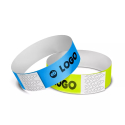

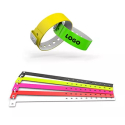
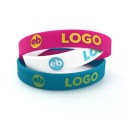

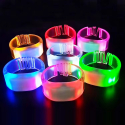

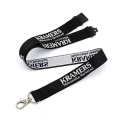

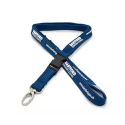
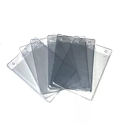




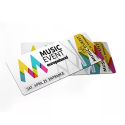
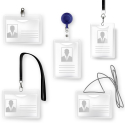
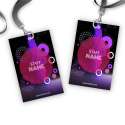

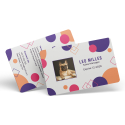

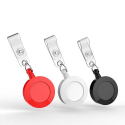




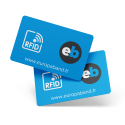

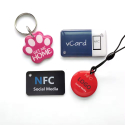

Who enters your premises today? Who was moving through your offices yesterday at 3 p.m.? These questions deserve clear answers if you want to maintain control over internal security. In a professional environment where managing people flows impacts both safety and daily organization, you cannot leave access control to chance. Every badge plays a strategic role in this system.
An access card turns simple identification into a lever for security and professionalism. It authenticates every employee, contractor, or visitor while conveying your company image. You project transparency and rigor from the very entrance to your buildings. Pay close attention to the design of your badges: their format, material, graphics, and level of security tell a story—yours.
How can you leverage this management tool to strengthen belonging while maintaining a high level of security? Why do so many companies decide touse custom PVC cards, printed in-house or through specialized providers? Explore current standards and solutions that are already redefining corporate access policies. Ready?
Protect your business with access badges designed for security
Protect your facilities against any intrusion
How can you ensure that no unauthorized external person enters your infrastructure? By equipping your teams with a personalized access badge, you control in real time who crosses each entry point. You eliminate the risks associated with physical keys that are easily lost or copied. By integrating an access control system based on RFID cards or NFC cards, you automatically block any unauthorized entry attempt.
According to a study conducted by HID Global, 78% of companies that adopted electronic access cards reported a measurable reduction in physical security incidents within the first year. These figures confirm the direct impact of this technology on perimeter control.
Lock down sensitive areas with precision
Have you identified areas requiring a higher level of security? Data centers, R&D labs, or regulated archive rooms impose strict access restrictions. By assigning access badges configured by job profiles or authorization levels, you define entry rights user by user.
You can authorize an engineer to access servers while denying that same area to a sales visitor. You avoid human vulnerabilities in the protection chain of your critical assets.
Ensure complete access traceability
Do you want a reliable history of movements within your buildings? With a centralized badge system, each passage generates a time-stamped access log. In the event of an alert or dispute, you can audit every movement of an employee or contractor.
Platforms such as Genetec Security Center or Honeywell Pro-Watch link each badge to a database, with automatic alerts in case of anomalies. You can verify who accessed a confidential room and when, without multiplying cameras or physical patrols.
Increase employee peace of mind
Why would your employees feel safer thanks to a badge? Because they know that only authorized people can circulate in their workspaces. You establish a controlled and predictable environment, free of surprise interventions or anonymous visitors.
According to the 2022 QWL Barometer by Parlons RH, 42% of employees consider the security of their immediate environment a priority factor for workplace well-being. The presence of a secure badge actively contributes to their sense of protection and collective professionalism.
Which types of access cards should you prioritize to combine security and professionalism?
Simple PVC badge with barcode or QR code
A PVC badge equipped with a barcode or QR code is an economical and easy-to-implement solution. You can print it with a standard card printer and distribute it quickly to your employees. This type of badge works with compatible optical readers that scan the unique code to grant or deny access.
These PVC cards are suitable for low-risk environments or for temporary identification, such as professional events or areas without sensitive data. To enhance security, you can combine this solution with visual or manual verification by an agent at the entrance.
Magnetic stripe cards and smart cards
Do you want to automate access control while relying on proven technology? Choose magnetic stripe cards or smart cards. Magnetic stripe cards store identification data on a stripe readable by swiping, while smart cards use an embedded electronic chip.
Contact smart cards require physical insertion into a reader. They are effective in banking, government, or industrial environments where intrusion risks justify a higher level of verification. Their operation relies on secure microprocessors capable of running cryptographic algorithms.
You may prefer contactless cards based on ISO/IEC 14443 standards, enabling fast reading near the reader (typically between 2 and 10 cm) without inserting the badge. These badges speed up passage while maintaining strong security through encrypted communication.
RFID badges and related technologies
An RFID badge (Radio Frequency Identification) gives you access to a wide range of technologies. You can choose between several frequencies depending on your intended use:
- HF (13.56 MHz) : a widely used standard, compatible with MIFARE or iClass technologies, suitable for professional buildings and moderately sensitive data.
- UHF (860 to 960 MHz) : enables reading ranges of up to 10 meters. Ideal for monitoring vehicle movements, tracking logistics flows, or managing inventory.
For direct interaction with smartphones, you can consider NFC-compatible badges (Near Field Communication). In corporate environments, you use them to access secure rooms or log in to terminals without manual credentials. Since Android 4.4 and iOS 13, most business smartphones can read NFC cards, paving the way for hybrid physical and digital badges.
Biometric badges or integration with connected devices
Do you want to go beyond a physical badge that a user could lose or lend? Biometric solutions are worth adopting. These badges integrate employee biometric data (fingerprint, facial recognition, iris, or even vein pattern). The system ensures that only the registered holder can access the protected area.
You can also integrate identification into everyday connected devices: smartwatches, professional smartphones, or Bluetooth tokens. These devices strengthen traceability while improving user experience and speed at access points.
In very high-security environments (labs, critical data centers, financial headquarters), combining an RFID physical badge, biometric authentication, and a dynamic code creates triple security without compromising access flow.
Master digital identification: which technology should you choose for your access cards?
RFID or NFC: which technology best serves your security system?
Are you hesitating between RFID and NFC for your access cards? Both use short-range radio waves but differ in range, cost, and interoperability.
- RFID (Radio Frequency Identification) operates up to 10 meters depending on frequency. It is commonly used for standard access badges in professional buildings, allowing you to control access to multiple zones through an extended infrastructure.
- NFC (Near Field Communication) offers a maximum range of 10 cm and relies on the ISO 14443 standard. Use it for temporary access or smartphone integration. It also enables bidirectional communication, useful for authenticating a badge and a terminal simultaneously.
Ask yourself: do you need extended range for an industrial site or precise, localized control for an administrative office? The answer will guide your choice.
Why integrate biometrics into your access cards?
Do you want to prevent fraud caused by badge sharing? Biometric solutions eliminate it entirely.
- Fingerprint : badges store encrypted biometric templates. The terminal verifies identity at each passage. Thales offers reading modules compatible with secure RFID badges.
- Facial recognition : some badges trigger facial authentication through connected systems (camera, artificial intelligence). IDEMIA, for example, combines badges and facial recognition in highly secure environments.
This combination of badge plus biometric factor doubles the level of security and meets the needs of sensitive sectors such as defense, energy, or healthcare.
Using the smartphone as a badge: a relevant choice?
More and more companies use digital access cards via smartphones. You rely on a secure mobile app instead of a physical badge. This format mainly uses Bluetooth Low Energy and NFC.
According to HID Global, 54% of security managers in European companies plan to switch to a mobile solution within two years. Why?
- You reduce the loss of physical media
- You simplify access rights distribution
- You track access usage in real time through the back office
Salto’s Mobile Access offering illustrates this trend well. It enables access to secure areas via an iOS- and Android-compatible app.
Encrypt your access data: a non-negotiable requirement
You use badges to control entries, but how do you protect the information they contain? Encryption plays a strategic role.
- AES 128- or 256-bit encryption : it protects exchanges between the card, the reader, and the server. MIFARE DESFire EV2 uses this level of encryption and equips many banking and industrial companies.
- Mutual authentication : the reader verifies the card’s identity and vice versa, preventing any illegitimate reading.
Ask yourself: do your current cards use a secure protocol, or do they expose your data to cloning or intrusion? Without encryption, you compromise your company’s overall security.
Your badge speaks before you do: enhance your corporate image
Why badge design immediately influences perception
Have you analyzed what your corporate badge communicates in the first second? A carefully designed badge incorporating your logo, colors, and typography immediately conveys coherence and rigor. You demonstrate attention to detail, structure, and organizational standards.
Harvard Business Review notes that visual codes strongly influence how partners perceive an organization. A poorly designed or printed badge suggests negligence, while a clean, readable badge enhances your professionalism.
A badge that fosters a sense of belonging
You allow employees to wear a distinctive sign visibly linking them to the company. This directly impacts internal dynamics. According to Professor Alex Haslam (University of Queensland), shared identity symbols such as clearly identifiable badges promote collective engagement and motivation.
You create an environment where everyone is recognized as an identified and valued contributor. This dynamic, visible even in informal moments, strengthens professional interactions and builds lasting connections.
Standardize your image and strengthen credibility
Have you planned a visitor badge visually aligned with internal staff badges? By harmonizing the graphic style of all identification media, including temporary ones, you establish a clear framework immediately understood by third parties.
Using a visual identity recognizable even by external audiences allows your brand codes to speak for themselves. First impressions do the work for you.
Turn the badge into a brand identity medium
Have you embedded your corporate culture into badge design? Badge shape, material, and wearing method subtly convey your values. An innovative company favors a sleek smart card, while a financial institution emphasizes security and sobriety.
This consistency between visual symbol and real-world perception strengthens your employer brand for employees, candidates, and stakeholders alike.
- Consistent design = immediate perception of seriousness and reliability
- Shared identification = stronger internal culture
- Standardization = controlled image with third parties
- Visual symbolism = differentiation of your positioning
Master digital identification: which technology should you choose for your access cards?
RFID or NFC: which technology best serves your security system?
Are you hesitating between RFID and NFC for your access cards? Both use short-range radio waves but differ in range, cost, and interoperability.
- RFID (Radio Frequency Identification) operates up to 10 meters depending on frequency. It is commonly used for standard access badges in professional buildings, allowing control of multiple zones.
- NFC (Near Field Communication) offers a maximum range of 10 cm and relies on ISO 14443. It supports temporary access and smartphone integration with bidirectional communication.
Ask yourself whether you need extended range or precise localized control. Your answer will guide your choice.
Why integrate biometrics into your access cards?
Do you want to prevent fraud caused by badge sharing? Biometric solutions eliminate it entirely.
- Fingerprint : encrypted biometric templates stored on badges and verified at each passage.
- Facial recognition : combined badge and AI-based authentication in high-security environments.
This combination doubles security and meets the needs of sensitive industries.
Using the smartphone as a badge: a relevant choice?
More companies are adopting digital access cards via smartphones using secure apps based on BLE and NFC.
According to HID Global, 54% of European security managers plan to adopt mobile access solutions.
- Reduced physical media loss
- Simplified access rights distribution
- Real-time access tracking
Salto Mobile Access illustrates this trend with iOS and Android compatibility.
Encrypt your access data: a non-negotiable requirement
Encryption protects the data stored and exchanged by access badges.
- AES 128- or 256-bit encryption : used by technologies such as MIFARE DESFire EV2.
- Mutual authentication : prevents illegitimate reads.
Without encryption, you expose your company to serious security risks.
Empower your badge: smart, tailored customization
How to turn a simple badge into a strategic tool?
You can do far more than add a name and photo. Badge customization combines security, targeted features, and branding.
Which printing options ensure readability and reliability?
Direct-to-card printing on PVC cards remains the standard for durability and aesthetics. You can include:
- Standardized ID photos, for instant identification
- Unique UID codes, automatically generated
- QR codes or barcodes individually assigned
How to precisely configure access rights?
Badge encoding allows granular access levels through:
- Multi-level assignment based on role
- Time slots programmed in RFID or NFC systems
- Access to internal services such as secure printers or cafeterias
Why connect badges to existing systems?
Synchronization with HR databases and access control systems ensures:
- Automatic access updates based on staffing changes
- Attendance tracking without re-entry
- Compliance with security protocols
Can a badge reflect a role or department?
Yes, adapt badge design by department:
- Color codes for immediate identification
- Icons or pictograms indicating permissions
- Graphic layouts differentiating staff types
Which custom detail will you integrate into your next badge?
Control issuance and revocation of access cards flawlessly
Badge creation at hiring and ongoing management
Access card creation starts at contract validation, with HR collecting data and security encoding the badge.
Access rights are adjusted throughout employment as roles evolve.
Loss, theft, or expiration: what to do immediately?
Deactivate the card immediately via access management software.
Plan simple reporting procedures and automatic reminders.
Automatic revocation upon employee departure
Synchronize HR systems and access control for immediate suspension.
ISO/IEC 27001 standards recommend this approach.
Clarify roles in the process
- Human resources : process initiation and data management
- Security manager : access validation and issuance
- IT department : system integration and logging
How do you organize collaboration across teams?
How can a simple badge redefine your company’s security and image?
Access cards enhance security while reinforcing a professional brand image.
Control access for stronger security
Well-implemented badge systems manage permissions and trace movements.
Professionalize internal processes
Badges become branding tools that signal organization and rigor.
Choose the right solution
- Standard PVC cards: for cost-effective use
- RFID or NFC technology: for fast contactless access
- Hybrid media: combining identification and security
- Custom design: aligned with your values
Benefit from strategic support
Audits and structured deployment ensure an efficient, scalable system.
Have you assessed the badge’s impact on daily management?
Integrated with HR and supervision systems, badges become a cross-functional lever.
Need a reliable, secure, and professional access badge system? Contact us.
We also recommend these pages: