 Deutschland
 España
 France
 Italia
 United Kingdom

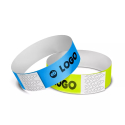
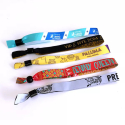
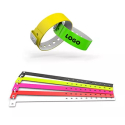
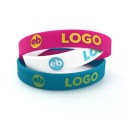





The essentials of custom wristbands bulk pricing
- Economies of scale principle : The unit price of custom wristbands drops as order quantity rises because fixed setup costs are spread across more units, lowering the cost contribution of each individual wristband.
- Typical quantity tiers : Volume discounts on a custom order are commonly triggered at standard breakpoints such as 100, 500 and 1,000+ units, with the bulk price per unit decreasing at each higher tier.
- Material impact on pricing : The degree of price reduction varies by material — silicone, fabric, Tyvek, vinyl and RFID wristbands each carry different base costs and respond differently to bulk order volumes.
- Setup and customisation costs : One-time charges for moulds, custom artwork and added colours are fixed per order, so they weigh heavily on the unit price of small runs and become negligible at high quantities.
- Lead times and rush orders : Production turnaround affects the final price, as rush orders with shortened deadlines typically add surcharges that can offset bulk savings.
- Budget optimisation levers : For an event, the main ways to lower cost per unit include consolidating orders into a single bulk purchase, limiting colours, and ordering early to avoid rush fees.
- What this guide covers : This page explains today how the unit price of custom wristbands scales with order quantity, with recent 2026 cost-per-unit breakdowns; see related posts for event ordering tips.
Why Ordering More Wristbands Lowers the Price per Unit
Ordering more wristbands lowers the unit price because the fixed costs of production are spread across more items. A single custom silicone wristband costs $25.98, but at an order of 5 units the price drops to $12.24 each. The larger the order quantity, the thinner each band's share of those upfront expenses becomes.
The role of fixed setup costs
Every custom order carries one-time charges that exist whether you produce 100 bands or 10,000. These cover the artwork preparation, the mould or die for embossed designs, and the calibration of the printing machine before the first wristband leaves the line. Because these costs are paid once, they weigh heavily on small runs and almost disappear across high volumes.
The components that make up the setup portion of your order typically include:
- Artwork proofing and file preparation for your custom design
- Tooling such as the mould or die used for debossed and embossed styles
- Machine calibration and colour matching before the print run begins
- Quality checks and the labour to prepare each batch
Economies of scale on materials and labour
Beyond setup, suppliers buy raw materials in larger quantities and pass part of that saving to you. Tyvek illustrates this well: custom Tyvek wristbands start at $0.23 each for a minimum order of 100 and fall to as low as $0.03 at higher volumes. The same logic applies across materials, with bulk Tyvek bands reaching £0.08 per unit in the UK.
Labour also scales efficiently. Running a continuous batch of one design is faster per item than stopping and resetting for a small order. For an event manager, this means the value per wristband improves sharply as your order quantity rises, making bulk planning the smarter route when attendance numbers are known in advance.
Quantity Tiers: How Price Breaks Are Structured
The unit price of custom wristbands drops as your order crosses successive quantity thresholds. Each volume tier spreads fixed setup and printing costs across more units, lowering the cost per wrist. The bigger the run, the lower the price per band, until you reach the supplier's deepest bulk rate.
Common order quantity thresholds
Wristband pricing follows a tiered structure rather than a flat rate. Suppliers group orders into brackets, and crossing into a higher bracket triggers a lower unit price. One verified benchmark applies across the trade: bulk orders of 500+ units reduce the price per wristband significantly. Minimum order quantities also matter, since several custom styles start at a MOQ of 100 units before any volume discount applies.
The typical progression moves through these stages:
- Single or sample unit: the highest price per band, covering full setup on one piece.
- Minimum order quantity (100 units): the entry point for most custom styles, where per-unit cost first drops.
- Mid-volume runs: growing quantities continue to lower the unit rate as fixed costs dilute.
- Bulk tier (500+ units): a significant reduction in the price per wristband.
- Large-volume bulk (1,000+ units): the deepest published rates, reserved for the highest quantities.
Reading a degressive pricing curve
A degressive curve simply means the unit price falls as quantity rises, but not in a straight line. The steepest savings appear early, when you move from a single piece toward the first hundreds. Beyond the bulk threshold, the curve flattens: each additional band still costs less, yet the marginal saving per extra unit shrinks.
For an event manager planning attendance, this shape rewards consolidating demand into one larger order rather than splitting it across several small runs. The exact tiers, break points and per-unit rates depend on the material, finish and customisation you select, so these are confirmed on quotation for your specific order rather than fixed in advance.
How Material Choice Changes the Volume Discount
Material is the single biggest factor in how steeply your unit price falls. Cheap substrates like Tyvek start low and drop further with volume, while premium options such as silicone or metal begin high but show the most dramatic per-unit savings once you order in bulk. The material sets both the starting price and the depth of the volume discount.
Silicone wristbands
Silicone shows the most extreme curve of any style. A single custom silicone wristband costs 25.98 USD. UK pricing starts around 0.50 GBP per band for promotions and charity campaigns. The colours, debossing and dual-layer effects you select all feed into the setup cost spread across the run, which is why high volumes matter here.
Fabric and woven wristbands
Fabric and woven bands sit at the premium end for festivals and VIP access, starting from 0.90 GBP per unit depending on customisation. The discount kicks in hard at scale: fabric wristbands ordered in quantities of 1,000+ can fall to as low as 0.22 GBP each.
Tyvek and paper wristbands
Tyvek is the budget workhorse and the cheapest option across every tier. Tyvek wristbands start as low as 0.08 GBP each for bulk orders, with a minimum order quantity of 100 units. Custom Tyvek begins at 0.23 USD for the MOQ and drops to just 0.03 USD per unit in bulk. These paper-style bands carry minimal setup, so the saving is steady rather than spectacular.
Vinyl and RFID wristbands
Vinyl bands suit multi-day events, starting from 0.40 GBP, while custom vinyl runs from 0.22 USD at the MOQ down to 0.170 USD in bulk. RFID and dual-layer technology carry higher entry prices: a dual-layer wristband is 9.99 USD as a single unit, falling to 0.36 USD per band in bulk.
| Material / style | Single or MOQ price | Bulk price per unit |
|---|---|---|
| Tyvek (custom) | 0.23 USD (MOQ 100) | 0.03 USD |
| Vinyl (custom) | 0.22 USD (MOQ 100) | 0.170 USD |
| Plastic (custom) | 0.39 USD (MOQ 100) | 0.240 USD |
| Debossed silicone | 9.99 USD (single) | 0.16 USD |
| Printed | 9.96 USD (single) | 0.13 USD |
| Dual-layer | 9.99 USD (single) | 0.36 USD |
| Metal | 116.99 USD (single) | 0.67 USD |
| Fabric (UK) | 0.90 GBP (starting) | 0.22 GBP (1,000+) |
Customisation and Print Styles That Affect Unit Cost
The way you customise your wristbands shifts the point at which volume discounts kick in. A single-colour print on a plain band reaches the lowest tier faster, while multi-colour artwork, dual-layer construction or embedded technology raises the baseline cost and delays the steepest savings. The more complex the customisation, the higher the entry price per unit.
Print styles and colour count
Each print style carries its own cost structure, and that structure dictates how quickly the price per band falls. A plain or single-colour design spreads setup across the run efficiently, which is why custom printed wristbands move from $9.96 for a single piece down to as low as $0.13 in bulk. Debossed styles, which press the design into the material, run from $9.99 to $0.16 per unit at volume.
Colour count matters because each additional colour can add a screen or print pass, raising the fixed setup that volume then has to absorb.
- Single-colour print: the lowest setup, reaching deep bulk rates fastest (printed bands as low as $0.13).
- Debossed or embossed: the design is moulded in, with bulk pricing from $0.16 per unit.
- Dual-layer construction: two bonded layers add cost, from $9.99 single down to $0.36 in bulk.
- Metal styles: the premium tier, from $116.99 for one piece to $0.67 at high volume.
Variable data and added features
Variable data means each band carries unique information such as sequential numbering or individual barcodes. Variable data printing adds per-unit processing, so the savings curve flattens compared with a single repeated design. Features like badges, sequential IDs or access-control elements increase the base cost before any quantity discount applies.
For an event with thousands of attendees, weigh whether every band genuinely needs unique data. Standardising the artwork across the run keeps the per-unit cost closer to the lowest published tier for your chosen material.
Delivery Times, Rush Orders and Hidden Costs
Tight deadlines and last-minute orders can quietly erode the savings you gained from ordering in volume. A rush or next-day delivery surcharge can cancel out the per-unit discount won on a large wristband order. Factoring lead times into your event planning protects both your budget and your delivery date.
Standard lead times vs rush orders
Production schedules vary by material, and the finish you choose directly shapes how early you need to place the order. Fabric wristband production typically requires a lead time of 8 to 13 days depending on customisation. When the event date leaves no margin, rush options exist but carry a premium: next-day delivery on Tyvek wristbands is available at an additional charge of £10.
For a responsable événementiel managing several suppliers, the practical takeaway is to lock the quantity early. Ordering at the bulk tier weeks ahead keeps the unit price low and removes any need to pay rush fees that flatten the value of the discount.
Additional costs to budget for
The headline price per band rarely tells the whole story. Several line items sit outside the unit rate and deserve attention before you confirm the order:
- Rush delivery surcharge: next-day dispatch on Tyvek wristbands adds £10 to the total.
- Standard shipping: free delivery applies on orders over £150, so smaller runs may carry a carriage fee.
- Setup and artwork: proofing and print preparation are reflected in the per-unit price at lower tiers.
- Production lead time: longer schedules on fabric styles can force a paid rush option if booked late.
Confirming these costs on quotation keeps the final figure aligned with the volume saving you planned for.
Maximising Value: How to Optimise Your Wristband Budget
Lowering your unit cost comes down to three levers: ordering above the bulk threshold, planning early enough to avoid rush fees, and matching the material to what the event actually needs. Bulk orders of 500+ units reduce the price per wristband significantly across every material. Pull these together and the saving compounds.
Plan ahead and consolidate orders
The single biggest mistake is fragmenting demand across several small purchases. Each separate run pays setup costs again and rarely reaches the volume tier where the price drops. Consolidating gives your event the leverage that bulk buying rewards.
- Combine multiple events into one order. If your business runs a season of activations, group the quantities so the total clears the 500+ threshold rather than ordering per date.
- Lock the quantity early. Free standard delivery applies on orders over £150, so a consolidated run often qualifies while individual ones do not.
- Book ahead of the lead time. Fabric production needs 8 to 13 days, so ordering with margin avoids the £10 next-day surcharge on Tyvek that erodes any volume saving.
- Standardise the artwork. One design across the full run keeps the per-unit price near the lowest published tier.
Choose materials wisely for the event type
Picking the right material for the right purpose protects both the budget and the attendee experience. A single-day promotion does not need a festival-grade band, and overspecifying quietly inflates the unit cost.
- Single-day or high-volume entry: Tyvek starts at £0.08 per unit in bulk, ideal when you need an eco-friendly, low-cost throwaway band.
- Multi-day events: Vinyl from £0.40 holds up across several days without re-issuing.
- Festivals and VIP access: Fabric drops to £0.22 each at 1,000+ units, giving premium feel at scale.
- Promotions and charity campaigns: Silicone from £0.50 doubles as a take-home keepsake that extends brand value.
Frequently Asked Questions About Wristband Volume Pricing
Volume pricing on custom wristbands works on tiered breaks: the more you order, the lower the per-unit rate. Bulk orders of 500+ units reduce the price per wristband significantly across every material. The questions below cover the points event planners raise most often before confirming an order.
What is the minimum order quantity for custom wristbands?
Most styles start at a minimum order quantity of 100 units. Custom Tyvek and vinyl wristbands both carry a minimum order quantity of 100 units. Below that level, per-unit costs stay high because setup and artwork are spread over very few bands.
At what quantity does the unit price drop noticeably?
The clearest savings appear once you pass the bulk threshold. Orders of 500+ units bring the price per wristband down sharply, and the lowest published rates apply at the highest tiers. For example, fabric wristbands ordered in quantities of 1,000+ can cost as low as £0.22 each.
Which material gives the lowest price per unit in bulk?
Tyvek remains the most affordable option at scale. Tyvek wristband prices start as low as £0.08 per unit for bulk orders. Vinyl starts from £0.40, silicone from £0.50 and fabric from £0.90, with each material discounting further as the quantity rises.
Does heavier customisation reduce my volume discount?
Yes. Multiple colours, intricate artwork or special finishes raise the base unit cost, so the discount applies to a higher starting figure. Standardising your design across the full run keeps the per-band rate closer to the lowest published tier.
Can rush delivery cancel out my bulk saving?
It can. Next-day delivery on Tyvek wristbands carries an additional charge of £10. Fabric production needs a lead time of 8 to 13 days, so ordering early protects the value gained from buying in volume.
Is there a single break point that guarantees the best rate?
No single figure fits every material, but 500+ units is the recognised bulk threshold where prices fall significantly. Larger event orders unlock the lowest tiers quoted for each style.
You might also like these pages:
- Minimum Order Quantities for Custom Wristbands: What to Expect
- Custom Wristband Delivery Times: Planning Your Event Order
- How to Request a Custom Wristband Sample Before Bulk Order
- Choosing a Custom Wristband Supplier: 7 Criteria for Event Pros
- Rush Order Custom Wristbands: Fast Delivery Options Explained