 Deutschland
 España
 France
 Italia
 United Kingdom

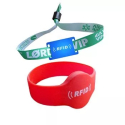
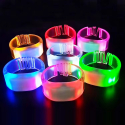
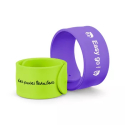
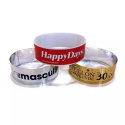








The Essentials of Choosing a Custom Wristband Supplier
- Manufacturer vs reseller : the first criterion is confirming whether the wristband supplier is a direct manufacturer or a reseller, as in-house production gives event managers tighter control over quality, lead times and customization.
- Material certifications and compliance : verify safety and material compliance for each option (silicone, vinyl, tyvek, plastic), since certified materials reduce skin reactions and avoid liability issues at large-occurrence events.
- Customization methods available : a reliable supplier should offer multiple branding techniques such as debossed, ink-filled and screen printed, allowing event managers to match logos, text and color schemes accurately.
- Pre-order sample protocol : request a physical sample before placing the full order to validate material feel, print quality, closure mechanism and color accuracy against the event's specifications.
- Production capacity and timelines : assess the supplier's production volume and delivery turnaround to ensure quantities can be met within the event schedule without rush-related defects.
- Anti-duplicate security features : prioritize suppliers offering tamper-resistant and security functions such as RFID, barcodes, QR codes and serial numbers to prevent counterfeiting and unauthorized re-entry.
- Logistics and multi-color distribution : confirm the supplier supports organized fulfillment and color-coded systems that map wristband colors to defined access levels for crowd and zone management.
- Material durability by environment : match wristband material to event conditions—silicone and tyvek perform differently across water exposure, multi-day wear and outdoor use—so durability becomes a decisive selection criterion.
Why Your Supplier Choice Determines Event Success
Your wristband supplier directly shapes three things: attendee security, brand perception and on-site logistics. A reliable wristband supplier protects your event against duplicate entry, last-minute stock failures and off-brand printing that undermines credibility. Getting this decision right is the foundation every other operational detail rests on.
The single most useful filter when you start vetting candidates is whether you are dealing with a manufacturer or a reseller. This distinction tells you who actually controls quality, pricing and turnaround.
Manufacturer vs Reseller: Why the Distinction Matters
A manufacturer owns the production line, sets the lead time and answers for material quality. A reseller buys from a manufacturer and adds a margin, often without direct control over a delayed batch or a print defect. For event pros managing high attendance figures, that gap matters.
With the global event wristband market surging toward $3.2 billion by 2034, supplier capability varies widely. A manufacturer can usually confirm production cycles, adjust quantities and stand behind compliance. A reseller frequently passes problems down the chain, leaving you to absorb the consequences on event day.
The Real Cost of an Unreliable Supplier
A weak supplier choice rarely shows its cost upfront. It surfaces at the gate, when bands arrive late, fade, snap or fail to match your access-level coding. The criteria event managers should use to select a reliable custom wristband supplier exist precisely to avoid these scenarios.
The most common risks include:
- Missed deadlines: bands arriving after doors open, with no recourse
- Inconsistent quality: colour shifts, weak welds or illegible print
- Security gaps: easily copied designs that allow duplicate entry
- Compliance failures: materials that do not meet regional regulations
- Hidden costs: rush fees and reorders that wreck your budget
Each of these traces back to the supplier you chose. The criteria in the sections below help you ensure none of them reaches your gate.
The Core Criteria for Vetting Any Wristband Supplier
Vetting a reliable custom wristband supplier comes down to five measurable criteria: material compliance, production reliability, specification transparency, sustainability, and after-sales support. A trustworthy supplier verifies lead times, certifications and product specs in writing before you place any bulk order. Each criterion below carries the same weight in your decision.
- Material quality and compliance: the supplier should certify that food-grade silicone meets the applicable regulations, including the new Brazil Resolution No. 1020/2026 where relevant.
- Production reliability and delivery: documented standard and express cycles, with verified capacity for large runs.
- Specification transparency: clear figures on width, text height and circumference, never vague promises.
- Sustainability and CSR: proof of responsible sourcing matters when 9.7% more is what consumers will pay for sustainably produced goods.
- Support and guidance: a dedicated advisor who walks you through quotes and proofs.
Certification and Compliance Standards
Ask for written confirmation that materials are food-grade and regulation-ready. Compliant food-grade silicone carries a 15-30% cost increase tied to US tariffs, so a supplier hiding that figure is not being transparent. Confirm which regional standards, such as Brazil Resolution No. 1020/2026, apply to your event location.
Production Capacity and Delivery Reliability
Request standard lead times for bulk orders exceeding 5,000 units. A reliable partner provides honest turnaround windows rather than optimistic guesses.
| Criterion | Verified benchmark |
|---|---|
| Standard production cycle | 10 to 14 days |
| Express production cycle | 6 to 10 days |
| Lead time verification threshold | 5,000 units |
| Standard wristband width | 12mm |
| Minimum text height for legibility | 6mm |
| Standard adult circumference | 8 inches |
| Food-grade compliant material surcharge | 15-30% |
Sample Request Protocol Before You Commit
Never sign off on a large run without a physical sample. Requesting a proof lets you confirm the 12mm width, 6mm text height and 8-inch adult fit before production starts. Inspect colour accuracy, print durability and clasp strength, then ask your advisor any remaining questions on a quote basis.
Matching the Right Material to Your Event
The right wristband material depends on three factors: how long your event runs, the environment your attendees move through, and the kind of audience you are managing. A one-day conference and a multi-day festival call for very different builds, and a reliable supplier should help you weigh those trade-offs honestly.
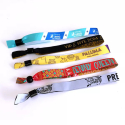
The main wristband materials event managers compare are Tyvek, silicone and vinyl or plastic, each suited to a distinct event duration and security level. Each option delivers something different in the field, as explained below.
Tyvek Wristbands
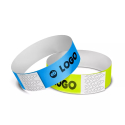
Tyvek is the lightweight paper-style band built for short events. It tears free from the stock roll, applies in seconds and works well for single-day entry where you need to move large crowds through the gate quickly. The trade-off is durability: it is not designed to survive several days of wear, water and friction. For a one-day market, a charity walk or a venue with high single-session footfall, Tyvek keeps your per-unit cost low without overcomplicating distribution.
Silicone Wristbands
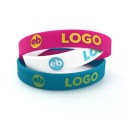
Silicone is the durable, reusable option, comfortable enough to wear for days and resistant to water and stretching. At a standard 12mm width, it carries clean branding and doubles as a keepsake attendees actually keep. The catch worth raising with your supplier is compliance: food-grade silicone can mean a 15-30% cost increase depending on the regulations that apply to your region. That is a conversation to have early, not at the order stage.
Vinyl and Plastic Wristbands
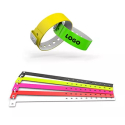
Vinyl and plastic bands sit between the two on durability and security. They hold up across multi-day events, resist tampering better than paper, and suit festivals or access-controlled zones where attendees need a sturdy band that survives the full run. They also handle full-colour printing well, which matters when you are coding by access level.
Technical specifications, exact widths and pricing vary by build and quantity. Ask your supplier's adviser to confirm the details against your specific event profile before you commit.
Evaluating Customisation and Print Methods
The print method a supplier uses tells you how long your branding survives a multi-day event. Debossed and ink-filled designs resist abrasion far better than surface screen printing, which can scuff or fade once wristbands rub against sleeves, bags and barriers. Judging this technical command is one of the criteria event managers should weigh when selecting a reliable custom wristband supplier.
Debossed and Ink-Filled vs Screen Printed
Each method handles wear differently, and a capable manufacturer will recommend the right one for your conditions rather than defaulting to the cheapest option.
- Debossed: the design is pressed into the silicone, leaving a recessed logo that cannot rub off. Ideal for long festivals.
- Ink-filled: the same debossed recess is filled with colour, boosting visibility while keeping durability.
- Screen printed: ink sits on the surface, allowing fine detail and gradients but offering the lowest resistance to friction.
- Embossed: the design is raised above the band, useful for a tactile premium feel.
For high-attendance gates where bands stay on for days, debossed or ink-filled finishes protect your branding integrity.
100% Silicone vs Rubber Fillers
Material honesty separates serious manufacturers from corner-cutters. 100% silicone keeps colour stable, stays flexible and meets compliance demands. Cheaper bands cut costs with rubber fillers, which can stiffen, crack or trigger skin irritation over time.
Ask any supplier directly whether their bands are pure silicone or blended. A manufacturer who controls the production line will answer without hesitation; a reseller often cannot. Note that compliant food-grade materials carry a 15-30% cost increase, so a price that looks too low usually signals fillers.
Artwork and Design Specifications
Good customisation starts with realistic specs. On a standard 12mm wide band, fine detail has limited room, so your design must stay clean and bold.
Keep text height at a minimum of 6mm to guarantee legibility from a distance at the gate. Confirm that your supplier accepts vector files, matches Pantone colour references and provides a digital proof before production. These checks prevent the off-brand printing that damages credibility on event day.
Colours, Sizing and Access-Level Coding
Colour and size are practical control tools, not just aesthetic choices. A reliable supplier offers a broad colour range and consistent sizing options so you can assign each band to a specific access tier and audience, keeping entry checks fast and reducing confusion at the gate.
Using Colour to Manage Access Levels
Distinct colours let your team read access rights at a glance, without scanning or stopping the queue. Assigning one colour per access level turns a wristband into an instant visual pass that staff verify in seconds. Build your design around a simple, unambiguous system and confirm the supplier can hold colour accuracy across a full run.
- General admission: a single base colour for the main crowd.
- VIP and backstage: a contrasting colour reserved for premium zones.
- Staff and crew: a dedicated colour for operational access.
- Vendors and media: separate colours to keep partner movement clean.
- Day-by-day passes: a different colour per day for multi-day events.
Sizing for Different Audiences
Comfort drives compliance: a band that fits well stays on, and one that pinches gets cut off. The standard adult circumference of 8 inches suits most attendees, but a school audience or family event needs smaller options. Keep your text height at 6mm minimum on the standard 12mm width so codes stay legible from a distance.
Ask whether the supplier provides youth and adult sizing within the same order. Matching the right fit to each audience protects both the experience and the integrity of your colour-coded access plan.
Security Features That Prevent Duplicate Entry
Match the security level of your wristband to the financial and reputational risk of the event. For free community gatherings, a printed design may suffice, but ticketed festivals need encoded or serialised bands that make duplicate entry difficult and easy to spot at the gate.
RFID, QR Codes and Barcodes
These technologies link each band to a unique record, so staff can verify access electronically rather than by eye alone. An RFID tag or a scannable code ties one wristband to one ticket, blocking the reuse of a single pass across multiple people.
- RFID tags: contactless verification for cashless payment, fast entry and re-entry tracking.
- QR codes: scanned from a phone or printed band, validated against your ticketing platform.
- Barcodes: a lower-cost option for one-time scan-in at the entrance.
Tamper-Evident and Serial-Numbered Bands
For events without scanning hardware, physical security still matters. Tamper-evident clasps tear or show damage if someone tries to remove and reattach a band, while serial numbers let you audit every unit issued.
Confirm the supplier can print sequential numbering across a full run and supply locking closures that cannot be reopened intact. When weighing which criteria matter most for a reliable wristband supplier, ask how their security options scale with attendance, and request these features on a quote basis where they sit outside the standard specification.
Budget, Lead Time and the Ordering Process
Balancing budget against reliability means reading the full picture: the cheapest quote rarely covers proofing, sizing checks and on-time delivery. A dependable supplier prices transparently and confirms a clear production schedule before you commit any cash, so your order arrives ready to distribute.
Balancing Cost Against Reliability
Compare quotes on like-for-like terms: material, print method, quantity and delivery window. Beware of figures that sit well below the market: the 15-30% cost increase for compliant food-grade silicone materials is real, so a suspiciously low price often signals corners cut on compliance or quality control. The cheapest wristband supplier is rarely the most reliable once you factor in reprints, late delivery and rejected stock. Read the contract carefully and confirm what each line item covers before approving.
Understanding Lead Time and Production
Lead time is your single most important scheduling input. Standard production cycles typically take 10 to 14 days, while an express cycle often reduces the turnaround to 6 to 10 days. Ask for confirmed lead times on bulk orders exceeding 5,000 units, since larger runs and full-colour work can extend the schedule. A clear ordering process keeps everyone aligned:
- Brief and quote: share quantities, materials and access tiers to get an accurate price.
- Artwork and proof: submit your design and approve a digital proof before production starts.
- Production: the run is manufactured against your confirmed specifications.
- Quality check: the supplier verifies colour, sizing and print legibility.
- Delivery: stock ships to your venue or office with tracking.
Build buffer days into your timeline so a reprint or a delayed proof never threatens your event date. Confirming the schedule in writing protects you against last-minute surprises.
Distribution and On-Site Management
On-site management succeeds or fails on preparation. A reliable supplier helps you organise the distribution before the doors open, so your team hands out the right band to the right attendee without slowing the queue. Pre-sorting wristbands by colour and access level before the event is the single biggest time-saver at the gate.
Pre-Sorting and Packaging
Ask whether your supplier can split the order into labelled packs grouped by access tier or by day. This keeps your stock organised and lets each entry point hold only the bands it needs.
- Sort by colour and tier: separate VIP, staff and general admission stock into clearly marked boxes.
- Count per gate: allocate quantities to each entry point so no station runs short mid-event.
- Label every pack: add a tag stating contents, day and access level for instant identification.
- Keep a sealed buffer: set aside spare bands for replacements and last-minute additions.
Scanning and Tracking On-Site
If you use scannable bands, confirm the supplier's codes integrate with your access system before delivery. Run a test scan on a sample from the order so your team catches reading errors during setup, not during the rush.
Brief every gate attendant on the colour system and the scanning workflow ahead of opening. A short walkthrough means staff verify each band quickly and apply replacements consistently, keeping movement smooth throughout the occurrence.
Your Supplier Selection Checklist at a Glance
The strongest criterion for choosing a reliable wristband supplier is proven consistency across material quality, customisation accuracy, security options and delivery timing. Use the checklist below to compare candidates against the same requirements before committing to an order.
- Material range: can the supplier match the right material to your event, from single-use to durable silicone with relevant food-grade compliance?
- Print quality: legible artwork at the standard 12mm width, with text height of at least 6mm.
- Sizing options: youth and adult fits within one order, the standard adult circumference being about 8 inches.
- Security features: RFID, QR codes, barcodes, serial numbering or tamper-evident closures scaled to your risk level.
- Lead time: standard production of 10 to 14 days, with an express cycle of 6 to 10 days when deadlines tighten.
- Ordering clarity: transparent quotes, minimum order terms and sample availability.
A reliable wristband supplier should meet every criterion on this list, not just the lowest price. Score each candidate against these requirements, request samples where possible, and confirm any specialised feature on a quote basis before you place the full run.
Frequently Asked Questions
These answers cover the technical questions event managers raise most often when comparing wristband suppliers, from material identification to security and sustainability. Use them to sharpen your brief before requesting a quote.
What is the difference between debossed and printed wristbands?
Debossing presses your logo or text into the silicone surface, creating a recessed design that resists wear over a long event. Printing applies ink to the surface, which gives sharper detail and full colour but can fade with friction. Debossed wristbands keep their design longer because the text sits below the surface rather than on top of it. For multi-day wear, debossing or debossed-and-ink-filled finishes hold up best.
How can I tell if a wristband is made from 100% silicone?
Genuine silicone stretches generously and returns to shape without creasing, feels soft rather than rubbery, and gives off no chemical smell. A common test is to stretch the band: pure silicone shows no white stress marks, while cheaper rubber blends turn pale where pulled. Ask your supplier for material certification rather than relying on touch alone, since this is one criterion that separates reliable suppliers from the rest.
Which wristband material is best for a multi-day event?
Silicone is the strongest choice for any occurrence spanning several days because it survives showering, sweat and repeated flexing without tearing. Tyvek suits single-day use and budget runs but is easy to remove. Vinyl sits between the two, offering durability with a one-time locking closure. For festivals and weekend passes, silicone gives the longest comfortable wear.
What security features prevent duplicate entry?
Tamper-evident closures tear visibly if someone tries to remove and reattach a band, while sequential serial numbers let you audit every unit issued. Scannable codes add a third layer by flagging any duplicate at the gate. A tamper-evident closure combined with sequential numbering is the most effective deterrent against a duplicate wristband. Confirm these features scale with your attendance.
What information should I provide a supplier before ordering?
Give your total quantity, the material, sizes needed, exact colours by reference, your artwork with text height of at least 6mm, the access tiers and any security requirements. Standard wristbands are 12mm wide, so confirm your design reads clearly at that width. Share your event date so the supplier can confirm whether a standard 10 to 14 day cycle or an express 6 to 10 day cycle applies.
Are custom wristbands recyclable or eco-friendly?
Some suppliers now offer recyclable or sustainably produced options.
You might also like these pages:
- Custom Wristbands Bulk Pricing: Cost Per Unit by Quantity in 2026
- Minimum Order Quantities for Custom Wristbands: What to Expect
- Custom Wristband Delivery Times: Planning Your Event Order
- How to Request a Custom Wristband Sample Before Bulk Order
- Rush Order Custom Wristbands: Fast Delivery Options Explained