 Deutschland
 España
 France
 Italia
 United Kingdom















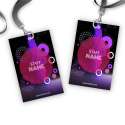



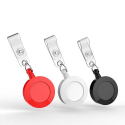



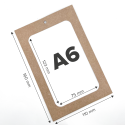


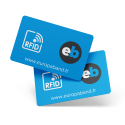
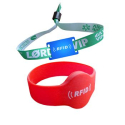
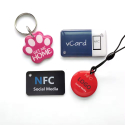
Key Requirements for Hospital & Healthcare Wristbands
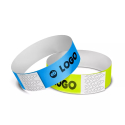
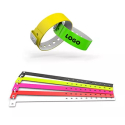
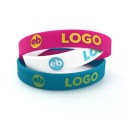
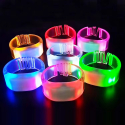
Just as clinical environments impose their own strict criteria, the wider world of wristbands suited to each setting shows how identification needs shift from one context to the next.
- Mandatory patient identity: every hospital wristband must display minimum core data for patient identification — full name, date of birth, and a unique identifier such as a medical record or NHS number — to ensure accurate matching at the point of care.
- Durable legibility: printed medical information must remain readable throughout the patient stay, with direct thermal printing preferred for resistance to water, disinfectants, and abrasion.
- Standardized colour coding: clinical alert wristbands must follow harmonized colour codes (allergy, falls risk, do-not-resuscitate, limb restriction) aligned with patient safety frameworks such as NHS guidance.
- Skin-safe materials: wristbands need hypoallergenic, BPA-free, soft materials suitable for prolonged wear and fragile skin in neonatal and geriatric patients.
- Comfort and adjustability: secure non-reusable closures and dedicated adult, child, and newborn sizes are required for a safe, comfortable fit.
- Technology compatibility: wristbands should support barcodes, QR codes, and RFID/NFC to enable digital traceability and the most precise value at scan.
- Identification error reduction: the central purpose of hospital wristbands is to reduce patient misidentification across every clinical interaction.
- Regulatory and hygiene compliance: wristbands must meet applicable regulatory standards and remain hygienic and resistant to repeated cleaning in healthcare environments.
Why Patient Identification Wristbands Matter in Healthcare
Patient identification wristbands are the first line of defence against treatment errors, ensuring the right care reaches the right person at every clinical contact. More than 2900 wristband-related mismatches were recorded among 24 382 patient identification reports between February 2006 and January 2007. Each one represents a potential medication error, a wrong procedure or a delayed diagnosis. Just as hospitals impose their own strict criteria, other environments call for wristbands suited to each setting, each with its own priorities for identification, durability and comfort.
The Cost of Patient Misidentification
When a patient cannot be reliably identified, every downstream step carries risk. A misidentification rarely stays isolated: it cascades through prescribing, sample labelling and procedure scheduling. For procurement and event teams managing healthcare supply, understanding these failure points clarifies what specific requirements wristbands must meet for hospital use.
The most common risks tied to weak patient identification include:
- Medication errors: the wrong drug or dose administered to a patient whose identity was not confirmed at the bedside.
- Mismatched blood samples sent to the laboratory, producing unreliable results.
- Wrong-patient or wrong-site procedures in surgical and orthopaedic settings.
- Duplicate records that fragment a patient's clinical history across the hospital.
From Manual Checks to Standardised Wristbands
Verbal confirmation alone leaves too much room for error, especially with sedated, confused or paediatric patients. Standardised wristbands close that gap by carrying verified identifiers that staff can check at every point of care. Compliance with wristband use has varied from 3% non-compliance in cardiac units to 29% in paediatric departments, which shows how uneven manual practice can be.
Moving to printed, standardised bands gives hospitals a consistent, scannable reference point. This is the foundation on which the specific design, material and printing requirements detailed in the following sections are built.
Core Information a Healthcare Wristband Must Display
A healthcare wristband must carry, at minimum, the data that allows staff to confirm a patient's identity without ambiguity. The core set covers full name, date of birth and a unique identifier such as a hospital number, printed in legible black text on a white band as recommended under NHS standards.
NHS guidance specifies that trusts should use only white wristbands with black text for standard patient identification. This consistency reduces transcription errors and supports reliable bedside checks across every department.
Mandatory Patient Identifiers
These fields form the backbone of safe patient identification. Each one must be accurate, current and matched against the patient record before any clinical intervention.
- Full name : surname and forename exactly as held in the medical record.
- Date of birth : a stable, lifelong identifier that distinguishes patients with similar names.
- Unique identifier : the hospital or NHS number, which provides the single most precise value for confirming identity.
- Gender : recorded where clinically relevant to care decisions.
For high-risk patients, NHS standards call for a red wristband with patient identifiers in black text on a white panel, signalling an allergy or other alert while keeping the core information readable.
Optional and Contextual Data
Beyond the mandatory set, some bands carry supplementary medical information that helps teams act faster. These details are added according to the care setting and never replace the primary identifiers.
- Ward or department name for internal logistics.
- Admission date or barcode linking to electronic records.
- Allergy or risk flags, shown alongside the red alert standard.
The exact layout and which optional fields appear are defined per facility and per band specification, established on request according to your clinical workflow.
Material and Skin-Safety Requirements
Hospital wristbands must be made from hypoallergenic materials that are safe against the skin for several days. The band cannot contain latex or phthalates, since these substances trigger reactions in sensitive patients and undermine the safety the wristband is meant to guarantee.
All our wristbands are hypoallergenic and do not contain latex or phthalates, so they remain safe for continuous wear on the wrist. This matters most for patients who keep a band on for an entire admission, where any irritation quickly becomes a clinical concern.
Hypoallergenic and BPA-Free Materials
The material specification for healthcare use rests on a short list of non-negotiable properties. Each one protects the skin while keeping the band durable enough for daily handling, hand-washing and movement around the ward.
- Latex-free : avoids allergic reactions in patients with latex sensitivity.
- Phthalate-free : removes plasticisers linked to skin and health concerns.
- BPA-free construction for prolonged contact against the wrist.
- Resistant to water, soap and routine cleaning agents used at the bedside.
Comfort for Vulnerable Patients
Comfort is a genuine requirement, not a nice-to-have, because neonates, elderly patients and people with fragile skin wear these bands continuously. A soft, smooth material reduces pressure marks and lets fragile skin breathe.
Fit plays a direct role here. We recommend leaving a space of one finger between the fastener and the wrist to prevent constriction while keeping the band secure. That small allowance accommodates swelling, suits different patient groups and keeps the identification band in place without digging into the skin.
Print Durability and Legibility Standards
A healthcare wristband must stay readable for the entire length of a patient's stay. NHS standards rest on white wristbands with black text, a contrast chosen because it preserves legibility under ward lighting and after repeated handling. The print has to survive water, hand gel and friction without fading to an unreadable state.
By 18 July 2009, NHS guidance required that all wristbands be generated and printed from the hospital system at the bedside. This shift moved facilities away from handwriting and reduced the transcription errors that fed into more than 2900 mismatch reports recorded between February 2006 and January 2007.
Thermal Printing vs Pre-Printed Labels
Thermal printing produces the patient information on demand, at the point of admission, directly from the hospital record. Pre-printed labels carry fixed data prepared in advance, which limits how current the available information stays.
For bedside generation, thermal printing is the method that matches the NHS requirement to print from the hospital system. It keeps the core identifiers accurate and aligns with the white-band, black-text format. Pre-printed labels still have a place for non-identification uses, but they cannot replace a band printed against the live record at the moment of care.
Resistance to Water, Alcohol and Friction
A band passes through hand washing, alcohol gel and constant rubbing against bedding and clothing. The print must resist all three so the legibility of name, date of birth and record number never degrades.
Exact specifications for print finish and durability are established on request, according to the band type and the clinical setting you require. This keeps the text intact across the full admission rather than for a single shift.
Colour-Coded Alert Standards for Clinical Risks
Colour coding gives clinical teams an instant visual signal of patient risk. Under NHS standards, the baseline is a white wristband with black text for routine identification, while a red wristband with patient identifiers in black text on a white panel flags an allergy or other clinical alert.
Standardised Colour Codes
The two colours recognised across NHS organisations carry distinct meanings, and each one keeps the core patient identifiers fully readable. The white band handles everyday identification; the red band escalates the message without hiding the surname, first name, date of birth and NHS number that staff still need to verify.
- White wristband, black text : the standard for routine patient identification across every department.
- Red wristband, black text on a white panel : the alert standard signalling an allergy or another clinical risk that requires extra caution.
NHS guidance limits standard identification to white wristbands with black text, and reserves the red wristband with a white panel for alerts and allergies. Keeping the palette deliberately narrow means a single glance tells a nurse, porter or pharmacist whether a patient needs additional checks before any intervention.
Reducing Confusion Across Trusts
When every trust applies the same two-colour logic, staff moving between sites read the same signal the same way. A red band means the same thing in a surgical ward as it does in an emergency department, which removes the guesswork that local colour schemes once created.
This shared approach matters most when patients are transferred or when agency staff cover unfamiliar wards. The wristband becomes a reliable, portable alert that travels with the patient, supporting safe care without relying on memory or local convention.
Technology Integration: Barcodes, QR Codes and RFID
Healthcare wristbands must integrate with the hospital's scanning systems so that patient information can be verified instantly at the point of care. The band has to carry machine-readable data that links directly to electronic records, removing the manual transcription that drives identification errors.
Barcode and QR Code Compatibility
A printed barcode or QR code turns each wristband into a scannable identity check. The label must be encoded so that ward scanners read it cleanly the first time, every time a nurse confirms a name, a medication or a sample.
By 18 July 2009 all NHS wristbands had to be generated and printed from the hospital information system rather than handwritten. This requirement made bedside printing the standard for reliable scanning and accurate data.
- Barcodes for fast bedside scanning against the patient record.
- QR codes holding richer information in a compact, printable format.
- Encoding tied to the core identifiers already on the band: surname, first name, date of birth and NHS number.
RFID and NFC for Tracking
RFID and NFC chips extend tracking beyond line-of-sight reading. A tag embedded in the band supports patient location, sample matching and workflow monitoring across a department, without the staff member having to position a printed label under a scanner.
These options suit settings where patients move frequently between units, or where high-throughput scanning would slow clinical work. The right combination of barcodes, QR codes and RFID is defined per facility, established on request to match your existing systems.
Fit, Closures and Sizing for All Patient Groups
A healthcare wristband only works when it stays on the right wrist for the full length of a stay. That means a closure designed for one-time use and a size matched to each patient group, from neonates to adults, so the band remains comfortable and readable throughout admission.
Secure, Single-Use Closures
The fastening is what keeps the identification reliable. Hospital wristbands should use a non-transferable, tamper-proof fastening that cannot be removed and reapplied to another patient. A single-use closure protects against swapped bands and supports the audit trail clinical teams rely on.
- Adhesive seal closures: press once to lock, with no way to reopen without cutting the band.
- Snap or clip fasteners: a permanent click that signals the band has been applied.
- Tamper-evident strips: visible damage if anyone tries to transfer the band.
For comfort, leave a space of one finger between the fastener and the wrist so the band accommodates swelling without constricting.
Adult, Paediatric and Neonatal Sizes
One length does not suit every patient. Adult bands fit a standard wrist, paediatric versions shorten the strap for smaller arms, and neonatal bands wrap a tiny wrist or ankle without excess material. Matching the size to the patient group keeps the band secure and the printed identifiers fully legible, which matters most in paediatric departments where non-compliance has run as high as 29%.
Hygiene, Compliance and Regulatory Considerations
Hospital wristbands must be single-use, hypoallergenic and aligned with national patient safety standards. Hospital wristbands should contain no latex or phthalates and use a non-transferable, tamper-proof fastening to protect every patient. Compliance is not optional: it shapes how each band is produced, applied and disposed of.
Single-Use and Infection Control
A wristband stays on one patient for one admission, then goes in clinical waste. Single-use design removes the hygiene risk of reusing a band between patients, and the smooth, sealed surface tolerates routine cleaning without the printed identifiers fading. Materials free from latex and phthalates lower the chance of skin reactions during long stays.
Meeting Regulatory and Safety Standards
The push for consistency followed real harm. Wristband-related mismatches appeared in more than 2900 of the 24,382 reports of patient identification incidents recorded between February 2006 and January 2007. National guidance responded with firm deadlines and clear rules that any supplier serving an NHS organisation or agency must respect.
- July 2008: all NHS organisations in England and Wales using wristbands had to follow the standardised design.
- 18 July 2009: wristbands had to be generated and printed from the hospital system rather than written by hand.
- Colour rules: white bands with black text for routine identification, red bands with black text on a white panel for alerts.
- Monitored compliance: non-use ranged from 3% in cardiac units to 29% in paediatric departments, showing where checks matter most.
Meeting these gov-backed standards keeps your wristbands defensible and your patients safer.
How to Choose a Healthcare Wristband Supplier
Choose a supplier whose wristbands meet recognised patient safety standards, carry the right identifiers, and integrate with your scanning systems. The most reliable partners prove compliance with NHS specifications and can adapt volumes and customisation to your facility without compromising legibility or skin safety.
Quality and Certification Criteria
Verify that the materials and printing match clinical requirements before you commit to an order. A supplier should confirm, in writing, that the wristbands satisfy the standards your wards already follow.
- Hypoallergenic materials that do not contain latex or phthalates, suitable for prolonged skin contact.
- Compliance with the NHS colour standard: white wristbands with black text, and red bands with identifiers in black on a white panel for alerts.
- Non-transferable, tamper-proof fastening so the band stays with the correct patient.
- Bedside-printable stock that supports barcodes and QR codes for accurate scanning.
Customisation and Volume Needs
Match the supplier's range to the patient information you need to display and the quantities your departments consume. Paediatric, surgical and cardiac units each have different sizing and ordering patterns, so flexibility matters.
- Sizes available for adults, children and neonates.
- Encoding tied to core identifiers: surname, first name, date of birth and NHS number.
- Order quantities that suit both small wards and high-throughput admissions.
- Technology options (barcode, QR, RFID) established on request to fit your systems.
Ask each supplier to demonstrate sample bands against your printers and scanners before you scale the rollout.
Frequently Asked Questions About Hospital Wristbands
Healthcare wristbands must meet strict standards for patient identification, material safety and print durability. The most common questions concern the information they display, their resistance to water and cleaning, colour coding and whether they can be reused. Here are clear answers for hospital and care procurement teams.
What information should be on a patient wristband?
A patient wristband must record core identifiers, printed as white wristbands with black text. In Wales, the first line of the patient's address is added. Some medical wristbands also carry additional details such as the medical record number and date of admission.
Are hospital wristbands waterproof?
Yes. A healthcare wristband stays on for the full length of an admission, so it must survive handwashing, showers and cleaning fluids. The print and the band itself are built to resist water and remain legible from application until discharge, with no smudging or fading.
What do the different wristband colours mean?
Colour signals clinical risk at a glance. The standard band is white with black text for general identification. An alert or allergy band uses a red wristband with patient identifiers in black text on a white panel. This consistent coding lets staff spot a risk without reading the full record.
Are healthcare wristbands hypoallergenic?
They are. All our wristbands are hypoallergenic and do not contain latex or phthalates, which protects sensitive and neonatal skin during prolonged contact. This matters for patients wearing a band continuously over several days.
Can hospital wristbands be reused?
No. Each band uses a non-transferable fastening that cannot be removed and reapplied to another patient. Single use protects the audit trail and prevents the mismatches behind more than 2,900 of the 24,382 wrong-care reports recorded between February 2006 and January 2007.