 Deutschland
 España
 France
 Italia
 United Kingdom






























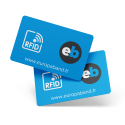

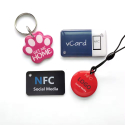
You regularly order PVC cards for your badges, loyalty programs, or membership cards, but you are questioning their environmental impact? You are not alone. Between increasing regulatory pressure (AGEC law, European Directive 2019/904) and growing customer expectations regarding responsibility, traditional PVC is becoming harder and harder to justify and makes you hesitate when choosing the selection of cards to purchase. The good news is that alternatives now exist: bio-based PLA, recycled PET, biodegradable composites... These materials offer durability equivalent to standard PVC, remain compatible with RFID or NFC cards, and allow you to align your media with your CSR commitments. In this guide, you will discover how these eco-friendly cards work, which certifications guarantee their reliability, and how to integrate them concretely into your business without compromising on quality.
Replace PVC cards without compromise with sustainable alternatives
Eco-responsible materials gaining momentum
Faced with the environmental impacts of polyvinyl chloride, several alternatives are now taking over. These materials make it possible to produce PVC cards with refined design, strong durability, and alignment with demanding CSR commitments. Are you looking for a solution that is both aesthetic and responsible for your professional cards, employee id badges, or loyalty cards? Here is what the market offers.
Reducing the role of plastic in your card solutions
Adopting these alternatives mechanically reduces your consumption of petroleum-based plastic. By switching from rigid PVC cards to controlled bio-sourced or recycled materials, you reduce your dependence on petrochemical supply chains. You also demonstrate concrete and measurable choices to clients or partners concerned with life cycle analysis.
Which material best matches your technical requirements and CSR commitments? Explore several samples, compare their durability in real-life conditions, and guide your choice according to your business sector.
Manufacturing differently to rethink the impact of PVC cards
Integrating eco-design from the design stage
From the design phase, you can completely rethink cards to reduce their environmental impact. Eco-design requires you to analyze the full life cycle of the product. You anticipate recycling options, limit material waste, and eliminate non-essential components. For example, you choose standard CR80 credit card size formats to avoid cutting waste and limit inks by favoring monochrome printing. This approach can reduce resource consumption by 10 to 20% during production, according to ADEME data.
Use of renewable energy and low-carbon manufacturing processes
In production, you shift to renewable energy sources such as solar, wind, or biomass. Card manufacturers like Plaxtil in France already produce using 100% green electricity. In addition, low-temperature thermoforming processes or low-pressure extrusion techniques can reduce CO₂ emissions by nearly 30% compared to standard PVC card processes, according to studies conducted by ClimatePartner on production lines in Central Europe.
Limiting toxic inks and laminates
Have you identified the hidden additives in a standard plastic card? Petrochemical solvent-based inks and synthetic laminates multiply health and ecotoxic impacts. You can eliminate these products by using vegetable-based inks made from linseed or soy oils. Many card printer manufacturers also use water-based varnishes instead of PVC laminates. The result: a finished product free of volatile organic compounds (VOCs) by more than 90%, validated by TÜV SÜD emission tests.
Recycling, composting, or recovery: where do eco-friendly PVC cards go?
End-of-life solutions adapted to card composition
Are you wondering what happens to eco-friendly PVC cards after use? Their end of life depends entirely on the materials used. Manufacturers now design cards compatible with several recovery streams, significantly reducing landfill disposal or uncontrolled incineration.
Recycling through appropriate channels
Cards made from recycled PET-G, PLA, or bio-based polyethylene can be integrated into existing recycling streams. For example, PET-G recycling can be carried out with type 1 plastics, provided the cards do not contain electronic components or composite layers that prevent identification by near-infrared (NIR) spectroscopy.
Centralized collection by companies
Several manufacturers and distributors have implemented take-back programs. Client companies can centralize used PVC cards and return them in a single batch to the supplier, who handles recovery. This method ensures traceability and avoids dispersion into unsorted waste.
Composting biodegradable materials
When the card includes a material such as PLA (polylactic acid) or certain biocomposites, you may consider industrial composting. These materials require temperatures above 58 °C and controlled humidity. To date, only composters certified EN 13432 accept this type of biodegradability, which conditions their recovery.
How do you organize the collection of used cards?
You can directly integrate card collection into your Corporate Social Responsibility policy. Install visible collection points on your premises, train your teams to clearly differentiate recyclable cards from non-processable ones, and regularly send the collected quantities to your provider. A simple change in routine toward centralized management produces a measurable effect on recovery rates.
To optimize your results, communicate internally about the positive impacts of these actions. Have you already quantified the percentage of cards recycled over the past year? This type of data allows you to set tangible goals for your teams.
Green cards that deliver real performance
Durability aligned with PVC card standards
Are you questioning the longevity of sustainable eco-friendly PVC card alternatives? Several specialized suppliers confirm that cards made from PLA (polylactic acid derived from plant resources), recycled PET, or biodegradable materials offer a lifespan equivalent to standard PVC cards, between 24 and 48 months under normal use. The German manufacturer AdvanIDe, for example, states that its eco-designed cards made from recycled PET-G retain their physical properties for up to 3 years, even under intensive use conditions.
Resistance to everyday wear and tear
Are you concerned that alternative materials mean fragility? Scratch resistance tests (according to ISO/IEC 24789), humidity resistance, and ultraviolet exposure tests prove otherwise. The Eco-Friendly Polylactic composite developed by TrustID withstands 10,000 bends without cracking and retains its color after 12 months of direct UV exposure. Recycled PET-G cards maintain structural integrity beyond 250 hours of water immersion, making them suitable for employee id badges exposed to constant humidity or sweat.
Proven real-world performance
In Quebec, the public transport network Exo replaced more than 300,000 subscription cards with bio-based models. After 18 months of daily use, technical audits show a failure rate equivalent to standard PVC cards (0.7%). In France, a fitness club chain opted for PLA cards printed in offset: over 12 months, customer feedback and wear rates remained below the average observed with PVC.
Have you already tested sustainable cards within your organization? What results have you observed in real-world conditions? Share your experience and compare performance with your previous PVC cards.
How to recognize a reliable eco-friendly PVC card: rely on certifications
Which labels truly guarantee environmental commitment?
You want to adopt sustainable eco-friendly PVC card alternatives, but you question the truthfulness of manufacturers’ claims? Turn to independent certifications to verify compliance with strict environmental standards. These labels help you distinguish a genuinely eco-responsible card from misleading green marketing.
What is FSC certification based on?
The FSC (Forest Stewardship Council) label certifies that the wood or paper used in a card comes from responsibly managed forests. This label is mainly found on cards made from cellulosic materials. The certification controls the entire chain, from forest to finished product, taking biodiversity, workers’ rights, and environmental impact reduction into account.
- FSC 100 % : guarantees that 100% of wood fibers come from FSC-certified forests
- FSC Mix : combines FSC-certified, recycled, and controlled materials
- FSC Recycled : materials come 100% from post-consumer or industrial recycling
You can consult the public FSC database to verify the validity of a certificate using the license number assigned to the manufacturer.
Why ISO 14001 is a reference in the industry
The ISO 14001 standard certifies that a company applies a consistent environmental management system. It does not certify a product, but rather the organization’s overall practices. A company complying with this standard monitors and reduces emissions, resource consumption, and waste throughout the production chain.
This certification is based on audits conducted by accredited bodies. It requires a documented environmental policy and measurable objectives. If you are looking for a sustainable card supplier, require proof of ISO 14001 compliance, including validity and certified scope.
How to assess the real value of a certification
Have you checked whether the presented label is among certifications officially recognized by organizations such as AFNOR, ISO, or independent international bodies? Some manufacturers use green logos without serious foundations. Do not settle for a simple green leaf pictogram printed on packaging.
- Request the full certificate from the supplier
- Verify the license number or certification code
- Consult public registries of issuing organizations
Compare this data with official standards and pay attention to details: a coherent certification must cover the entire life cycle of the card, not only the raw material.
How can you use eco-friendly PVC cards in your business?
Are you considering using more environmentally friendly cards but wondering if they will meet your specific needs? Discover in which professional contexts sustainable cards already effectively replace traditional PVC cards.
Loyalty cards and customer marketing
Retail brands, independent cafés, and local shop networks already widely use eco-friendly cards to strengthen customer loyalty. By choosing cards made from recycled paper or PLA (polylactic acid), these organizations promote an image aligned with customer expectations regarding environmental responsibility.
In France, the company Biodegraplast supplies plastic-free loyalty cards made from FSC-certified cellulose fibers, used in particular by organic retail chains and zero-waste shops.
Corporate access cards
In the professional world, more and more companies are replacing traditional identification cards with eco-friendly versions. These access cards often integrate RFID cards or NFC cards while using biodegradable materials such as recycled PET or bio-based PETG. You therefore reduce your plastic footprint, even for high-technology uses.
Concrete examples include coworking spaces, IT group headquarters, and tech incubators that have adopted these identification solutions, particularly to comply with their CSR policies.
Student or member cards
Schools, universities, and sports clubs were among the first sectors to test eco-friendly alternatives to PVC cards. Campuses such as the University of Lausanne distributed compostable student cards as early as 2021. In France, some municipalities provide youth passes or pool access cards made from PLA or water-resistant cardboard, printed without solvents.
Have you considered introducing this type of card in your community or educational institution? These choices often resonate strongly with younger users who value responsible initiatives.
Gift cards or membership cards for ethical organizations
Eco-friendly cards are also gaining ground in the nonprofit and cultural sectors. Some NGOs offer donors personalized cards made from FSC-certified wood, while festivals or committed clubs distribute passes made from 100% compostable plant-based materials. You can strengthen the consistency of your ethical commitment with a physical medium aligned with your values.
Do you run a community-supported agriculture group, an animal protection organization, or an independent art gallery? Create a membership card in recycled kraft paper, printed with vegetable-based ink, and you will enhance the positive perception of your organization.
Assert your commitment: turn PVC cards into a sustainable brand lever
How to highlight your eco-responsible positioning
You use cards daily in your commercial, loyalty, or identification activities. Why not make this tangible medium an explicit vector of your environmental commitment? Sustainable eco-friendly PVC card alternatives offer this concrete opportunity to position your company as a responsible player.
Consumers now look beyond the product to judge the brand. According to NielsenIQ’s “Sustainable Brands 2022” study, 78% of French consumers say they consider a product’s environmental impact in their purchasing decision. When you replace traditional PVC with a compostable or recycled alternative, you meet this expectation precisely.
Why your market expects this transition
“Engaged” consumption is growing at double-digit rates each year. The GreenFlex-ADEME 2023 barometer reveals that 84% of French consumers believe brands should help them consume better. By offering sustainable cards, you clearly demonstrate action.
This choice also differentiates you. You move away from standardized products to introduce a strong narrative dimension around plastic reduction. All else being equal, consumers prefer products aligned with their values. What story does your current card medium tell?
How to communicate about your sustainable cards without greenwashing
You highlight your material change through complete transparency. Mention the material used, its certifications (PEFC, ISO 14001, etc.), and its recyclability or biodegradability. Integrate this approach into your visual and digital communication materials.
- Add a visible mention on the card itself
- Plan a dedicated page on your website explaining your choice
- Tell the transformation story in your newsletters or on LinkedIn to create engaging content
This approach cannot be improvised: it integrates into your brand strategy like any marketing positioning. Your competitors likely still rely on virgin fossil PVC. Take advantage of this gap to assert a perceived lead immediately recognized by your customers.
Are you ready to transform an ordinary medium into a marker of authentic commitment?
What does the law say about eco-friendly PVC cards? Standards and obligations
Are you keeping up with legislative changes?
Since 2019, European Directive 2019/904 has specifically targeted single-use plastic products. This directive, transposed into French law through the AGEC law (Anti-Waste for a Circular Economy) of February 2020, has already led to the ban of various non-recyclable plastics. Article 7 clearly mentions a gradual restriction on placing certain products mainly composed of virgin PVC on the market. By 2030, you will need to prove that your cards meet much stricter durability and recyclability criteria than before.
Local authorities, banks, and public institutions are anticipating these bans by imposing criteria in their tenders. Are you already using materials compliant with future European standards?
Do you know the technical standards in force?
Sustainable eco-friendly PVC card alternatives must comply with several technical standards to guarantee compatibility with readers, card printers, and usage environments. ISO/IEC 7810 defines the dimensions and physical resistance of identification cards. ISO/IEC 7816 concerns smart cards, including layer thickness and reading parameters. Compliance with these standards ensures interchangeability of eco-friendly cards with existing systems.
In parallel, you must also consider environmental standards such as:
- EN 13432 : for biodegradable and compostable materials
- ISO 14001 : for environmental management of production sites
- REACH : for the registration and control of chemical substances used during manufacturing
Have you verified whether your suppliers comply with these documented requirements?
Anticipate recycling and compliance obligations
The AGEC law requires producers from 2025 onward to finance end-of-life management of their products, notably through the principle of Extended Producer Responsibility (EPR). This directly concerns plastic cards. If you market or distribute cards, you must join an approved eco-organization or set up your own collection, sorting, and recycling stream.
You can already integrate a traceability system compliant with NF ISO 14040 to document the life cycle of your cards. This approach significantly reduces the risk of non-compliance during an audit.
What measures will you implement to guarantee this compliance without burdening your logistics process?
Eco-friendly PVC cards are gaining ground worldwide
A rapidly expanding sector
The eco-friendly card market is experiencing annual growth of 17.2% between 2022 and 2028 according to a report by Data Bridge Market Research. This momentum is driven by increased regulatory pressure, consumer demands, and the integration of ESG criteria into corporate strategies. In 2023, the firm MarketsandMarkets already estimated the global market for recyclable and bio-based bank cards at USD 1.9 billion, with forecasts reaching USD 3.6 billion by 2028.
Which countries are leading the transition?
Northern European countries are widely adopting sustainable cards. Sweden, the Netherlands, and Germany impose strict criteria in public tenders. In France, several banks such as La Banque Postale or Crédit Agricole already offer cards made from PLA (polylactic acid derived from corn) or recycled PET to their customers.
On a global scale, Mastercard announced in 2023 that all its cards would be made from sustainable materials by the end of 2028. In the same vein, Visa signed agreements with specialized manufacturers such as Thales and IDEMIA to expand the use of bioplastics and recycled plastic.
Innovative technologies supporting this evolution
Manufacturers are investing in next-generation materials. PLA certified for industrial composting under EN 13432 is replacing virgin PVC in many use cases. Others are experimenting with cards made from FSC-certified wood or composites based on oyster shell powder.
On the printing side, several players are switching to solvent-free vegetable-based inks on low-energy digital presses. Processes such as UV LED printing also reduce the production of VOCs (volatile organic compounds).
- The manufacturer Allcard offers biodegradable cards printed with algae-based inks
- Tag Systems launches a first chlorine-free PVC card, certified Cradle to Cradle Silver level
- G+D (Giesecke+Devrient) develops a 100% recyclable bank card with an rPVC body and bio-based overlay
And you, how will you respond to this global shift?
Has your company evaluated the environmental impact of its current cards? Do you know what changes would be required to adopt sustainable cards? Start by questioning your suppliers. Ask them what alternatives to PVC cards they offer. Committed players will not hesitate to provide you with precise, quantified information.
We also recommend these pages:
- What are the different types of PVC cards ?
- PVC card formats and thicknesses
- PVC cards with chip, magnetic stripe, or RFID cards