 Deutschland
 España
 France
 Italia
 United Kingdom


























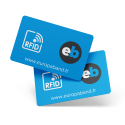

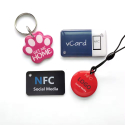

You probably handle PVC cards every day without really thinking about it: an employee id badge, an access card, a bank card, or a loyalty card. These plastic cards play a central role in identification, access control, and service management within companies, public administrations, and retail businesses.
With the rise of connectivity, data protection, and security, choosing the embedded technology in these cards is no longer a minor detail. Do you need fast remote verification, onboard data storage, or simple swipe-based reading? These answers will guide your selection toward a magnetic stripe card, a chip card, or an RFID-enabled card.
In this article, you will explore the precise differences between these three technologies, identify their relevant use cases, and understand how they impact user experience, security, and information system performance.
Learn How PVC Cards with Chip, Magnetic Stripe, or RFID Work
PVC Cards with Magnetic Stripe
You have certainly already used a bank card or a loyalty card with a black stripe. This magnetic stripe contains three tracks that store encoded data in the form of magnetic particles aligned on a plastic strip.
A magnetic reader reads or writes the information when you swipe the card through a terminal. These systems generally follow the ISO/IEC 7811 standard, which governs stripe characteristics, tracks, density, and data types.
Why continue using them despite the emergence of more advanced technologies? Here are some concrete reasons:
- Low cost : production requires few resources, making them cost-effective for large volumes.
- Wide compatibility : many point-of-sale and access systems still support them.
However, you must consider these limitations:
- Limited security level : a simple reader is enough to copy the data and reproduce it on another card.
- Low durability : scratches, heat, or intensive use quickly degrade the stripe.
PVC Cards with Chip
A chip card contains a microprocessor or memory embedded in a PVC body. This chip interacts with readers to identify the user and authorize or deny access to a service or area.
You have two distinct categories:
- Contact chip cards : the reader must physically touch the chip, often via a gold-plated metal contact. These cards follow standards such as ISO/IEC 7816 and are used for SIM cards, health cards, or payment cards.
- Contactless chip cards : they use radio frequency to communicate within a few centimeters of the reader. The ISO/IEC 14443 standard defines their communication protocol. You use them in public transportation or access badges.
This type of card ensures secure storage. You can store:
- encrypted personal data
- digital certificates
- access or usage histories
RFID Cards (Radio Frequency Identification)
RFID cards contain an antenna and an electronic chip capable of communicating with a reader via radio waves. Unlike standard contactless cards, they operate over varying distances ranging from a few centimeters to several meters depending on the frequency used.
Three frequency classes govern their use:
- Low frequency (125 kHz) : useful for simple access control
- High frequency (13.56 MHz) : the most widespread technology with standards such as ISO/IEC 14443 or 15693
- Ultra-high frequency (860 to 960 MHz) : ideal for long-range identification, such as in logistics or warehouses
Why are more and more organizations switching to RFID? This technology allows you to:
- speed up reading up to 424 kbit/s depending on the protocol
- reduce waiting times at building entrances
- improve user experience with no direct contact
But you must also consider the associated risks. A non-encrypted RFID system exposes data to interception. Hackers can use scanners to clone or eavesdrop on communications if they are not protected according to current security standards.
Do you already use an RFID or chip card in your daily life? Do you know exactly what data it contains and who can access it?
How to Protect Sensitive Data on PVC Cards with Magnetic Stripe, Chip, or RFID?
Security Levels by Embedded Technology
You must choose a technology suited to the sensitivity level of the data to be stored. Magnetic stripe cards offer the lowest level of protection. A standard reader can easily read and copy the information, leading to rapid exposure to fraud.
Chip cards, equipped with a microprocessor, provide better data encryption and enable strong authentication. They resist duplication attacks or electrical analysis. An RFID card adds a layer of physical security through contactless identification, while remaining vulnerable to remote eavesdropping if encryption is weak.
Combined cards (chip + RFID) enable multi-level systems. They unify physical and logical access with the same card. This setup prevents unauthorized access across the entire system, provided you correctly configure reader inputs and security protocols.
Cloning, Identity Theft, and Unauthorized Access: What Threats Should You Anticipate?
A poorly configured system will allow RFID cloning through simple proximity. Tools like ProxMark3 now enable any knowledgeable user to duplicate a low-frequency RFID card in under 10 seconds. You must restrict access to update interfaces and disable unused channels.
Relay attacks also affect contactless cards. An individual can intercept and relay communication between a valid card and a distant reader. You must enforce minimum latency times or use mutual authentication protocols such as FIDO2 to block these scenarios.
Identity theft, often linked to poor storage or archiving practices, directly involves the lifecycle of your cards. Remove obsolete cards from the central system immediately after deactivation to prevent any fraudulent reuse.
Encryption, Authentication, and Access Monitoring: What Should You Implement?
Implement AES-128 encryption or higher on all communications between the card and the reader. Combining this encryption with strong two-factor authentication creates a barrier against all forms of physical or remote hacking. For high-security sites, link this data to digital certificates stored directly on the card.
Precisely locate each access point. Assign usage rights to each identifier and link them to a centralized server repository. This eliminates anonymous actions and guarantees real-time traceability.
Always enable access logs. Classify critical alerts such as out-of-hours reading attempts, repeated authentication failures, or geographic movements inconsistent with the user’s registered location.
Data Collection and User Control: Why Centralize?
A smart card becomes a powerful tracking tool once you connect its use to a centralized reporting system. You will accurately visualize access times, duration of presence, job changes, and behavioral anomalies.
Associate each card with a unique user identified by their employee number, biometrics, or network ID. This way, you avoid ambiguity during audits and can instantly deactivate a compromised badge without impacting the rest of the system.
Your system must also automatically detect duplications or simultaneous use at different locations. A SIEM system coupled with a connected badge registry enables this type of proactive monitoring.
What type of card do you currently use, and what methods do you apply to secure your access? Do you have user traceability or only a door-opening system?
Why Hybrid Cards Change the Game
Why Combine Chip, Magnetic Stripe, and RFID?
You have probably already encountered a card combining multiple technologies. A hybrid card allows you to leverage the advantages of each reading method. Magnetic stripe readers are still present in many legacy systems. Chips offer better security for digital identification. RFID enables fast, seamless contactless reading at access gates or connected kiosks.
This technological choice avoids the need to issue multiple cards for different uses. A single card meets several needs simultaneously, simplifying logistics and increasing operational efficiency.
What Benefits for Large Organizations or Complex Products?
If you work in a multi-site company, a university campus, or a hospital network, you must manage highly diverse flows. A multi-technology card allows personalized and flexible usage rights. This reduces support costs, lowers the risk of human error, and speeds up onboarding of new users.
By combining interfaces, you also ensure compatibility with various existing equipment. This spares you immediate investments while preparing for migration to newer standards.
Concrete Example: The Multifunction Employee Card
Imagine an employee card that allows you to badge in at your company entrance, authenticate at your workstation, and pay for your meal at the cafeteria. Thanks to the magnetic stripe, you can still use older terminals. The chip allows you to encrypt credentials without compromising security. RFID provides smooth passage through high-traffic gates.
You thus create a seamless work environment that improves daily user experience.
How to Facilitate Migration from Legacy Systems?
Radically changing an access control or payment infrastructure can disrupt your services. By choosing hybrid cards, you introduce new features while maintaining compatibility with existing technologies. This allows you to proceed step by step, site by site or module by module.
By investing in this type of card, you preserve what you already have while opening the door to innovation.
What Are the Concrete Uses for PVC Cards with Chip, Magnetic Stripe, or RFID?
Secure Access to Facilities and IT Resources
Do you want to precisely control who enters your facilities or accesses your servers? PVC cards equipped with RFID technologies or contact chips make it possible to restrict and log access to specific areas. They work with compatible readers, often integrated into security infrastructures such as electronic locks or workstation authentication terminals.
For example, an RFID badge such as MIFARE Classic 1K used with a secure reader like the HID Omnikey 5321 allows access only to authorized employees while tracking entry and exit times in a centralized database.
Staff and Visitor Identification
How do you distinguish an employee from an external contractor or subcontractor? Customized PVC cards with photo, name, role, or logo facilitate immediate identification and reduce the risk of impersonation. You can include a chip or magnetic stripe to restrict access to sensitive services based on user profile.
In hospitals, multiprotocol badges (e.g., RFID and QR code) meet this dual-authentication requirement while maintaining a portable, flat, and durable format.
Cafeteria Management, Time Tracking, or IT Asset Management
Do you want to centralize employees’ daily operations using a single medium? A PVC card can integrate multiple useful functions, such as cashless payment in corporate catering via MIFARE DESFire EV2 technology or time tracking through clock-in and clock-out badge use.
You can also connect these cards to an asset management system to track the assignment of laptops, phones, or professional terminals to each user.
Integration into Connected Products or Services
Have you considered using RFID cards in your logistics processes or temporary services? More and more organizations integrate PVC cards into machines, production lines, or temporary tools such as single-use guest badges.
In industry, a UHF RFID badge identified by a PLC can trigger a maintenance action or signal a specific production cycle. In the event sector, a preprogrammed PVC card can serve as an access ticket, a payment method, and a geolocation tool within the venue via NFC terminals.
What Technological Changes Are Transforming PVC Cards with Chip, Magnetic Stripe, or RFID?
Are You Already Deploying RFID and NFC Cards? Prepare for Widespread Adoption
PVC cards increasingly integrate RFID (Radio Frequency Identification) and NFC (Near Field Communication) chips. These technologies enable contactless reading while ensuring near-instant response times. According to Allied Market Research, the RFID market will reach $32.3 billion by 2029, driven by access mobility, ticketing, and secure payments.
This shift to contactless reduces material wear and accelerates identification processes. In high-density environments such as universities or multi-site enterprises, you streamline entry without sacrificing security. Are you already leveraging this potential, or are you still relying on magnetic stripe systems?
Combine Biometrics with Physical Cards for Dual Validation
Companies are now integrating a second biometric factor into their PVC cards. For example, you can combine an RFID card with fingerprint authentication or facial recognition. Mastercard launched a biometric payment card as early as 2021 in collaboration with Thales and Idemia.
This strengthens physical security without compromising access fluidity. Have you identified use cases where your cards would concretely benefit from this dual authentication?
PVC Cards Are Becoming Virtual… but Not Completely
Despite the rise of mobile solutions via smartphones, PVC cards maintain their role in controlled environments or areas without stable connectivity. However, more organizations now offer a physical card paired with a mobile credential via an app. This synchronizes physical access and digital identification on a single platform.
According to an ABI Research study, about 20% of identification solutions issued by 2025 will include a digital component in addition to the PVC card. Is your company already adopting a hybrid strategy?
Connect All Your Cards to a Single Infrastructure for Efficient Management
PVC card technologies are evolving toward unified platforms where each RFID card, each magnetic badge, or each mobile credential communicates with your centralized management system. This model allows you to track entry flows, per-user usage, and security incidents in real time.
A concrete example: some universities equip student cards with an RFID identifier for access, a magnetic stripe for library services, and a QR code for cafeteria payments. Interconnecting services maximizes user experience while reducing production and support costs.
Which services could you interconnect to create a seamless and productive solution around your PVC cards?
Which PVC Cards Should You Choose to Boost Your Services and Secure Your Access?
Adapt Your Cards to Your Real Needs
What level of security does your organization require? Which areas or services do you want to authorize access to? Answer these questions before finalizing your technology choice. A PVC card with chip allows you to protect sensitive data. A magnetic stripe card remains relevant for lightweight systems. An RFID card suits high-traffic environments with no physical contact.
Think Combination, Not Compromise
Why choose between a chip and RFID when you can leverage both? Hybrid cards integrate multiple technologies into a single product. The result: you manage different access levels and service scenarios with one card. This combination adapts seamlessly to the growing complexity of multi-purpose identification systems.
Choose a Partner Rather Than Just a Supplier
Your process does not stop at printing. You must also ensure encoding, assignment, replacement, and tracking. Work with a provider who masters data security, offers scalable custom card solutions, and guarantees consistent quality across the entire chain. Ask which encryption protocols they use and how they manage card personalization.
Don’t Lose Your Edge by Ignoring Technological Developments
The ISO/IEC 14443 standard for RFID cards is changing access methods. Embedded microprocessors are becoming smaller while increasing secure storage capacity. Are you keeping up with these developments? Anticipating the needs of your ecosystem means integrating technology monitoring into your equipment strategy so you don’t block tomorrow what you deploy today.
We also recommend these pages: