 Deutschland
 España
 France
 Italia
 United Kingdom














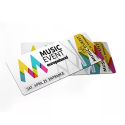

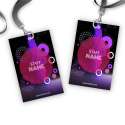

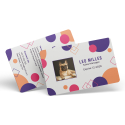







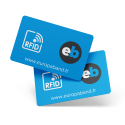
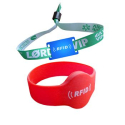
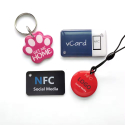

You already use PVC cards without necessarily thinking about it. Loyalty cards in cosmetic retail chains, office access badges, carefully designed gift cards, or premium business cards: they are present in almost every professional environment.
Why? Because a well-designed card does more than just identify or register a customer. It enhances your brand, instantly conveys the right information, and improves the user experience. What impression do you leave if your card bends, fades, or lacks style?
This guide shows you concretely how to choose PVC cards that match your brand image, your technical requirements, and your budget constraints. Do you want to maximize access security? Differentiate your loyalty program? Offer a gift card with exemplary aesthetics? Follow our recommendations step by step.
What are the different types of PVC cards?
Are you hesitating between several types of custom plastic card printing ? Here is how to tell them apart.
Standard cards: disarmingly effective simplicity
Are you looking for a clean, durable, and cost-effective card? Standard PVC cards feature a thickness of 760 microns, like traditional bank cards. Their ISO CR80 credit card size (85.6 x 54 mm) ensures compatibility with card printers and standard accessories (holders, badge clips). They are perfectly suited for premium business cards, thanks to their smooth surface that delivers a professional finish once printed.
Magnetic stripe cards: think loyalty and access control
Are you planning to implement a loyalty system or control entry to restricted areas? Choose a card equipped with a magnetic stripe HiCo or LoCo. LoCo encoding (Low Coercivity, 300 Oe) is suitable for low-risk applications such as loyalty cards. For more demanding uses like employee id badges or multi-use customer cards, select a HiCo magnetic stripe (High Coercivity, 2750 Oe). It better resists accidental demagnetization.
Smart cards: prioritize memory and security
How will you use your cards ? If you need to store data or secure access, smart cards are the obvious choice. You have two main options:
- Contact smart cards : they require physical insertion into a terminal. These cards typically integrate 2 to 64 KB of EEPROM memory, accessible via an ISO 7816 interface.
- Contactless cards (RFID cards) : smoother to use, they communicate via radio frequency (13.56 MHz for common technologies such as MIFARE Classic or DESFire). The user simply presents the card to a compatible reader to trigger interaction. Do you use time tracking, access cards, or transport cards? These models meet those needs flawlessly.
Visual effect cards: capture attention at a glance
Does your industry require a distinctive design ? Explore finishes such as:
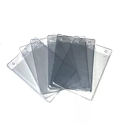
- Transparent or semi-transparent cards : they evoke modernity and are particularly appealing in luxury and technology sectors.
- Metallic cards : incorporating silver or gold effect pigments, they suggest prestige and refinement. The finish immediately draws the eye whether on display or in hand.
- Textured cards : with grained or soft-touch surfaces, they stimulate touch and reinforce the brand’s sensory experience. In a cosmetic campaign or product launch, this choice makes the difference.
So, which configuration best meets your current uses ? What expectations do your customers express when receiving a card ? Ask yourself these questions to make a choice that is both strategic and high-performing.
Custom plastic card printing: evaluate quality without making mistakes
When selecting your future PVC cards, you must consider thickness and the card format.
What thickness guarantees a robust and professional card?
Compare your current cards to a bank card. If you feel a difference, you probably need to reconsider their thickness. The professional standard is 760 microns, or 0.76 mm. This ISO standard (ISO/IEC 7810 ID-1) ensures a solid feel as well as perfect compatibility with badge readers and card printers.
Are you planning access cards, loyalty cards, or ID cards? Always stick to this 760-micron format. Thinner variants, such as 500 or 600 microns, reduce durability and rigidity.
Will your card stand the test of time?
You must expose your custom cards to multiple stress factors: repeated friction, humidity, temperature variations. A quality card retains its original shape and markings regardless of the environment in which it circulates.
PVC material already offers good resistance, but you maximize durability with protective lamination or retransfer printing. This technique fully protects the artwork against scratches and fading. Do you handle cards in the field, outdoors, or at checkout counters? Then opt for reinforced finishes with UV or scratch-resistant treatments.
Which finish best reflects your brand image?
Your card must reflect exactly what you want to convey. To achieve this, choose a finish consistent with your positioning:
- Glossy : captures light, attracts attention, enhances photographic visuals. Ideal for loyalty cards or event materials.
- Matte : reduces glare, conveys understated elegance, suggests sobriety. Sought after in premium or institutional networks.
- Satin : a subtle balance between smooth aesthetics and soft texture. Particularly credible for multi-service professional cards.
Feel different finishes, test them with your end users. What does your audience prefer? The brightness of a glossy surface or the texture of a matte finish?
Customize your PVC cards by industry: options that make the difference
Double-sided printing: every inch counts
Do you work in events, food service, or retail? In that case, you must leverage every available space on your PVC cards. Double-sided printing allows you to add additional data without overcrowding the main design. Display high-visibility elements such as name and logo on the front. Use the back to include a website, promo code, terms of use, or an integrated loyalty card. This configuration increases perceived value and optimizes card utility.
Integrated barcodes and QR codes: combine management and interaction
Do you manage a venue with a loyalty program or controlled access? Adding a barcode or QR code meets these needs. A barcode facilitates scanning at physical points of sale. A QR code instantly redirects to a landing page, mobile app, or event website. Integrate these elements without compromising aesthetics by choosing adaptable sizing and harmonious placement on either side of the card.
Holograms and spot varnish: combine security and visual identity
Do you represent an institution, administration, or service company? You greatly benefit from integrating a hologram or spot varnish. These elements enhance security features while strengthening aesthetics. A hard-to-duplicate hologram protects against counterfeiting. Spot varnish applied to a logo or signature creates a tactile and visual effect. Use these techniques to assert your identity while securing card usage.
Signature panel: choose an interactive card
Do you distribute gift cards, access cards, or personalized badges? Implement a signature panel. It allows the user to add a handwritten note, manual authorization, or visual confirmation. This solution is perfectly suited to transaction or control contexts and enhances customer engagement by adding a personal dimension to each card.
What industry are you in? And which information must appear on your cards? Answer these questions before defining your customization options.
Strengthen the security of your PVC cards based on usage
Are you hesitating between PVC cards with chip, magnetic stripe, or RFID cards ?
Here are the main differences.
Magnetic stripe and chip: identify users without ambiguity
Do you issue access cards or internal identification badges? Activate dual functionality: magnetic stripe and chip. The standard ISO 7811 magnetic stripe stores up to 79 alphanumeric characters across three tracks. It is suitable for simple controls such as parking access or shared spaces.
For advanced security, insert a contact or contactless chip. You gain access to technologies such as MIFARE Classic, used in more than 60% of RFID systems worldwide. This chip encodes encrypted data across multiple access levels, allowing you to control identity and permissions without physical card manipulation.
This choice is particularly suited to public organizations, educational institutions, multi-site companies, and security providers.
QR code: activate the digital gateway to your products or services
Do you prefer directing your customers or users to an online interface? Integrate a customized QR code. With a static QR, you redirect to a fixed URL such as a brand website or product page. A dynamic QR allows you to update information without reprinting the card, ideal for a connected loyalty card or evolving marketing campaign.
QR code models also facilitate event tracking. A single scan can register attendance, activate a guest badge, or distribute content instantly.
You thus align physical communication with your digital tools while streamlining interaction tracking.
Invisible markings and anti-counterfeiting elements: position yourself as a premium player
If you distribute premium cards or operate in a sector exposed to copying—watchmaking, luxury, administrations, banking institutions—you must eliminate any risk of falsification. UV markings, thermochromic inks, optically variable effect holograms, or hidden microtext provide reliable verification without complex equipment.
Visual or thermal inspection enables field controllers to ensure immediate authentication, limiting fraudulent reuse of benefits, products, or services linked to the physical card.
Ask yourself: if your card fell into the wrong hands, what would you risk? Then adjust security features accordingly.
How to identify a reliable and competent PVC card supplier
Evaluate the technical service criteria
Before committing, review the concrete elements the supplier offers. What print resolution levels are guaranteed? Require at least 300 dpi to ensure sharp, readable output, especially for variable data such as barcodes or photos. Also verify the range of materials used. Serious suppliers use 100% virgin PVC, standard 760 microns thick (30 mil PVC card), with no uncertain recycled plastic content.
Do you have specific needs for punching, magnetic stripes, or RFID cards? The provider should offer these custom card solutions in-house, without subcontracting. This ensures strict quality control and reduced margins of error.
Inspect customer service quality
You must be able to rely on a responsive and knowledgeable contact. Test communication from the first interaction. Ask precise questions about accepted data formats, file protection, exact production and shipping timelines. A reliable supplier answers clearly and documents responses.
Also ask whether the provider complies with GDPR for personal data management when processing named files. A supplier that encrypts transmitted data and applies a strict non-retention policy demonstrates high rigor.
Gather concrete customer feedback
Avoid suppliers that do not easily display verified reviews. Look for comments on platforms such as Trustpilot or Google Business. Prioritize those mentioning situations similar to yours: comparable production volumes, deadline constraints, technical specifics.
Also request physical samples. Feel the cards, analyze rigidity, visual rendering, and print contrast. This approach allows you to compare multiple quotes at equivalent quality. Beyond unit price, you truly assess cost-performance ratio.
Are you hesitating between several providers?
Create a comparison table, list the criteria mentioned above, and rate each supplier. Which one checks all the boxes? Which demonstrates responsiveness, provides proof of expertise, and respects file confidentiality?
What budget should you plan for custom plastic card printing?
Which elements influence the final price?
You must consider several factors to estimate the cost of a custom PVC card order. Each plays a direct role in the final price you pay.
- Quantity : ordering 500 cards costs less per unit than ordering 50. Suppliers generally apply tiered volume discounts.
- Card type : simple white PVC cards cost much less than those with RFID chips, magnetic stripes, or rewritable surfaces.
- Finishes : a card with rounded corners, matte or glossy lamination, or custom die-cutting incurs additional cost compared to a standard model.
- Embedded technologies : integrating a MIFARE chip, variable QR code, or security hologram can increase the price up to $3 per card depending on the technology chosen.
How do economies of scale impact your budget?
Once you exceed certain order thresholds (100, 500, 1,000 cards), you benefit from significant price reductions. For example:
- 100 simple PVC cards printed on one side may cost on average $0.80 per unit
- for 1,000 units, the price typically drops to around $0.30 per unit
You can therefore optimize your budget by anticipating needs over 6 or 12 months instead of placing multiple small orders at close intervals.
Which additional costs should not be overlooked?
The unit card price represents only part of the overall budget. Also plan for the following costs:
- Graphic design : if you outsource artwork creation to a designer, budget $100 to $400 depending on desired detail level
- Variable printing : adding a specific name, identifier, or unique barcode on each card increases unit cost by $0.10 to $0.50
- Shipping : shipping fees vary based on volume, total weight, and chosen delivery speed
All these elements can create a significant gap between the displayed base price and the final budget. Have you already estimated the full cycle cost, from creation to distribution?
PVC cards and sustainability: think durable without sacrificing quality
Do you want to combine professional performance and environmental responsibility?
In a context where ecological issues increasingly influence purchasing decisions, integrating sustainable solutions in the selection of your PVC cards will not compromise their effectiveness. On the contrary, it strengthens positive brand perception while reducing environmental impact.
Choose recyclable solutions and eco-friendly alternatives
Standard PVC cards historically use virgin polyvinyl chloride, a non-biodegradable plastic. To give your cards a more environmentally friendly profile, you can choose several alternatives produced using less impactful processes.
- PET-G cards: This chlorine-free modified plastic is more easily recyclable than conventional PVC and also offers better resistance to scratches and high temperatures.
- Recycled PVC cards: These models use up to 85% PVC from industrial or post-consumer waste, immediately reducing virgin plastic consumption.
- PLA cards: Derived from fermented plant materials (corn starch, beet), polylactic acid offers a biodegradable alternative, although durability is lower than classic PVC.
Request the use of solvent-free inks and certified materials
Print quality does not depend solely on plastic choice. By directing your supplier toward water-based or solvent-free inks, you limit volatile organic compound emissions. These inks now offer excellent durability and color fidelity, compatible with all professional finishes.
Also verify that materials used carry environmental certifications such as ISO 14001 or FSC (for paper-based composites). These standards ensure structured impact reduction and enhanced traceability.
Why should you require an environmentally committed provider?
You directly influence the production chain. A supplier labeled Imprim’Vert or ISO 14001 certified applies strict procedures for waste management, energy consumption optimization, and chemical process control. This requirement allows you to justify your choices to customers, partners, or employees while strengthening your sustainable positioning.
How does your supplier document material origins? Have they implemented a formal waste reduction policy? Ask these questions. Your cards will then reflect not only your visual identity but also your commitment to corporate social responsibility.
Maximize your chances of enhancing your brand image
You have identified the criteria that make custom plastic card printing a strategic lever. How will you put this choice into practice? By simultaneously mobilizing quality standards, design relevance, and budget logic.
Adopt these winning habits
- Prioritize material quality : choose a thickness between 760 and 850 microns to ensure rigidity and longevity
- Maximize customization : name, photo, RFID cards, spot varnish—each element enhances the user experience
- Apply your brand guidelines rigorously : consistent color codes across all media increase brand recognition fourfold, according to MIT Sloan Management Review
- Integrate appropriate security features : dynamic QR code, hologram, microtext, depending on required protection level
- Scale your project with a clear forecast budget : unit cost decreases with volume, but ROI is also measured in loyalty and brand perception
Measure the impact on your business objectives
Do you need a tool to turn first contact into real engagement ? According to a Bain & Company study, increasing retention by 5% generates profitability gains of 25% to 95%. In cosmetics, services, or retail, offering an elegant, multi-service PVC card creates immediate recognition and attachment. Some retailers report up to a 30% increase in repeat purchases among cardholders.
Act now
What are you waiting for to professionalize your PVC cards ? Contact us to receive samples tailored to your needs. You can also request a free online quote by specifying your options. Choosing the custom PVC card that sets you apart means gaining a competitive edge.
We also recommend these pages: