 Deutschland
 España
 France
 Italia
 United Kingdom




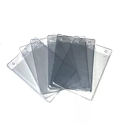




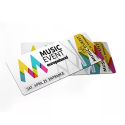

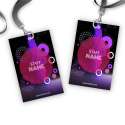

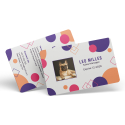





Have you ever held a loyalty card, an access badge, or a driver’s license in your hands? In almost every case, you were handling a PVC card. Polyvinyl chloride, or PVC, refers to a plastic material that is wear-resistant, durable over time, and fully customizable to meet the needs of your business or organization.
PVC cards often display personal data (last name, first name, ID photo), an expiration date, a barcode, an embedded chip, or even a brand’s distinctive visual identity. You can choose a matte, glossy, or transparent finish depending on your use case.
Why is this material used across so many industries? It ensures excellent print quality, withstands daily handling, and remains budget-friendly, even for small production runs.
Are you looking to understand which type of PVC card to choose ? Let’s dive into the different variants available.
Explore all available PVC card variants
Standard PVC cards
These cards match the CR80 credit card size, identical to bank cards. You use them for basic badges, loyalty cards, or temporary event passes. Their surface can be printed using inkjet or thermal transfer, depending on the equipment you have or the service providers you choose.
Magnetic stripe PVC cards
They feature an encodable magnetic stripe on the back. You use them for access control systems, hotels, or time-tracking devices. Data is read using a compatible reader that reads or rewrites information stored on high- or low-coercivity tracks.
Contact chip PVC cards
These cards integrate a visible chip on the surface. You use them in contexts where data security plays a central role, such as payment methods or restricted-access employee id badges. They allow encrypted data storage accessible only through compatible readers.
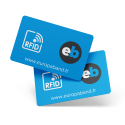
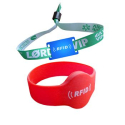
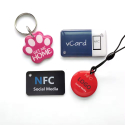
Contactless chip PVC cards (RFID or NFC cards)
You access data without inserting the card into a device. NFC cards or RFID cards are read at short range. You use them in public transportation, secure area access, and fast time-tracking systems. Providers such as HID Global or NXP supply certified components to ensure reliable data exchanges.
Rewritable PVC cards
They allow multiple print cycles on the same card. You favor them for visitor badges or temporary passes in businesses open to the public. You save costs over the long term by reusing the same card for different users.
Transparent PVC cards
You focus on a clean design with a semi-transparent, frosted, or fully transparent card. This choice enhances your visual identity and positions your card as a premium accessory. They are often used in high-end communication campaigns or private clubs.
Cards with holographic stripe
You add an extra layer of security while emphasizing a premium positioning. The hologram makes the card difficult to counterfeit. You use them in banking environments, major conferences, or VIP services. The stripe reinforces both protection and perceived value.
Biodegradable or eco-friendly cards
These cards use materials such as PLA (polylactic acid) or recycled PVC. This approach meets the expectations of brands concerned about their environmental footprint. According to data from the CDP Institute, more than 680 French companies are already committed to plastic reduction initiatives of this type.
Pre-printed cards
You receive them already printed with a standard or customized design. You save time when managing large volumes, such as in sports clubs, trade shows, or companies with high staff turnover. You also reduce the need for on-site card printers.
Matte or glossy surface cards
The finish determines the first impression you make. A matte surface delivers a subtle, professional look, while a glossy finish enhances color intensity. This choice influences both brand perception and the technical printing requirements you must follow.
How to choose the right PVC card type for your needs?
Based on the data to be integrated
Do you want to store a unique identifier, a photo, a magnetic stripe, or an RFID chip in your PVC cards? Each type of data determines the card format. For example, a magnetic stripe card stores simple information such as an access code or customer number. For encrypted or sensitive data, you should opt for chip cards with a microcontroller or secure RFID technology.
Do you need front-and-back encoding, a dynamic QR code, or a custom hologram? Clearly list your technical requirements to avoid overload or incompatibility during production.
Based on your industry
- Retail: Choose personalized loyalty cards, printed in full color with magnetic stripe encoding or barcodes. These formats work with standard POS readers and withstand frequent handling.
- Events: Use PVC badges with photo, QR code, or contactless MIFARE chip. These models enable fast access control and easy participant identification.
- Corporate or administrative environments: Select chip-based or RFID PVC cards to ensure identification, access management, and time tracking. Compatibility with existing systems remains essential.
Based on the desired level of security
Do you want to prevent identity theft, intrusion, or fraud? If so, choose a model with advanced security features: NFC chip, random visual cryptogram, ghost image, hologram, or tactile varnish. These elements deter counterfeiting and ensure card validity.
The security level also depends on the card’s life cycle. The longer the usage period, the more you need durable and tamper-proof protection technologies.
Based on the image you want to convey
- Premium: Choose PVC cards with a matte finish, spot UV, foil stamping, or embossing. These refined finishes enhance your brand and set you apart with your audience.
- Eco-friendly: Opt for recycled PVC cards or chlorine-free PET-G cards. Some printers also offer biodegradable cards made from starch or algae-based materials.
- Technology-driven: Favor smart cards with embedded chips, RFID cards, or dynamic QR codes. They show that you invest in modern, scalable custom card solutions.
Price: cost comparison by card type
Below is an estimate of average unit costs per card, excluding customization and specific quantities:
- Standard non-encoded PVC card: between €0.08 and €0.15
- Magnetic stripe card: between €0.15 and €0.30
- Contact chip card: between €0.90 and €1.40
- Contactless card with MIFARE Classic RFID chip: between €0.40 and €0.80
- High-end card with special finishes (glossy material, foil stamping, tactile varnish): up to €2.50
What is your production volume? From 500 units onward, prices drop significantly, especially for personalized cards.
Always compare offers that include on-demand printing, encoding, delivery, and durability guarantees to determine the real cost per use.
Are you looking for a simple, modern, and versatile tool to enhance your business?
PVC cards check all the boxes. Do you want to build customer loyalty, quickly identify employees, secure access, or distribute a subscription? This modular tool meets each of these goals efficiently.
Why do professionals rely on PVC cards?
- Versatility : employee id badges, loyalty cards, access cards, promotional media, or gift cards—they adapt to every business context.
- Customization : you can integrate a barcode, RFID chip, custom visuals, a signature, or named data. You maintain full control over the image you project.
- Efficiency : PVC cards resist wear, remain readable over time, and work seamlessly with compatible readers, even with frequent use.
What message does your card send to your clients and partners?
A thick, well-designed card with a professional look and clear functionality conveys seriousness from the first interaction. This physical medium reflects the level of standards and professionalism you apply across all your services. Conversely, a poorly designed generic card weakens your brand image.
What return on investment can you expect?
Each personalized PVC card acts as a discreet yet permanent communication tool. It strengthens loyalty, streamlines the customer experience, and modernizes your processes. You turn a simple medium into a value driver, at low unit costs, when printing in volume.
What value do you place on your professional image? If you are looking for a medium that matches your standards, PVC cards open up many opportunities with precision and reliability.
And you, which PVC card will you choose?
You are now familiar with the possibilities offered by different types of PVC cards: basic models, magnetic stripe cards, chip cards, direct thermal printable cards, encodable options, and many more. Each category serves specific purposes and can turn a simple card into a powerful management or communication tool.
What features are you looking for? Do you want to secure access to your facilities, streamline your loyalty program, or offer an elegant gift card? Ask the right questions and align your choices with your business goals. A well-designed card conveys far more than a message—it reflects your standards and professionalism.
Do you have a PVC card project? Request a personalized quote or explore our full catalog to find the card that fits your brand image.
We also recommend these pages: