 Deutschland
 España
 France
 Italia
 United Kingdom










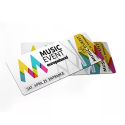

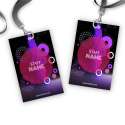

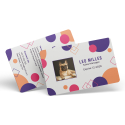






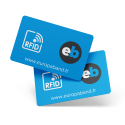
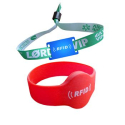
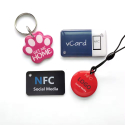

In companies, trade shows, leisure clubs, or retail chains, you probably handle PVC cards on a daily basis. You use them as access badges, loyalty cards, control passes, or identification solutions. Their durability is unquestionable, but their effectiveness depends entirely on their customization.
The technologies available today allow you to easily integrate visual and functional elements directly onto these PVC cards. Dynamic QR codes, barcodes for laser readers, high-resolution photographs, vector logos: every detail adds concrete value to your printed medium.
What would you like to integrate into your next PVC card to make it more efficient and secure? This article details the essential customization elements so you can design cards that are both practical and professional.
Boost the value of your PVC cards with these 4 must-have customizations
QR codes
The QR code (Quick Response code) encodes several types of digital data and enables instant reading via a smartphone or optical reader. It typically contains information such as a URL, an identification number, or access to a personalized service.
- Event badges: Scan to verify a participant’s registration.
- Loyalty cards: Access a customer account or points balance directly.
- Digital service cards: Instantly connect to a corporate portal or restricted tool.
Position the QR code away from the edges and avoid dark areas of the design to ensure reliable scanning. Favor a minimum size of 15 x 15 mm to remain readable with standard devices. This ensures fast, controlled, and error-free interaction with the user.
Barcode
A barcode encodes data linearly, whereas a QR code encodes it in two dimensions. You must choose a format suited to the intended use. Code 128 supports alphanumeric data, while EAN remains preferable for standardized commercial products.
- Internal tracking: Link each card to a specific user or product.
- Employee time tracking: Integrate the code into a time clock system.
- Access control: Scan at the entrance of facilities or restricted areas.
Insert the barcode discreetly on the back or at the bottom of the card. Maintain strong contrast and avoid distortion caused by graphic compression. This method ensures smooth automation while preserving a clean design.
ID photo
You add an ID photo to quickly authenticate the person. This type of visual becomes essential on identification solutions, employee id badges, or secure passes.
Adopt a neutral background and even lighting. Framing the face frontally at a minimum resolution of 300 dpi ensures sufficient clarity for printing. Use tools such as Adobe Lightroom or IDPhotoStudio to standardize shots and adjust proportions without altering card formats.
By integrating a sharp photo, you enhance visual security and drastically reduce the risks of impersonation or access control breaches.
Company logo
You apply the logo to reinforce visual identity and professionalize the presentation. On a PVC card, it represents the primary visual anchor of a company or brand.
Place the logo in the top-left corner or centered on the front. Respect the color codes defined in your brand guidelines to maintain consistency across all physical media. Optimize the resolution to 300 dpi to avoid blur or pixelation during printing.
By integrating the logo into a clear, well-structured visual, you strengthen your brand image and ensure immediate recognition in everyday use.
How to turn a PVC card into a custom card solution based on usage
Loyalty cards customized with QR code and logo
Do you want to strengthen customer relationships and accurately track purchasing behavior? Integrate a unique QR code linked to the customer account directly on the loyalty cards. Each checkout records accumulated benefits by scanning in seconds. You can link this code to a CRM to analyze individual purchasing habits. Add your logo in full color to ensure immediate brand recognition. This printed visual also serves as a promotional medium circulating among the public.
Event badge with photo, QR code, and color coding
Are you organizing a trade show or seminar? Use PVC event badges to control access and differentiate guest profiles. Integrate a participant ID photo to prevent fraud or badge sharing. Add a QR code that redirects to a personalized profile or generates real-time entry tracking via a compatible mobile application. You distinguish participant types, exhibitors, or speakers using coded color bands. Each badge becomes a fast and precise identification tool while reinforcing logistical organization.
Professional identification card with photo, barcode, and magnetic stripe
To ensure effective access control in the workplace, equip your employees with identification solutions that include multiple synchronized elements. Choose a high-resolution photo printed direct-to-card for clear visual identification. Integrate a barcode compatible with your time tracking system. Incorporate a magnetic stripe encoded with access rights specific to each employee. This combination provides dual security: instant visual recognition and reader-based verification. You thus create an employee id badge that centralizes identification, physical control, and time management.
Do you already use some of these elements on your PVC cards? What benefits do you observe on a daily basis?
Data encoding: strengthen access and security with precision
How to add a magnetic stripe or RFID card technology to your PVC cards
Do you want to control who enters where and when? Integrate a magnetic stripe or a RFID cards into your PVC cards. The magnetic stripe allows data to be recorded on three tracks defined by the ISO/IEC 7811 standard. You can store user identifiers or temporary access codes there.
The RFID chip operates via radio frequency. It stores data in EEPROM memory, accessible only through encrypted communication. You optimize security with every use. Choose between low-frequency chips (125 kHz) for simple identification, or high-frequency (13.56 MHz) for complex access systems compatible with NFC cards.
Why sensitive environments rely on these systems
In universities, secure badges limit entry to computer labs or dormitories. In companies, you manage employee schedules through RFID reading connected to the HR system. At events, you control VIP areas through simple card detection, without lines or manual checks. Have you ever estimated how much time you could save on access control at your next trade show?
Follow these best practices for durable encoding
- Choose compatible standards : ISO/IEC 14443 for contactless RFID, ISO/IEC 7811 for magnetic stripe. This ensures interoperability with existing readers.
- Secure encoded data management : encrypting information during chip enrollment protects against unauthorized duplication.
- Implement expiration rules : a controlled lifespan limits risk in case of card loss or theft.
How visual customization influences secure access
Add a photo or a unique QR code to link visual identity to the digital identifier. This dual authentication reduces any attempt at impersonation. The logo of your organization, strategically positioned, prevents unauthorized reproduction. Your system thus combines form and function. You can even integrate a barcode for logistics flows or temporary access zones. What visual combination do you think you will adopt to leave no gaps?
Ready to design a PVC card that reflects your image?
You have discovered how the choice of customization elements for PVC cards transforms a simple plastic medium into a high-performance tool. Whether you want to integrate a QR code leading to a form, a photo to authenticate an employee, a logo to strengthen brand recognition, or a barcode to track checkout scans or access to a protected site, each element adds targeted functionality.
How do you want to combine visual identity, security features, and operational functionality? A background in your brand colors, custom typography, a glossy or matte finish, elements readable by all types of scanners: you can fine-tune your card for every intended use.
Do you have a custom PVC card project? Discover our custom plastic card printing solutions, tailored to your image and objectives. We support you in choosing technical specifications, formats, and personalization options that will give your professional medium the expected impact.
We also recommend these pages: