 Deutschland
 España
 France
 Italia
 United Kingdom

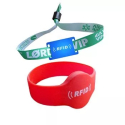
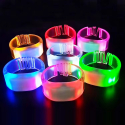














The essentials of LED wristbands at concerts and nighttime events
Deciding between electronic wearables and simpler bands often starts with choosing the right wristband material for the type of crowd and venue you are planning for.
- Core technology: LED wristbands use programmable RGB LEDs paired with a radiofrequency (RF) receiver, allowing a central operator to trigger colour changes remotely. Advanced setups integrate DMX control to sync wristbands with stage lighting and music cues.
- Synchronisation scale: A single RF transmitter can drive 5,000+ wristbands simultaneously, turning an entire audience into one coordinated field of synchronised light during concerts and nighttime events.
- Audience effect: Each wristband converts passive spectators into active participants, reinforcing crowd immersion through collective, rhythm-driven lighting that pulses in time with the show.
- Relevant event types: LED wristbands are deployed at concerts, festivals, nighttime events, sporting events and sponsor activations where coordinated visual impact across a large crowd is needed.
- Marketing value: Worn on every attendee, wristbands act as mobile billboards, supporting custom branding, measurable sponsor ROI and brand visibility throughout the event.
- Safety and compliance: Wristbands intended for large public events are produced to recognised standards such as CE and RoHS for electronic safety and material compliance.
- What event managers will learn: This page explains how LED wristbands enhance the atmosphere of concerts and nighttime events, covering the technical setup, the role of the lighting designer and how to plan a synchronised light experience.
What LED Wristbands Are and How They Differ From Standard Wristbands
LED wristbands are programmable, light-emitting wearables that glow and change colour on cue, turning every attendee into a pixel of a giant light display. Unlike a paper or rubber band that simply grants access, they actively respond to the show, which is exactly how LED wristbands enhance the atmosphere of concerts and nighttime events. Deciding between electronic wearables and simpler bands often starts with choosing the right wristband material for the type of crowd and venue you are planning for.
From Tyvek and silicone wristbands to programmable LED wearables
A standard wristband serves one purpose: identification or access control. An LED version adds a layer of synchronised lighting that a designer can drive across an entire crowd. The contrast is clear once you compare the formats:
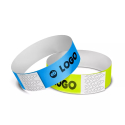
- Tyvek wristbands: single-use paper material, ideal for day passes and quick entry, no electronics.
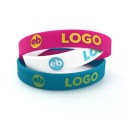
- Silicone wristbands: reusable and durable, often branded, but visually static.
- LED wristbands: a wearable with embedded electronics that emit colour on command and react in real time to the performance.
So a Tyvek or silicone band controls the gate; the LED band shapes the experience inside.
Core components: RGB LEDs, RF receiver and control logic
The technology behind these devices is compact but capable. An LED wristband combines RGB LEDs, a radio receiver and control logic to display any colour on command.
- RGB LEDs: mix red, green and blue to produce the full colour spectrum.
- RF receiver: operates on the 433 MHz or 868 MHz bands to receive cues reliably across large venues.
- Control logic: interprets each signal and triggers the matching colour or pattern.
Lightweight builds under 30 grams keep them comfortable for hours of wear.
How LED Wristbands Transform the Atmosphere of Live Crowds
LED wristbands transform the atmosphere of concerts and nighttime events by converting an audience into a single, coordinated light source. When thousands of devices pulse in time with the music, the venue becomes part of the show, and every attendee shifts from spectator to participant in a shared, immersive experience.
Why synchronised light energises a crowd
A lighting designer no longer works with the stage alone: the crowd itself becomes a programmable canvas. Synchronised light turns a passive audience into an active part of the performance, amplifying the emotional impact of every song. Colours sweep across the seating bowl, ripple toward the stage, or freeze on a single beat, giving the room a physical sense of rhythm that conventional lighting rigs cannot reach.
This collective effect is precisely what draws people in. With 73% of attendees willing to travel for experiences that genuinely interest them, the visual spectacle created by tens of thousands of coordinated wristbands becomes a real reason to attend rather than watch from home.
The psychological impact of shared light experiences
Shared light experiences tap into a sense of belonging. When everyone holds the same glow, individual differences fade and the crowd feels like one body moving together. For an event manager, that emotional cohesion is the difference between a good night and one people talk about for years.
The measurable effects on your audience include:
- Heightened immersion: attendees feel surrounded by the show rather than separated from it.
- Stronger emotional peaks: light cues reinforce key moments, building tension and release alongside the music.
- A sense of unity: a synchronised wristband display dissolves the gap between front rows and back rows.
- Lasting memories: the visual signature of the concert becomes the image people share afterwards.
- Deeper engagement: wearing the device keeps each guest physically connected to the experience from start to finish.
The Technology That Powers Synchronised Light Shows
Synchronised light shows rely on a control signal sent from the lighting desk to every wristband worn in the crowd. A central console transmits cues over radio frequency, telling each device which colour to display and when, so tens of thousands of units react as a single coordinated system rather than individual lights.
How DMX and wireless control coordinate thousands of wristbands
DMX: the standard lighting protocol that carries colour and timing instructions from a console to the devices on stage and across the audience. For large deployments, DMX remotes enable synchronised control of LED wristbands across crowds of 5,000 or more attendees, linking the wearables to the same system that drives the stage rig.
The wireless layer keeps the signal stable over long distances. Radio frequency systems operating on the 433 MHz or 868 MHz bands ensure reliable transmission across a packed venue, while some advanced implementations use Bluetooth Low Energy for added functionality. The Wristband Co. even provides DMX remotes free of charge with orders of 5,000 or more bands.
The coordination process follows a clear sequence:
- The lighting console generates DMX cues mapped to the music and show timeline.
- A transmitter broadcasts those cues over the 433 MHz or 868 MHz radio band.
- Each wristband's microcontroller receives the signal and decodes the instruction.
- The onboard LED switches to the assigned colour at the exact programmed moment.
- Thousands of devices change together, painting the crowd as one surface.
The role of the lighting designer in programming light cues
The lighting designer treats the audience as an extension of the rig. Each colour change, fade and blackout is written into the show file alongside the stage lighting, so the crowd reacts on cue. This planning lets you align peaks in the set with bursts of colour, giving your event a visual language that conventional lighting alone cannot deliver.
Where LED Wristbands Make the Biggest Impact
LED wristbands have the greatest impact wherever a large crowd gathers after dark and emotion runs high: concerts, festivals, nighttime events, stadium sport and brand activations. The denser the crowd and the darker the venue, the more powerful a synchronised LED wristband display becomes.
Concerts, festivals and nighttime events
Concerts remain the natural home of LED wristbands. Coldplay popularised them with their Xylobands, distributing tens of thousands of DMX-controlled wristbands per show and turning every arena into a sea of coordinated colour. Artists including Taylor Swift, Beyoncé and Ed Sheeran have since used them across global tours.
Festivals push the concept further. Tomorrowland and Coachella have integrated interactive light experiences that span entire crowds, letting the production team paint colour across fields of attendees rather than a single stage. For nighttime events where darkness amplifies every flash, the wristband becomes the main source of spectacle and a strong driver of engagement. Devices are typically designed for crowds of 5,000 or more people, the scale at which DMX control truly shines.
Sporting events and brand activations
Stadiums and large sporting events use LED wristbands to unite tens of thousands of fans, colour-code rival sections or trigger a coordinated reveal at a key moment. The effect carries on broadcast, extending the visual impact well beyond the venue.
Brand activations and corporate events lean on the same principle for a different goal: visibility. A synchronised glow ties an audience to a sponsor message and keeps guests physically connected to the experience. From product launches to gala dinners, branded LED wearables turn passive guests into a living, lit-up part of the show.
Each context carries its own constraints around crowd size, control system and timing. The specifics for your event are best confirmed with an adviser, who can scope the right setup for your venue and audience.
Boosting Sponsor Visibility and Engagement With Branded LED Wearables
Branded LED wristbands turn every attendee into a walking advertisement that glows in sync with the show. For an event manager, this means sponsor logos remain visible throughout the night, generating thousands of brand impressions while the crowd actively enjoys the experience rather than tuning out a static banner.
Branded wristbands as moving billboards in the crowd
A printed logo on a wearable that lights up across a darkened venue earns attention that a stage-side board never will. Each branded LED wristband becomes a moving billboard that travels with the attendee from the gates to the dance floor and back home. Because the device is worn for the full event, sponsor exposure extends well beyond the performance itself.
The benefits this delivers for your sponsorship partners:
- Continuous brand exposure: a custom logo stays in view through every song and crowd shot.
- Premium association: the sponsor is tied to the most memorable visual moments of the night.
- Take-home value: attendees keep the wristband, extending reach after the event closes.
- Social amplification: photos and videos of the synchronised display circulate online with the branding intact.
Measuring sponsor ROI and audience engagement data
Quantifying return matters when you pitch a sponsorship package. Branded wearables let you count distributed units, photo coverage and the duration logos appear on screens and broadcasts. Tie these figures to a global LED wristbands market expected to reach $632.6 million by 2031, and the commercial case becomes easy to defend.
Pairing engagement metrics with custom branding gives sponsors clear evidence of value: visible impressions, sustained wear time and crowd participation that a traditional ad placement cannot match. That data is what secures repeat sponsorship for your next event.
Customising LED Wristbands for Your Event and Brand
Customising LED wristbands means matching the device to your event identity through colour palettes, printed designs, NFC chips and reusable materials. Working alongside your lighting designer, you can adapt each wristband to your venue, your audience segments and your brand guidelines before a single unit ships.
Colour, design and NFC personalisation options
The visual side of a custom wristband starts with how it looks under stage lighting and how it functions once worn. NFC-enabled LED wristbands let you merge ticketing, access control and cashless payments into a single wearable. That convergence reduces queues at the gates while keeping your branding on the wrist all night.
The personalisation options you can specify:
- Colour selection: choose lighting tones that align with your brand or each performance segment.
- Printed design: add logos, event names or sponsor artwork onto the strap.
- NFC integration: link the wristband to tickets, entry zones and on-site purchases.
- VIP segmentation: assign distinct colours or designs to separate general admission from premium tiers.
- Matching accessories: coordinate the wristbands with branded lanyards for staff and crew.
Eco-friendly and reusable wristband choices
Sustainability now sits high on the agenda for many event managers, and LED wristbands answer that demand. Reusable models can be collected at exit points, recharged and redeployed across multiple shows, cutting waste compared with single-use bands.
Eco-friendly options give you a genuine talking point with attendees and sponsors who value responsible production. Pairing recoverable wristbands with digital tickets reduces printed materials further, so your event communicates its environmental commitment while keeping the immersive lighting experience intact across every night of the run.
Event Logistics, Safety and Compliance for LED Wristbands
Deploying LED wristbands across a large event comes down to three operational stages: distribution at entry, activation during the show and collection afterwards. Combined with verified safety standards like CE and RoHS, this workflow keeps the crowd experience smooth while protecting both attendees and your organisation.
Distribution, activation and collection workflow
A structured rollout prevents bottlenecks at the gates and ensures every device fires on cue. For deployments of 5,000 or more attendees, DMX remotes give your lighting designer full control over synchronised effects.
- Distribution: hand out wristbands at entry points alongside ticket scanning, briefing staff to fit them securely on each guest.
- Pre-event testing: verify signal coverage across the venue using the radio frequency bands of 433 MHz or 868 MHz before doors open.
- Activation: trigger the wristbands from the control desk so the crowd lights up in time with the performance.
- Collection or take-home: either gather reusable units at exits for recharging, or let guests keep branded wristbands to extend reach.
Safety standards and compliance considerations
Before any large-scale order, confirm the wristbands meet recognised European and international standards. CE and RoHS certifications confirm that LED wristbands are safe for skin contact and free from restricted hazardous substances.
- CE marking: certifies the wristband conforms to EU health and safety requirements for electronic wearables.
- RoHS compliance: restricts hazardous materials in the electronics, protecting both attendees and the environment.
- IP65 rating: ensures devices withstand rain and physical demands during outdoor events.
- Lightweight comfort: designs under 30 grams keep guests comfortable through extended wear.
Request documentation from your supplier for every batch. Verified compliance protects your event from liability and reassures sponsors that the wearables distributed under their branding meet professional safety expectations.
Global Events That Proved the Power of LED Wristbands
Some of the biggest names in live music have already proven what LED wristbands bring to large crowds. From stadium tours to international festivals, these wearables have turned passive audiences into active participants in synchronised light shows that span entire venues.
Stadium tours that pioneered synchronised wristbands
Coldplay pioneered widespread adoption, distributing tens of thousands of DMX-controlled LED wristbands per show. Their Xylobands became synonymous with immersive concert experiences and set the template every event manager now references.
Other headline acts followed quickly. The artists who have built LED wristbands into their global tours include:
- Taylor Swift, Beyoncé and Ed Sheeran: integrated synchronised wristbands across stadium dates worldwide.
- Coldplay: the originator of the Xyloband format that defined the category.
These examples give you reassurance that the technology scales reliably, even for events drawing 5,000+ attendees.
Measurable gains in engagement and social reach
The appeal goes beyond spectacle. Surveys show 73% of attendees are willing to travel for experiences that genuinely interest them, and synchronised lighting is one of the elements that makes a show worth the journey.
That pull translates into commercial momentum across the sector. The global LED wristbands market is expected to reach $632.6 million by 2031, a figure driven by the demand for shareable, photogenic moments. When a crowd lights up in unison, the resulting footage spreads across social feeds long after the final song, extending your event's reach well beyond the venue walls.
Where LED Wristband Technology Is Heading in 2026 and Beyond
LED wristband technology is moving toward higher-resolution effects, AI-driven choreography and richer interactivity. The Global LED Wristbands Market is expected to reach $632.6 million by 2031, reflecting strong demand for immersive light shows. For event managers, that trajectory means more precise control over how a crowd lights up.
Micro-pixel displays and higher-resolution effects
The next wave of wristband design replaces single-colour LEDs with denser pixel arrays, letting each band display gradients and patterns rather than one flat tone. Paired with Bluetooth Low Energy alongside existing 433 MHz or 868 MHz radio systems, these devices give your lighting designer finer segmentation across the audience.
What higher-resolution hardware unlocks:
- Gradient transitions that ripple across the crowd instead of switching colours abruptly.
- Zone-by-zone effects matched to seating tiers or stage proximity.
- Animated text and shapes spelled out across thousands of wristbands.
- Tighter sync between the music and the light, frame by frame.
How AI will redefine crowd light effects
Artificial intelligence is set to read live inputs and adapt the show in real time. Rather than running a fixed sequence, systems could respond to tempo, crowd movement or applause, then push new lighting cues to every wristband instantly.
This shifts the role of the lighting designer toward shaping the rules of an adaptive experience. The result is a more responsive crowd, where the future of nighttime events feels co-created between performer, technology and the people wearing the light.
Frequently Asked Questions About LED Wristbands for Events
LED wristbands enhance live atmospheres by turning every guest into part of a coordinated light display. Below are the questions event managers ask most often before deploying these wearables at concerts and nighttime events.
Are LED wristbands only for concerts?
No. While concerts popularised them, LED wristbands work across many event formats. They also suit corporate galas, product launches, sporting events and nighttime brand activations where you want the crowd to feel unified.
How are LED wristbands controlled and synchronised?
Your lighting designer triggers them from a control desk. Radio frequency systems operating on the 433 MHz or 868 MHz bands ensure reliable signal coverage across the venue. Some advanced implementations let effects sync precisely with the performance.
Are LED wristbands eco-friendly and reusable?
Reusable units can be collected at exits, recharged and redeployed across multiple events, reducing waste, while helping confirm the electronics are safe for repeated skin contact.
Do LED wristbands improve sponsor visibility?
Yes. Branded wristbands keep a sponsor logo glowing across thousands of wrists throughout the event, generating photo and video moments shared widely online. 73% of attendees say they are willing to travel for experiences that interest them, making immersive branded moments a strong engagement driver.
What is the minimum crowd size for synchronised effects?
Synchronised DMX-controlled effects are designed for crowds of 5,000 or more attendees. The Wristband Co. provides DMX remotes free of charge with orders of 5,000 or more bands, giving your team full command over large-scale light shows.