 Deutschland
 España
 France
 Italia
 United Kingdom

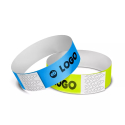

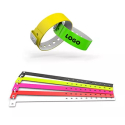
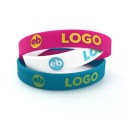


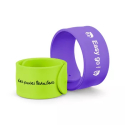











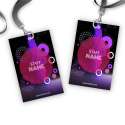



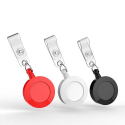



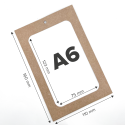


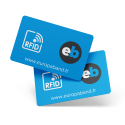

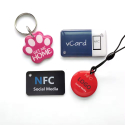
The Essentials of RFID Wristbands vs Traditional Event Wristbands
Before settling on a band type, it helps to compare which wristband material fits your event, since durability and comfort shape how well any RFID or traditional band performs on the ground.
- RFID wristband definition : A wearable band embedding a microchip and an antenna that communicate wirelessly with readers, transmitting a unique identifier without physical contact.
- Scan speed advantage : RFID wristbands grant entry through taps completed in under 2 seconds, compared to the manual visual checks required for traditional event wristbands.
- Cashless payments : The embedded chip enables tap-to-pay transactions at bars, food stands, and merchandise points, removing cash and card handling for attendees.
- Security and anti-counterfeiting : Each chip carries a unique, encrypted identifier that is difficult to clone, whereas paper or fabric traditional event wristbands can be copied or transferred.
- Real-time data collection : Every tap records attendee flows, movement behaviors, and sales figures, giving event organizers measurable data unavailable with standard wristbands.
- Reusability and durability : RFID wristbands are built for repeated use across multiple events, contrasting with the single-use nature of conventional paper or tissue bands.
- Intended audience : The advantages target event organizers managing festivals, trade shows, and corporate events who need faster access, payments, and analytics across their events.
What Are RFID Wristbands and How Do They Differ From Traditional Bands?
RFID wristbands are event bands embedded with a tiny chip and antenna that store a unique digital ID, enabling contactless scanning for entry, payments and access control. Traditional event wristbands carry no electronics: they are simple fabric, vinyl or paper bands verified by sight alone. The difference is data versus a visual marker. The choice ultimately comes down to how each band will be worn and reused, and comparing which wristband material fits your event helps clarify where RFID earns its place against simpler alternatives.
This distinction sits at the heart of the question many organizers ask: RFID wristbands turn a passive accessory into a connected data point, while traditional bands remain a one-way visual credential. That shift explains why the global RFID market reached 17 billion dollars in 2025.
How Does an RFID Wristband Work?
Each band houses a chip linked to a thin antenna coiled inside the strap. When an attendee taps the wristband against a reader, the antenna powers the chip and transmits its stored ID. The reader matches that ID to your event database to confirm the ticket, open a gate or process a cashless purchase. A single tap clears in about a second, which is why throughput climbs sharply at busy gates.
What Are Traditional Event Wristbands?
Traditional event wristbands are non-electronic bands used to signal access rights. Staff confirm them by checking color, print or a tamper-evident seal. They are inexpensive and instantly readable by the human eye, but they hold no information and cannot be scanned, tracked or recharged. Once issued, a traditional band tells you only that someone is wearing it.
Passive vs Active RFID Bands
Not every RFID wristband uses the same technology. The two families serve different event scenarios:
- Passive RFID bands: no internal battery, powered by the reader's signal at close range. Most common for festival entry, cashless payments and access zones.
- Active RFID bands: battery-powered with a longer read range, used for real-time location tracking across large sites.
- Hybrid setups: combine RFID with NFC so attendees can also tap a smartphone.
RFID vs Traditional Wristbands: A Side-by-Side Comparison
RFID wristbands outperform traditional event wristbands on speed, security and data, while traditional bands keep an edge on simplicity and upfront cost. RFID-enabled events reduced average entry times by 40% compared with traditional methods. The table below summarises where the gap between the two technologies is widest.
| Criterion | RFID wristbands | Traditional event wristbands |
|---|---|---|
| Access speed | Tap clears in about a second; 40% faster entry | Manual visual check, slower |
| Throughput | 2,500 attendees per hour (Tomorrowland), a 150% increase | 1,000 attendees per hour |
| Cashless payment | Closed-loop transactions clear in under two seconds, even offline | None |
| Spending uplift | +20% per attendee (Eventbrite); +25% at Coachella | - |
| Security and fraud | 95% drop in ticket fraud (RFID Journal) | Easy to counterfeit or transfer |
| Operational data | 78% of organisers improved efficiency using RFID data (Cvent) | No data capture |
| Reusability | Reprogrammable across events | Single-use |
| Upfront cost | Higher initial investment | Lower per-unit cost |
The pattern is consistent: traditional event wristbands win on simplicity and low upfront cost, but RFID wristbands deliver measurable advantages once your event needs faster access, payment data and tighter security. The following sections explain why organisers are making the switch.
Why Are Event Organizers Switching to RFID Wristband Systems?
Event organizers are switching to RFID wristband systems because attendees now expect faster entry, cashless spending, and tighter security. The market reflects this shift: the global RFID market reached 17 billion dollars in 2025, driven largely by festivals, trade shows, and live events.
The pressure comes from attendee behavior. Long queues at gates and cash-only bars feel outdated, and organizers managing large festivals know that every minute of delay multiplies frustration across thousands of people. RFID wristbands let you move crowds and process payments at a speed that traditional bands simply cannot match.
How Much Faster Is RFID Entry Than Manual Checks?
A single tap replaces the visual inspection that slows down manual entry. An Intellitix study found RFID-enabled events reduced average entry times by 40%. Tomorrowland reported processing 2,500 attendees per hour at its main gates with RFID, compared to 1,000 using traditional methods, a 150% increase in throughput. For a responsable événementiel handling peak arrivals, that difference decides whether your opening hour is smooth or chaotic.
Why Do Attendees Expect Cashless Options?
Cash is fading fast. Cash dropped to 14 percent of US consumer payments by number in 2024, down from 16 percent the year before. Attendees arrive expecting to tap and pay, exactly as they do everywhere else. RFID closed-loop systems process transactions offline in under two seconds, and a wristband tap clears in about a second.
The financial logic is just as clear. Eventbrite reports that cashless payment systems increase per-attendee spending by 20% and cut transaction times by 30%. Coachella, an early RFID adopter, saw a 25% rise in per capita spending.
The core reasons organizers make the move:
- Faster gates: 40% shorter entry times and far higher throughput.
- Higher revenue: 20% to 25% more spending through cashless taps.
- Better data: real-time insight into how attendees move and buy.
- Stronger security: encrypted chips that resist counterfeiting.
8 Key Advantages of RFID Wristbands Over Traditional Event Bands
RFID wristbands beat traditional event bands on eight fronts: faster access, cashless payments, stronger fraud protection, live data, personalization, social sharing, lower operating costs and reusability. Each benefit translates into measurable gains for organizers, from quicker gates to higher per-attendee spending.
Efficient Access Control
A single tap replaces the manual visual check that slows traditional wristband lines. The throughput difference is dramatic at scale.
- An Intellitix study found RFID-enabled events reduced average entry times by 40%.
- Tomorrowland reported processing 2,500 attendees per hour at main gates, compared to 1,000 with traditional methods, a 150% increase in throughput.
- Shorter queues mean fewer staff at entry points and a smoother first impression for your festivals and corporate events.
Cashless Transactions
The embedded chip turns the band into a payment device. Closed-loop systems process payments offline in under two seconds, and a wristband tap clears in about a second.
- Eventbrite data shows cashless payment systems increase per-attendee spending by 20% and cut transaction times by 30%.
- Coachella, a pioneer in RFID adoption, saw a 25% increase in per capita spending after switching to wristband payments.
- With cash down to 14 percent of US consumer payments by number in 2024, from 16 percent a year earlier, attendees already expect tap-to-pay everywhere.
Enhanced Security and Fraud Prevention
Each chip carries a unique encrypted identifier that resists cloning, unlike paper or fabric bands that can be copied or passed along.
- RFID Journal notes a 95% drop in ticket fraud at events using RFID wristbands.
- Lollapalooza cut fraudulent entries from an estimated 8% of tickets to under 0.5%.
- Lollapalooza credited the technology with saving $50,000 in potential losses at a single event.
Real-Time Data and Insights
Every tap records attendee flows, movement patterns and sales, giving you a live operational picture no traditional band can offer.
- Cvent found that 78% of organizers using RFID data improved operational efficiency.
- At Electric Daisy Carnival, RFID data revealed congestion at food stalls during peak evening hours.
- EDC organizers shifted staff to those areas, reducing wait times by 25% and boosting vendor sales.
Personalized Attendee Experiences
Linking a chip to an attendee profile lets you tailor messages, recommendations and access in ways a static wristband never could.
- Forbes reports that personalized experiences can lift satisfaction rates by 35%.
- Events using personalized push notifications via RFID saw 40% higher engagement.
- VIP zones, schedule reminders and tailored offers reach the right attendees in the right areas without extra check-in staff.
Social Media Integration
RFID bands can connect to social accounts at activation points, letting attendees post, check in or unlock content with a tap.
- According to Social Media Today, events with social media integration saw a 25% spike in online mentions.
- Every tap-to-share moment turns attendees into promoters, extending your festival reach beyond the venue.
- The same media touchpoints feed back into your data, linking online buzz to on-site behavior.
Reduced Operational Costs
Fewer manual checks, less cash handling and smarter staffing add up across the event lifecycle.
- Frost & Sullivan estimates that RFID adoption reduces event operational costs by 15%.
- RFID can cut staffing costs at large-scale events by reducing manual checks and cash handling.
- The wider RFID market sat around 17 billion dollars in 2025, a scale that keeps hardware and reader pricing competitive for organizers.
Sustainability and Reusability
Reusability: unlike single-use paper or Tyvek bands, RFID wristbands are built to be collected, wiped and redeployed across multiple events.
- Reusing bands cuts the printing and disposal waste tied to one-off traditional wristbands.
- Durable silicone or fabric carriers survive rain, wear and repeated taps without failing.
- A reusable inventory spreads the per-event cost of the chip across several occasions, which strengthens the cost case alongside the savings above.
Taken together, these eight advantages explain why faster gates, higher spending and cleaner data have made RFID the default choice for organizers running large-scale festivals and recurring corporate events.
Do RFID Wristbands Pay for Themselves? A Cost Perspective
Yes, RFID wristbands typically recover their higher unit cost through fraud reduction, increased on-site spending, and leaner staffing. Cashless taps push attendees to spend more per visit, and the data they generate helps organizers run leaner operations.
Where Do the Savings Come From?
The return comes from three directions: less fraud, more revenue per attendee, and tighter operations. On the fraud side, RFID Journal notes a 95% drop in ticket fraud at events using RFID wristbands. Lollapalooza cut fraudulent entries from an estimated 8% of tickets to under 0.5%, which organizers credited with saving $50,000 in potential losses at a single event.
Revenue climbs too. Coachella reported a 25% increase in per capita spending after RFID, and Eventbrite found cashless systems lift per-attendee spending by 20% while cutting transaction times by 30%.
| Cost or saving item | Documented impact |
|---|---|
| Organizers reporting improved operational efficiency (Cvent) | 78% |
| EDC food stall wait time reduction | 25% |
| Ticket fraud drop (RFID Journal) | 95% |
| Lollapalooza fraud savings (single event) | $50,000 |
| Per capita spending increase (Coachella) | 25% |
| Per-attendee spending increase (Eventbrite) | 20% |
What Drives the Cost of an RFID Band?
The price per band depends on several factors that organizers should weigh before committing:
- Chip type and read range embedded in each wristband
- Material and durability, since reusable bands spread the cost across events
- Reader hardware and the data platform behind the system
- Order volume, which lowers the unit cost per band
- Cashless and access-control features activated for your event
Run the math against your fraud exposure and projected spend. For high-traffic festivals, the efficient processing and measurable data usually tip the balance toward RFID.
How to Choose and Roll Out RFID Wristbands for Your Event
Choosing the right RFID band starts with matching the technology to your attendee volume, payment needs, and event duration. A clean rollout then rests on early testing, staff training, and a clear plan for lost bands and leftover balances. Get these three pieces right and the system runs quietly in the background.
How to Match the Band to Your Event
Before you order, weigh how each band will be worn, scanned, and reused. The criteria below help organizers narrow the choice quickly.
- Read range and chip type : short-range chips suit gate taps, while longer-range ones track flow across zones.
- Payment model : closed-loop systems process payments offline in under two seconds, ideal for crowded bars and food stands.
- Material and comfort : fabric or silicone for multi-day festivals, lighter bands for single-day corporate events.
- Personalization : on-site encoding via a thermal printer lets you add a name or label to each band at check-in.
- Reusability : durable bands you can collect and reprogram cut costs across a season of events.
What a Smooth Rollout Looks Like
A controlled deployment keeps surprises off the event floor. Follow these steps to manage attendees without bottlenecks.
- Encode and test a sample batch with your readers and printer two weeks ahead.
- Link each wristband to a ticket and, where relevant, a payment balance.
- Run a full mock check-in with staff so taps and refunds feel routine.
- Brief gate and bar teams on offline mode and manual fallback.
- Open early entry lanes to validate throughput before peak arrival.
RFID-enabled events reduced average entry times by 40% in an Intellitix study, so a tested rollout pays off at the gate.
Handling Lost Bands and Leftover Balances
Plan for the edge cases that frustrate attendees. Let staff void a lost band and reissue a new one tied to the same account, protecting any stored balance. For leftover funds, publish a refund window after the event and process returns automatically through the same closed-loop system. Clear signage at exits tells attendees how to reclaim a remaining balance, which keeps trust high and support queries low.
When Do Traditional Wristbands Still Make Sense?
Traditional event wristbands remain the smarter choice for small gatherings, tight budgets, and one-off events where access tracking and cashless payments bring no real return. A paper or fabric band still does the job when speed, security analytics, and reusability are not priorities.
For a single-day event with a few hundred guests, the lower unit cost of a traditional wristband usually outweighs the infrastructure an RFID system requires. Setting up readers, software, and staff training only pays off at scale, so a simple band keeps things lean for modest operations.
Stick with a classic wristband or printed label when:
- Budget is the deciding factor: small community events, school fairs, or private parties rarely justify RFID hardware costs.
- Attendance stays low and gates never see queues worth automating.
- The event is a single occurrence with no plan to reuse bands across future dates.
- You need a disposable, single-use band and have no requirement for payment or data features.
The advantages of RFID wristbands over traditional event wristbands grow with crowd size and complexity. Below that threshold, a straightforward band stays both practical and economical.
Frequently Asked Questions About RFID Event Wristbands
RFID wristbands raise practical questions for event organizers weighing a switch from paper or fabric bands. Below are direct answers on durability, offline operation, reuse, refunds, and security to help you assess what these wristbands deliver compared to traditional event bands.
Are RFID Wristbands Waterproof?
Most RFID wristbands designed for events resist water and sweat, which makes them suited to outdoor festivals and multi-day shows. The embedded chip and antenna stay protected inside a sealed band, so rain, spills, or showers rarely affect how attendees tap to enter or pay.
Do RFID Wristbands Work Without Cell Service?
Yes. Closed-loop RFID payment systems process transactions offline in under two seconds, with no cellular connection required. Readers store taps locally and sync once a network returns, so cashless purchases and entry scans keep working even in remote venues or crowded zones with poor signal.
Can RFID Wristbands Be Reused?
RFID wristbands are built for repeated use across several events, unlike single-use paper bands. The chip can be reprogrammed and reassigned to new attendees, which spreads the cost over multiple shows and reduces waste between editions of your event.
Can Attendees Get a Refund for Unused Balance?
Refunds for unused balance depend on the policy you set with your payment provider. Many cashless platforms let attendees request the remaining funds on their band through an online form after the event, so any credit left on the wristband returns to them.
Are RFID Wristbands More Secure Than Paper Bands?
Considerably. Each band carries a unique encrypted identifier that resists cloning, while paper bands are easily copied or transferred. RFID Journal reports a 95% drop in ticket fraud at events using RFID wristbands compared to traditional methods. Lollapalooza cut fraudulent entries from an estimated 8% of tickets to under 0.5%.