 Deutschland
 España
 France
 Italia
 United Kingdom

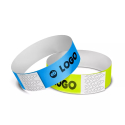
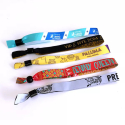
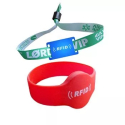




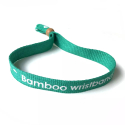
The essentials of woven vs printed fabric wristbands
Both finishes belong to the broader world of custom printed wristbands and branding, where logo placement, colour choices and design options ultimately decide how your event reads on the wrist.
- Core definitions : woven fabric wristbands have the pattern jacquard-woven directly into the polyester threads, while printed wristbands use thermal sublimation to embed the design onto a polyester satin ribbon.
- Visual difference : woven bands display a textured relief with sharp, crisp edges on logos and text but a limited colour palette; printed bands deliver photo-quality results with gradients and unlimited colours edge-to-edge.
- Tactile difference : the woven pattern creates a raised, textured surface you can feel under the fingers, whereas the printed design sits flat and smooth, remaining imperceptible to the touch.
- Durability : woven patterns are scratch-proof because the design is part of the weave, while printed colour is permanently fixed below the surface and does not crack or flake off.
- Shared material : both woven and printed fabric wristbands are made from polyester, resistant to water, sweat and multi-day wear — unlike single-use tyvek bands.
- Use cases : woven is suited to premium logos and fine text, while printed is suited to complex visuals and multicolour festival or sponsorship designs.
- Choosing the right type : the key difference comes down to texture and colour range — pick woven for tactile, premium detail and printed for vivid, full-colour artwork.
Woven vs Printed Fabric Wristbands: The Core Difference at a Glance
The core difference comes down to manufacturing method. Woven wristbands are produced on industrial jacquard looms, giving a textured, embroidered feel, while printed (dye-sublimated) bands have ink heat-infused into the fibers for a smooth feel. That single distinction shapes everything: how the design looks, how it sits against the skin, and which artwork it can reproduce. Both finishes sit within the wider family of custom printed wristbands and branding, where logo placement, colour choices and design options define how your event reads on the wrist.
For an event manager weighing both options, the practical takeaway is simple. Woven excels at stitched detail and a classic festival look. Printed excels at true full-color artwork, gradients, photos and edge-to-edge color. Both start from polyester, but the result feels and reads very differently on the wrist.
What Are Woven Fabric Wristbands?
Woven fabric wristbands: polyester bands whose artwork is stitched directly into the material on jacquard looms. Because the design is woven rather than printed, the finished band feels thicker and more structured than a printed band, with a smooth, slightly shiny surface that is soft to the touch.
- Texture: slightly more texture and a classic festival look
- Best use: logos and text clarity, with stitched detail and long-wear durability
- Security: each loom produces a slightly unique weave pattern, acting as a built-in anti-counterfeiting feature
What Are Printed (Dye-Sublimated) Fabric Wristbands?
Printed (dye-sublimated) wristbands: bands that start with a pre-woven satin polyester ribbon, then receive ink heat-infused into the fibers under high heat. The surface stays flat and smooth, which makes it the better canvas when your design relies on color rather than relief.
- Color capability: true full-color, gradients, photos and edge-to-edge coverage with no color limit, including sponsor logos in specific PMS colors
- Feel: smooth, with the design fused into the ribbon rather than raised
- Best use: full-color artwork and photographic or gradient designs
The sections below break down each of these contrasts in detail, from visual rendering to durability.
How the Visual Rendering Differs: Texture, Color and Detail
The visual gap comes down to how the artwork meets the fabric. Woven wristbands stitch the design directly into the ribbon, while printed wristbands heat-infuse ink into a satin polyester surface for true full-color reproduction. This single distinction shapes everything from color depth to logo crispness.
Color Range and Gradients
Sublimated printing carries no color limit. Photographs, smooth gradients and sponsor logos with specific PMS colors all reproduce faithfully because the ink is heat-infused into the fibers. That makes printed bands the natural pick for a multi-stage festival lineup or a complex artistic visual.
Woven bands work differently. The color comes from individually dyed threads on the jacquard loom, so the palette stays restricted to a defined set of thread colors. Subtle gradients and photo-realistic blends are not achievable. What you gain instead is a textured, classic festival look that flat printing cannot replicate.
Logo Sharpness and Fine Text Legibility
For crisp logos and small text, the two methods trade strengths:
- Woven: excellent for logos and text clarity, with stitched detail that stays legible across long-wear use. Very fine serifs can soften slightly because each character is built from threads.
- Printed: renders thin lines, tiny typefaces and intricate iconography with photographic precision, since the image is laid down pixel by pixel rather than woven.
- Both: hold up well outdoors, as the UV-resistant inks on printed bands will not fade even in intense sunlight.
Edge-to-Edge Print vs Woven Borders
Printed wristbands deliver edge-to-edge color: the design runs to the full width of the band with no border. Your background can saturate the entire surface, which suits bold custom fabric wristbands and branded sponsor strips.
Woven bands keep a subtler frame because the weave pattern defines the field. Each loom also produces a slightly unique weave that acts as a built-in anti-counterfeiting marker. If you want every pixel of color flooding the ribbon, choose printed; if you value tactile depth and stitched authenticity, woven wins.
How the Tactile Feel Differs: Surface, Relief and Comfort
The tactile gap comes down to relief versus flatness. Woven bands have a raised, embroidered texture you can feel under your fingers, while printed bands stay completely smooth and flat to the touch. Both use the same polyester base, yet they read very differently against the skin.
The Textured Feel of Woven Bands
On a woven band, the artwork is stitched directly into the threads, so the design has a textured, embroidered feel. Running a finger across the surface, you notice slight relief where the pattern sits proud of the base weave. The finished band feels thicker and more structured than a printed one, which gives it a substantial, premium quality in the hand. Despite that texture, the dense weave produces a smooth, slightly shiny surface that stays soft to the touch and resists fraying once the edges are hot-cut.
The Smooth Surface of Printed Bands
Printed bands start from a pre-woven satin polyester ribbon, and the ink is heat-infused into the fibres. Because the colour sits within the material rather than on top of it, the surface stays perfectly flat. There is no raised pattern to feel, just a uniform satin glide from edge to edge. This smooth feel suits full-colour artwork, gradients and photo-style designs that need an unbroken, even canvas.
Comfort for Multi-Day Wear
Both materials are rated for three to seven days of continuous wear, so neither type irritates over a long festival or conference weekend. The differences worth weighing:
- Woven: thicker and more structured, with a tactile relief and a soft, fray-resistant edge.
- Printed: thinner and lighter, with a flat satin surface that disappears against the wrist.
- Shared: polyester resists water and sweat, keeping both comfortable across multi-day events.
How Each Type Is Made: Jacquard Weaving vs Dye Sublimation
Woven wristbands are produced on industrial jacquard looms that interlace coloured polyester threads to form the design, while printed wristbands rely on dye sublimation, where ink is heat-infused into the fibres of a pre-woven satin ribbon. Two distinct processes that explain every visual and tactile difference you can observe.
The Weaving Process
With woven bands, the artwork is not added on top of the fabric: it is the fabric. Each loom produces a slightly unique weave pattern, which acts as a built-in anti-counterfeiting feature. The result is a thicker, more structured band with an embroidered feel.
- Coloured polyester threads are loaded onto an industrial jacquard loom, each colour corresponding to one part of your design.
- The loom interlaces the threads to weave the logo and text directly into the ribbon, giving a textured relief you can feel.
- This dense weave produces a smooth, slightly shiny surface that is soft to the touch and resists fraying.
- The ribbon is hot-cut to seal the edges, then sized to standard dimensions of approximately 13.5 inches long and half an inch wide.
The Sublimation Printing Process
Printed wristbands start from a blank ribbon and receive the design through heat. Sublimation prints will not crack, peel, fade in sunlight, or wash off in rain because the colour is embedded below the surface. This is what makes full-colour artwork possible.
- The starting material is a pre-woven satin polyester ribbon, ready to receive the artwork.
- Your design is printed onto a transfer carrier, including photographs, gradients and sponsor logos with specific PMS colours.
- The carrier is pressed against the satin ribbon under high heat, typically 350 to 400 degrees Fahrenheit, turning the ink to gas.
- The ink is heat-infused into the fibres, leaving a smooth feel with no colour limit and edge-to-edge coverage.
The weave builds the design into the material; sublimation embeds it within an existing ribbon. That single distinction drives the texture and colour range covered in the previous sections.
Durability and Longevity: Which Holds Up Better?
Both types hold up exceptionally well because they share the same base material. Fabric wristbands are made from polyester and rated for three to seven days of continuous wear, far beyond what single-use bands offer. The difference lies in how each design survives that wear, not in the fabric itself.
Water, Sweat and Fade Resistance
On printed bands, the colour is sublimated into the fibres of the satin polyester ribbon, which means it sits below the surface. Sublimation prints will not crack, peel, fade in sunlight, or wash off in rain, and the inks are UV resistant even under intense sun at an outdoor festival.
Woven bands take a different route to the same result. Because the pattern is jacquard-woven directly into the threads, there is no surface layer to scratch off. The colour is structural, part of the weave, so abrasion against bags, sleeves or other wrists leaves it untouched.
Wear Over Multi-Day Events
For a multi-day event, both materials resist water, sweat and friction with no realistic risk of the design degrading. What separates them in practice:
- Scratch resistance: woven patterns cannot be scraped away because the artwork is stitched into the band, not applied on top.
- Fade resistance: printed colour stays vivid edge-to-edge thanks to UV-resistant, heat-infused inks.
- Structure: woven bands feel thicker and more structured, which can translate into a sturdier feel over repeated days of wear.
- Fraying: woven ribbons are hot-cut to prevent fraying at the edges, so they keep a clean finish.
The honest verdict: neither type wins on raw longevity. Both survive a full festival weekend without issue, so your choice should rest on the look and feel you want rather than on fear of premature wear.
Closures, RFID and Add-Ons That Affect Both Types
Closures and add-ons apply identically to both woven and printed fabric wristbands, since they are fitted after the polyester band is produced. The choice of lock, RFID chip or barcode is independent of whether you select a woven or dye-sublimated finish. These elements shape access control and reusability more than the visual rendering itself.
One-Way Locks vs Reusable Sliders
The closure determines whether a wristband is single-use or can be removed and worn again. For multi-day events where bands stay on for three to seven days of continuous wear, a secure fastening matters as much as the fabric itself.
- One-way locks : a barb closure that tightens once and cannot be reopened without cutting. Ideal for festival access control and preventing transfer between attendees.
- Reusable sliders : an adjustable bead that lets the wearer loosen or remove the band, suited to staff credentials or season passes you want to reuse.
- Sewn or crimped ends : a permanent fixed-length finish for promotional giveaways where security is secondary.
RFID and Tracking Add-Ons
Both fabric types can host embedded chips and printed codes for cashless payment, entry scanning and attendee data. RFID tags and barcodes integrate into woven and printed wristbands without changing their texture or appearance.
- RFID chips : contactless tags for access gates, cashless bars and crowd-flow analytics at your event.
- QR codes and barcodes : scannable graphics for ticket validation, with full-color printed bands rendering them edge-to-edge.
- Serial numbers : sequential numbering for inventory tracking and anti-fraud verification.
When you specify these custom add-ons, decide on the closure and tracking layer first, then pick your woven or printed finish for the look you want.
Fabric vs Tyvek vs Vinyl: Choosing the Right Material
Le bon matériau dépend de la durée de l'événement, du budget et du positionnement souhaité. Les bracelets en tissu démarrent autour de 0,49 $ pièce, contre environ 0,03 $ pièce pour le Tyvek, ce qui place chaque option sur un segment d'usage très différent.
When to Choose Fabric
Les bracelets en polyester, qu'ils soient tissés ou imprimés en sublimation, sont conçus pour durer. Les bracelets en tissu supportent de trois à sept jours de port continu, résistent à l'eau et à la transpiration, et offrent un rendu haut de gamme. Ils s'imposent dès que votre événement s'étale sur plusieurs jours ou que l'image de marque compte.
- Festivals multi-jours : un seul bracelet pour toute la durée, sans risque de déchirure.
- Événements premium : le tissé apporte une texture brodée et un logo net, l'imprimé permet des visuels pleine couleur.
- Contrôle d'accès renforcé : le motif de tissage légèrement unique de chaque métier à tisser fait office de sécurité anti-contrefaçon.
When Tyvek or Vinyl Makes Sense
Pour les événements d'une journée ou les budgets serrés, le Tyvek reste imbattable sur le coût. À environ 0,03 $ pièce, il convient parfaitement aux usages à grand volume et jetables.
- Événements d'une journée : concerts, salons, soirées étudiantes où le bracelet n'a pas vocation à durer.
- Gros volumes économiques : quand la quantité prime sur la sensation tactile ou la finition.
- Personnalisation rapide : impression couleur simple pour identifier des catégories de participants.
Le tissu se justifie dès que la longévité et l'image priment, tandis que le Tyvek garde l'avantage sur les opérations courtes et serrées côté budget.
Eco-Friendly Fabric Wristband Options
Both woven and printed fabric wristbands can be produced with recycled polyester, making them a credible choice for events with sustainability commitments. The base material stays polyester in either process, so switching to a recycled feedstock changes the source of the fibre, not the look or feel of the finished band.
Recycled Polyester and RPET
RPET : recycled polyester made from post-consumer plastic bottles, melted down and re-spun into yarn or ribbon. Recycled polyester wristbands keep the same water and sweat resistance as virgin polyester, suited to three to seven days of continuous wear.
- RPET woven ribbon, compatible with jacquard looms for textured logos and text
- Recycled satin polyester ribbon for dye-sublimated full-colour artwork
- OEKO-TEX certification, confirming the fabric is tested for harmful substances
Reducing Event Waste
A fabric band rated for multi-day wear replaces several single-use tickets or paper passes across a festival run. Because the design is woven in or sublimated below the surface, the colour will not crack, peel or fade in sunlight, so attendees keep the same band for the whole event rather than swapping daily. For premium events with an environmental positioning, recycled polyester fabric wristbands let you communicate your values without compromising on the texture or full-colour rendering your branding requires.
How to Choose Between Woven and Printed for Your Event
Choosing between woven and printed comes down to two questions: does your design rely on fine logos and text, or on full-color visuals? Pick woven for stitched logos and tactile detail; pick printed for gradients, photos and edge-to-edge color. Your event positioning and budget refine the rest.
Decision Checklist
- Assess the artwork. If your design uses one or two solid colors with sharp logos and text, woven fabric wristbands render that detail with a crisp, embroidered look. For photographs, gradients or sponsor logos in specific PMS colors, printed bands handle unlimited color.
- Define the wearer role and perception. A textured, more structured woven band reads as premium on VIP and staff. A smooth printed band suits broad attendee distribution where vivid multi-color artwork carries the message.
- Match the event format. Woven carries the classic festival look and long-wear durability; printed shines for sponsorship-heavy or visually complex events.
- Confirm wear duration. Both are polyester and rated for three to seven days of continuous wear, so multi-day comfort is covered either way.
- Set your budget. Fabric bands start at approximately $0.49 per piece, so factor your custom quantity into the final choice.
Recommended Use Cases by Event Type
- Multi-day music festivals: woven for the textured, traditional feel; printed when sponsor artwork needs full-color reproduction.
- Corporate and branded activations: woven for clean logo and text clarity that signals quality.
- Charity runs and community events: printed for colorful, photo-style designs across the whole band.
- Conferences and VIP access: woven for a structured, premium impression on credentialed wearers.
Exact lead times, production specifics and pricing for your design are confirmed on quote, depending on the artwork, quantity and finishing options you request for your custom fabric wristbands.
Frequently Asked Questions
What is the visual and tactile difference between woven and printed fabric wristbands?
Woven bands show a textured, embroidered relief with sharp logos but a limited colour palette, while printed bands sit flat and smooth with full-colour artwork. Woven wristbands have a textured, embroidered feel because the design is stitched into the threads, whereas printed bands stay smooth as the ink is heat-infused into the fibres.
Are fabric wristbands waterproof and sweat-resistant?
Yes. Both types are made from polyester, which handles water, sweat and continuous wear without degrading. Fabric bands are rated for three to seven days of continuous wear, and sublimation prints will not crack, peel, fade in sunlight or wash off in rain.
Can fabric wristbands be reused?
Fabric wristbands are designed for the duration of an event rather than indefinite reuse. They typically close with a one-time locking mechanism, so removing one usually means cutting it off. For multi-day events, a single band stays comfortable across the full three to seven day window.
Which type is best for photo-quality artwork?
Printed (dye-sublimated) bands are the clear choice for complex visuals. Printed wristbands deliver true full-colour results with gradients, photos and edge-to-edge coverage, with no colour limit. They reproduce photographs, gradients and sponsor logos in specific PMS colours, which woven bands cannot match.
Do woven and printed bands use the same material?
Both rely on polyester, but the construction differs. Woven bands are produced on industrial jacquard looms, with the pattern woven directly into the threads. Sublimation-printed bands start from a pre-woven satin polyester ribbon onto which the design is heat-infused. Same base fibre, two distinct production routes.
Can both types include RFID?
Yes. RFID chips can be integrated into both woven and printed fabric wristbands without affecting the visual or tactile result. This lets you combine your chosen finish with cashless payment, access control or attendee tracking on the same polyester band.