 Deutschland
 España
 France
 Italia
 United Kingdom


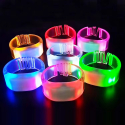
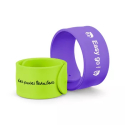
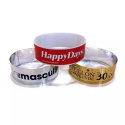





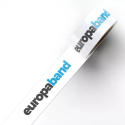




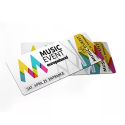

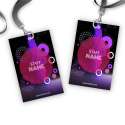








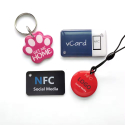
The Essentials of RFID Wristband Technology at Events
- Definition : RFID stands for radio-frequency identification, a contactless radio technology that exchanges data wirelessly between a tag and a reader without requiring physical contact.
- Core components : Each RFID wristband embeds an integrated circuit (microchip) paired with an antenna, which together store and transmit identification data.
- Frequency families : Two main technologies are used — RFID HF (high frequency) and near-field communication (NFC), the latter operating over very short ranges of a few centimetres.
- Operating principle : The embedded tag transmits stored data to a reader through radio waves, functioning without a direct line of sight between the wristband and the scanner.
- Main event functions : At events, RFID wristbands enable cashless payments, access control, fraud prevention, and real-time data collection on attendee movement.
- Common materials : RFID wristbands are manufactured from Tyvek, plastic, vinyl, silicone, and cloth, depending on durability and comfort requirements.
- Usage contexts : This technology is deployed at festivals, conferences, and corporate events to streamline entry, payments, and attendee tracking.
What Are RFID Wristbands?
RFID wristbands are wearable bands that embed a tiny radio-frequency identification chip, allowing event staff to identify each guest with a simple tap or scan. They replace paper tickets and lanyards with a single, reusable item worn on the wrist. For an event manager, this means faster entry, fewer queues, and a reliable way to track access across multiple zones.
The Core Components: Chip and Antenna
Every band relies on two small parts working together. The technology stays passive: the wristband holds no battery and only activates when it enters a reader's field.
- Integrated circuit: the microchip storing the unique identifier and any data linked to the attendee, such as ticket type or cashless balance.
- Antenna: a thin conductive coil that captures the reader's signal, powers the chip, and sends the stored information back.
- Band material: the wearable layer (Tyvek, vinyl, silicone or plastic) that protects the electronics and stays on the wrist throughout the event.
RFID vs. NFC: What's the Difference?
Radio-frequency identification (RFID): a broad technology that reads tags from a short to medium distance, ideal for fast gate scanning at high-volume entrances. Near-field communication (NFC): a subset of RFID that works only at very close range, the same tech your guests use when paying with a phone.
In practice, RFID suits access control where you scan crowds quickly, while NFC fits interactions that need a deliberate tap, like a cashless purchase or a social media activation. Most event wristbands use one or the other depending on how you want guests to interact at each touchpoint.
How Do RFID Wristbands Work at Events?
RFID wristbands work by embedding a tiny chip and antenna that communicate wirelessly with a reader using radio-frequency identification. When an attendee taps or passes their wristband near a reader, the chip transmits a unique ID, which the system matches against your event database in milliseconds. An RFID wristband stores a unique identifier that links each attendee to your event database, not personal data on the chip itself.
The Scanning Process Step by Step
- The attendee approaches a reader at an entry gate, bar, or cashless payment point.
- The reader emits a radio signal that powers and activates the chip inside the wristband.
- The tag's antenna sends its unique ID back to the reader over the air.
- The reader forwards that ID to your backend database for validation.
- The system grants access, deducts a payment, or logs the entry, then confirms the action in real time.
The whole exchange takes a fraction of a second, which keeps queues moving even at peak arrival times.
How Data Travels Between Tag and Reader
No physical contact is required. The reader's antenna and the tag's antenna exchange information through electromagnetic waves. The tag never stores sensitive details: it carries only a reference number. All meaningful data, like ticket type, top-up balance, or zone permissions, lives securely in your central database. This separation protects attendees if a wristband is lost.
Passive vs. Active RFID Tags
Passive RFID: the tag has no battery and draws power from the reader's signal. It works at short range and suits most event wristbands, including entry control and cashless payments.
Active RFID: the tag carries its own battery and broadcasts continuously over longer distances, useful for tracking movement across large venues.
For the majority of events, passive tags deliver the right balance of cost and performance. They keep the wristband lightweight and affordable, while still giving you fast, reliable scans at every reader you deploy across the site.
Key Benefits of RFID Wristbands for Event Organizers
RFID wristbands give organizers a single, contactless tool that handles payments, access, and tracking from one chip. The benefits are operational and strategic at once: faster queues, lower fraud, richer data, and more efficient crowd handling across the entire event footprint.
Cashless Payments
Each wristband links to a prepaid digital wallet, so attendees tap to pay at bars, food stalls, and merchandise points without cash or cards. Cashless RFID payments reduce transaction times at the cart and increase average spend per attendee. Vendors process more orders, and you settle accounts faster after the event.
Faster Access Control and Admissions
A single tap at the gate validates entry, which clears queues far quicker than manual ticket checks. The same wristband can grant tiered access to VIP zones, backstage areas, or specific stages, letting you manage multiple permission levels from one credential.
Fraud and Theft Prevention
Because each chip carries unique encrypted identification data, wristbands cannot be cloned or copied like paper tickets. This significantly lowers the risk of counterfeit entries and gatecrashing.
- Counterfeit protection : unique IDs block duplicate or forged passes.
- Theft control : lost wristbands can be deactivated instantly, protecting any loaded wallet balance.
- Account accuracy : every payment ties to a verified credential, cutting disputes.
Real-Time Data and Analytics
Every tap generates timestamped data on movement, spending, and zone occupancy. Organizers see which areas draw crowds, which vendors perform best, and when peaks occur, all while the event is live. RFID systems collect real-time attendee data that informs staffing, restocking, and layout decisions on the spot.
Smart Waste and Crowd Management
With live occupancy figures, you redirect attendees before bottlenecks form and reposition staff where demand spikes. Cashless transactions also cut paper tickets and receipts, reducing on-site waste. Density readings help you manage flow safely and keep entry points moving.
Brand Engagement and Social Media
Wristbands double as a branded, wearable keepsake that attendees keep long after the gates close. Linking the chip to social check-ins, photo activations, or loyalty rewards turns a simple credential into an engagement channel. Custom colours and printed logos extend your brand visibility throughout the venue and across attendees' own social posts.
RFID vs. Barcode Wristbands: Key Differences
RFID wristbands store and transmit data through an embedded microchip read by radio waves, while barcode wristbands carry a printed label scanned optically by an aligned reader. RFID transmits data wirelessly without line-of-sight contact, whereas a barcode must be physically presented to the scanner. This difference shapes how each performs across durability, speed, security, and onsite functionality.
On scanning speed, RFID wins on volume. A reader captures the wristband as the attendee taps or passes nearby, which keeps entry lines moving during peak arrivals. Barcode scanning depends on positioning the printed label correctly under the reader, so each scan takes longer and stalls more easily in crowds.
For durability, RFID wristbands embed the chip inside the band, protecting the data carrier from moisture, friction, and bending across multi-day wear. A printed barcode sits on the surface, where smudging, fading, or scuffing can render the label unreadable before the event ends.
On security and data, RFID holds a clear edge. Each chip carries a unique encoded identity that resists cloning, supporting fraud prevention and cashless transactions. A barcode can be photographed and copied with little effort, which limits its use for payments or restricted-zone access. RFID also enables ongoing data collection on attendee flow, something a one-directional barcode scan cannot match.
That said, barcode wristbands remain simpler and cheaper to produce for short, low-risk events. Choosing between the two depends on your guest volume, event length, and security needs. For precise technical specifications and quantified comparisons matched to your event, please consult our advisor.
Choosing the Right RFID Wristband Material
The right RFID wristband material depends on how long your event runs, whether attendees need waterproof bands, and if you plan to reuse them. Tyvek suits single-day events, while silicone bands are built for reuse across multiple days. Each material balances durability, comfort, and branding differently.
Tyvek RFID Wristbands
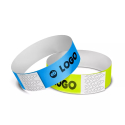
Tyvek is a lightweight, tear-resistant synthetic paper ideal for short-duration events such as one-day festivals or conferences. Custom 3/4" Tyvek wristbands start as low as $0.04 per band, making them the most cost-effective option for high-volume entry control. They come in 3/4-inch and 1-inch widths and accept full-colour printing for branding, though they are designed for single use.
Plastic and Vinyl RFID Wristbands
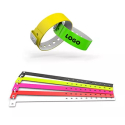
Plastic and vinyl bands offer greater durability than Tyvek when your event spans several days. Vinyl bands last up to 14 days, which makes them well suited to multi-day festivals where attendees keep the same wristband. Custom plastic wristbands start as low as $0.07 per band. Both materials resist water and tearing better than paper-based options, supporting repeated scans at access points and cashless payment terminals.
Silicone RFID Wristbands
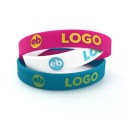
Silicone is the premium choice when comfort, waterproofing, and reuse matter most. Custom silicone wristbands are available as low as $0.16 per piece. They feel like a quality accessory rather than a disposable band, which encourages attendees to keep wearing them. Silicone RFID wristbands are reusable and fully waterproof, making them a strong fit for recurring events.
Cloth RFID Wristbands
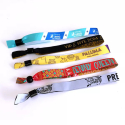
Cloth, or woven fabric, wristbands combine durability with a premium look that works well for VIP guests and multi-day passes. The soft fabric is comfortable for extended wear and integrates an embedded RFID tag for access and payments. The texture also supports custom designs that reinforce your event branding.
Pricing for materials not listed above, along with branding options and lead times, is established on a per-quote basis depending on quantity, finish, and the RFID configuration you require for your event.
Where RFID Wristbands Deliver the Most Value
RFID wristbands deliver the most value wherever attendee volume, repeat scanning, and on-site spending converge. The technology pays off most clearly at festivals, professional conferences, and branded activations, where speed at entry points and cleaner data outweigh the upfront cost of equipping every guest.
Festivals and Multi-Day Events
Multi-day festivals are the natural home for RFID. With thousands of attendees moving between zones, contactless entry cuts queues and cashless payments keep bar and food lines moving. RFID wristbands let organizers track attendee flow in real time and reduce fraud at high-traffic gates. Durable materials matter here: vinyl bands last up to 14 days, covering even the longest festival runs without re-issuing.
Conferences and Corporate Events
For conferences, the value sits in efficient check-in and session-level data. A single tap registers attendance, controls access to breakout rooms, and feeds reporting dashboards. You gain a clear picture of which sessions drew the most attendees, which informs future programming.
The strongest use cases for corporate organizers include:
- Accreditation and badging: link each wristband to a registration profile for instant identification.
- Zone access control: restrict VIP areas, speaker lounges, or sponsor spaces.
- Lead retention: capture interactions at sponsor booths without manual scanning.
Branded and Experiential Activations
Branded activations turn the wristband into a marketing surface. Custom printing carries your logo or sponsor identity throughout the event, while the embedded chip triggers interactive moments such as photo stations or social sharing points. Custom silicone bands, available as low as $0.16 per piece, give activations a premium, reusable feel that attendees keep long after the event ends.
How to Roll Out RFID Wristbands for Your Next Event
Rolling out RFID wristbands follows three core stages: define your event needs, customize and brand your bands, then plan encoding, testing and on-site setup. A successful RFID deployment starts with a clear scope and a reliable technology partner before any wristband is encoded.
Define Your Event Needs
Start by mapping how you want attendees to interact with the technology. Decide whether your priority is cashless payments, access control by zone, or attendee data collection, since each function shapes the chip and reader configuration you will need.
- List the functions to manage: entry, payments, VIP zones, fraud prevention.
- Estimate attendee volume and the number of scan points across your venue.
- Identify the data you want to capture during and after the event.
Customize and Brand Your Wristbands
Once your needs are set, choose a material that matches both comfort and event length. Vinyl bands last up to 14 days, which suits multi-day festivals, while Tyvek wristbands come in 3/4-inch and 1-inch widths for shorter events. Add your branding, colours and event artwork so each band reinforces your identity while attendees wear it.
Plan Encoding, Testing and On-Site Setup
Coordinate with your partner on encoding the chips, linking each wristband to an attendee profile and payment account. Always run a full test of readers and scan points before doors open to catch any read errors. Plan staffing for activation desks, prepare a backup workflow, and confirm network coverage across all checkpoints so organizers can manage entry and payments without slowdowns on the day.
Frequently Asked Questions About RFID Wristbands
What is an RFID wristband?
An RFID wristband is a wearable band embedding a microchip and antenna that store and transmit identification data wirelessly to a reader. RFID wristbands use radio-frequency identification to exchange data contactlessly, without any direct line of sight between the band and the scanner. They serve as the attendee's identity and payment token throughout an event.
How do RFID wristbands work for cashless payments?
Each wristband is linked to an attendee account preloaded with funds or a registered payment method. When you tap the band on a reader at a bar, food stall, or merchandise point, the transaction is debited instantly. This cashless approach removes cash handling, speeds up queues, and gives you precise sales data per zone.
Are RFID wristbands waterproof?
It depends on the material. Silicone and vinyl bands resist water and sweat, making them suitable for multi-day outdoor festivals, while Tyvek offers a lighter, tear-resistant option for shorter events. Vinyl RFID wristbands last up to 14 days, which makes them a reliable choice for extended or weather-exposed events.
Can RFID wristbands be reused?
Reusability depends on the chip and the closure type. Many plastic and silicone bands can be deactivated, collected, and reprogrammed for future events, while single-use Tyvek bands are typically discarded after one occasion. Choosing a reusable format helps lower long-term costs for recurring events.
How are RFID wristbands different from barcode wristbands?
A barcode wristband requires a direct optical scan and line of sight, so each guest must stop and present the code. RFID reads through radio waves, allowing faster, contactless taps and storing far more data, including access rights and payment balances on a single band.
Is data on RFID wristbands secure?
Yes. The data stored on the chip is usually an encrypted identifier linked to a secure backend rather than personal or financial details. This design limits exposure if a band is lost and supports fraud prevention and access control at events.