 Deutschland
 España
 France
 Italia
 United Kingdom



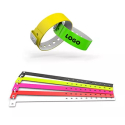
















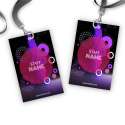



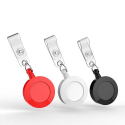



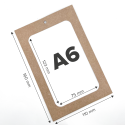


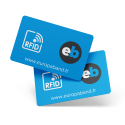

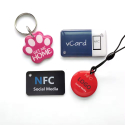
The Essentials of RFID Wristbands for Multi-Zone Access and VIP Areas
- RFID wristband definition : A wearable credential combining an embedded microchip and antenna, read contactlessly at close range (1–3 inches / a few centimeters) by readers positioned at each checkpoint.
- Multi-zone access principle : Each credential carries individual permissions verified at every access point, granting or denying entry to specific zones based on the rights assigned to that wristband.
- VIP and restricted areas : Distinct zones such as VIP areas, backstage, press, and general admission are managed with independent rule sets, ensuring only authorized attendees reach each restricted space.
- Real-time verification : Every scan checks the credential against an attendee database in real time, confirming validity and access rights instantly at each large event entry point.
- Capacity and occupancy monitoring : Access control systems track occupancy per zone in real time, helping enforce capacity limits and maintain a secure flow of attendees across the venue.
- Time-based access rules : Permissions can be scheduled by time slot, automatically activating or restricting entry to zones during defined windows for sessions, performances, or service hours.
- Offline operation : Readers can continue validating credentials and enforcing access rules even without continuous network connectivity, preventing disruptions during the event.
- Audit trails and logs : Each scan is logged, creating detailed audit trails that support security, traceability, and post-event analysis of movements across all zones.
Understanding RFID Wristbands and Their Role in Access Management
RFID wristbands manage event access by storing a unique digital credential on an embedded chip that communicates wirelessly with readers placed at each entry point. When held near a reader, usually within 1-3 inches, the chip transmits its stored data for instant verification, granting or denying entry in seconds.
Composition and How an RFID Wristband Works
Each wristband combines three core elements: an RFID chip that holds the attendee credential, a thin antenna that transmits the signal, and a band material (silicone, fabric or vinyl) worn for the event duration. RFID : Radio Frequency Identification, a technology that exchanges data between a tag and a reader over short distances without physical contact.
The exchange follows a simple sequence:
- The reader emits a radio field at the access gate.
- The chip powers up and sends back its encoded credential.
- The system checks the rights linked to that wristband.
- Access is approved or refused, with the scan logged automatically.
RFID vs NFC: What Difference for Your Events
Both belong to the same radio family, but they serve different needs. RFID suits fast gate throughput at distance, while NFC (a short-range subset of RFID) powers tap interactions like cashless payments or social check-ins directly from a smartphone. Many event wristbands today carry an NFC tag so attendees can pay, share and unlock perks with a single touch.
Why Choose Wristbands Over Paper Tickets and Badges
Paper tickets and printed badges remain easy to copy, lose or pass along. An encoded wristband ties one credential to one wearer for the whole event, which closes that gap. RFID Journal notes a 95% drop in ticket fraud at events using RFID wristbands compared to paper systems.
The operational gains are equally clear for you as an event manager:
- Faster entry: average time falls to 15 seconds per person.
- Higher flow: peak throughput reaches 2,400 people per hour.
- Stronger control: fraud incidents stay under 0.5% of total tickets.
This foundation is what makes multi-zone access and VIP management possible, covered in the next sections.
How Multi-Zone Access Control Works with RFID Wristbands
A single RFID wristband carries a unique credential that stores each attendee's access rights for every zone. At each checkpoint, a reader scans the chip held within 1 to 3 inches, instantly verifies the rights, and grants or denies entry. This is how multi-zone access control turns one wristband into a complete permission system.
Assigning Permissions by Zone (General Admission, VIP, Backstage, Press)
Each wristband is encoded with a set of permissions that define which zones the holder may enter. A general admission attendee accesses public areas only, while a VIP credential unlocks lounges and premium spaces. Backstage and press wristbands open restricted zones tied to specific roles. You assign these rights when you register the credential, and you can layer several zones onto one wristband.
This layered structure means a single chip handles the entire access map of your event. One RFID wristband can carry permissions for multiple zones at once, from general admission to VIP and backstage, all verified at the same checkpoint. Combined with secure encoding, this approach helps reduce unauthorized entry by up to 95% across multi-level security zones.
Real-Time Verification at Every Checkpoint
Every entry point runs a live check the moment a wristband is scanned. The reader queries the access control system, confirms the credential is valid for that zone, and records the movement. The whole sequence takes seconds, which keeps lines moving even at peak attendance.
The flow at a checkpoint follows a clear sequence:
- The attendee presents the wristband within reading range of the device.
- The reader retrieves the encoded credential and its zone permissions.
- The system verifies the rights against the rules set for that zone.
- Access is granted or denied, and the scan is logged with a timestamp.
- The occupancy count for the zone updates automatically.
Time-Based Access Rules and Capacity Limits
Beyond zone rights, you can attach time windows and capacity thresholds to each credential. A backstage pass might activate only during a performance slot, then close automatically. Per-zone occupancy is tracked live so the system flags a zone as it nears its limit, letting you manage crowding before it builds.
| Metric | Traditional Method | RFID Wristbands |
|---|---|---|
| Average entry time | 30 seconds per person | 15 seconds per person |
| Peak hour throughput | 1,200 people per hour | 2,400 people per hour |
| Fraud incident rate | — | — |
| Attendee satisfaction | — | — |
Configuring and Securing VIP Areas and Restricted Zones
Securing VIP areas and restricted zones with RFID wristbands relies on three pillars: hierarchical access levels assigned to each credential, encrypted chips that block cloning, and the ability to deactivate any wristband instantly. Each scan triggers real-time verification, so only authorized attendees reach backstage, press, or premium spaces.
Defining Hierarchical Access Levels
Start by mapping every zone of your venue and ranking permissions from the broadest to the most exclusive. A general admission wristband opens public areas only, while a VIP credential unlocks lounges, premium seating, and dedicated service points. Backstage and press passes sit on separate tiers with their own rule sets.
This layered structure means a single attendee profile carries exactly the rights you assign, no more. RFID multi-zone access with instant verification reduces unauthorized entry by up to 95% compared with paper credentials. Each access point reads the wristband and grants or denies entry based on that hierarchy.
- General admission: public zones, food courts, open stages.
- VIP areas: private lounges, premium viewing, fast-track lanes.
- Backstage and crew: artist areas, technical zones, loading docks.
- Press and media: photo pits, interview rooms, broadcast zones.
- Time-bound rights: permissions that open or close per session window.
Encryption and Credential Cloning Prevention
Each wristband chip stores an encrypted identifier checked against your attendee database at every scan. This makes duplication far harder than with printed tickets or simple barcodes, where copies circulate easily. The result is measurable: RFID Journal notes a 95% drop in ticket fraud at events using RFID wristbands compared with paper systems.
The financial impact is concrete too. At Lollapalooza, fraudulent entries fell from an estimated 8% of tickets to under 0.5%, and organizers credited the technology with saving $50,000 in potential losses at a single event. Encryption combined with live verification is what keeps these numbers low and your secure perimeter intact.
Real-Time Deactivation and Incident Handling
When a wristband is lost, stolen, or flagged for suspicious activity, you revoke its access in real time from the management interface. The next time it touches a reader, entry is denied automatically. No need to chase the credential physically or reissue an entire batch.
Readers keep enforcing rules even without continuous network connectivity, and every scan is logged. Those audit trails let your security team trace movements, identify where an incident occurred, and respond before a breach spreads across zones. For a responsable événementiel managing large crowds, that traceability turns access control into a tool you can actually act on.
Tracking Flows, Capacity, and Logs in Real Time
RFID access systems turn every scan into actionable data. Each entry and exit feeds a centralized dashboard that shows live occupancy per zone, validates credentials, and records movements. This gives you a comprehensive operational picture and the ability to react before a bottleneck becomes a safety issue.
Capacity and Occupancy Monitoring per Zone
Every reader counts attendees in and out, so your control room sees occupancy figures updating live for each zone. When a VIP area, a hall, or a stage approaches its limits, the system flags it, letting your teams redirect flows or hold entries. Live occupancy tracking per zone lets organizers enforce capacity limits and protect attendee safety across the venue.
Audit Trails and Access Traceability
Each scan is timestamped and stored, building detailed logs of who accessed which zone and when. These audit trails support security investigations, dispute resolution, and post-event reporting. If an unauthorized attempt occurs at a restricted checkpoint, the record is already there. Multi-level security zones with instant verification reduce unauthorized entry by up to 95%.
Typical data points captured by the systems include:
- Live occupancy and capacity status per zone
- Timestamped entry and exit logs for every credential
- Access granted or denied events at each checkpoint
- Peak throughput and flow rates between zones
- Failed or unauthorized scan attempts for security review
- Dwell time and movement patterns across the event
Using Data to Steer the Event
Real-time logs are not just a record, they drive operational decisions. When a zone fills faster than expected, you reallocate staff and signage on the spot. At EDC, organizers used RFID data to shift staff toward congested areas, reducing wait times by 25%. The same visibility helps you balance bar queues, anticipate session crowds, and document everything for sponsors and authorities.
Operational specifics such as reader counts, dashboard configuration, and integration scope are defined per project, based on your venue layout and the number of zones to cover. These elements are scoped on request to match your event requirements.
Use Cases by Type of Professional Event
RFID wristbands adapt to every event format, from premium festivals to private corporate gatherings. Their strength lies in the ability to enforce distinct access rules per zone while collecting usable data, whatever the scale or audience profile of your event.
Large-Scale Festivals and Concerts
Festivals push throughput and security to their limits. RFID handles both at once. Tomorrowland processes 2,500 attendees per hour at main gates with RFID, compared to 1,000 with traditional methods. At Lollapalooza, fraudulent entries dropped from an estimated 8% of tickets to under 0.5%, and organizers credited the technology with saving $50,000 in potential losses at a single event. Multi-zone control separates general admission from front-stage pits and artist areas with independent rule sets.
Conferences and Trade Shows
Professional conferences and trade shows rely on RFID to segment access by ticket tier, session room, and exhibitor zone. Time-based permissions open and close rooms automatically for scheduled talks. The same credential also tracks which sessions and booths attendees visit, giving you precise attendance figures per zone for post-event reporting and sponsor value.
Corporate and Private VIP Events
For corporate galas and private VIP areas, discretion and exclusivity matter more than raw volume. RFID restricts hospitality lounges, executive tables, and backstage spaces to authorized guests only, with instant verification at every checkpoint. Each wristband becomes both a credential and a branded keepsake aligned with your client's identity.
Event Parks and Resorts
Parks and resort venues run continuous operations across many zones: attractions, dining areas, cashless points, and restricted maintenance spaces. RFID ties access, payment, and occupancy into one platform. Cashless RFID payments typically drive a 15-30% increase in on-site spending. Real-time occupancy monitoring helps balance crowds, and audit trails support security across the entire site.
- Festivals: high-speed entry and a 95% drop in ticket fraud versus paper systems.
- Conferences: tier-based and time-based room access with per-session attendance data.
- VIP events: exclusive zone control plus personalized experiences.
- Parks and resorts: unified access and cashless payments lifting per-attendee spending.
- All formats: AES-256 encryption and detailed logs for traceability.
Deploying a Multi-Zone RFID System: Steps and Best Practices
Deploying a multi-zone RFID system starts with mapping every zone and ends with a tested offline plan. Between those two points, you audit your access needs, choose compatible hardware, and connect everything to a single platform that enforces each credential's permissions in real time.
- Audit your access needs. List every population (general admission, VIP, press, staff, artists) and the zones each group may enter. This inventory becomes the backbone of your permission rules.
- Map the zones and entry points. Place a reader at every checkpoint where a credential must be verified.
- Select the hardware and integration platform. Pick readers, encoders, and an access control software that talk to each other.
- Configure rules and run tests. Simulate peak flows before doors open, with throughput reaching up to 2,400 people per hour on RFID systems.
- Validate the offline mode. Confirm readers keep verifying credentials without network coverage.
Mapping Zones and Defining Permissions
Treat each zone as an independent rule set. A VIP wristband may open backstage during a defined slot, while a general admission credential stays blocked there. Multi-level security zones with instant verification reduce unauthorized entry by up to 95%. Document who can go where, and when, so your team configures the platform without guesswork.
- Assign one permission profile per attendee category.
- Apply time-based windows for sessions, performances, and service hours.
- Flag restricted areas (backstage, press, control rooms) with stricter rules.
- Keep audit logs active on every reader for post-event traceability.
Choosing Hardware and the Integration Platform
Your readers, encoders, and software must form one comprehensive system rather than disconnected tools. Look for a platform that supports AES-256 encryption, the same standard used by financial institutions, so each credential stays secure end to end. Confirm the integration covers cashless payments and access control on the same wristband, and that the platform exports the data your team needs. Reference deployments scale well: CrowdPass has scanned over 1M+ credentials across events.
Offline Mode and Continuity Plan
Connectivity drops at large venues, so your continuity plan matters as much as the live setup. Readers should cache permissions locally and continue validating credentials without a constant network link, then sync logs once coverage returns. Test this scenario during your dry run, prepare backup power for key checkpoints, and brief staff on manual fallback procedures so a network outage never stops the flow at your gates.
Customization and Brand Value of RFID Wristbands
RFID wristbands work as functional credentials and as a branded touchpoint worn throughout an entire event. You can adapt colors, materials and printed elements to match your visual identity without affecting the embedded chip, the access permissions or the reader compatibility. The credential stays fully operational while carrying your label and message.
Customization Options and Materials
The chip and antenna stay hidden inside the band, so you keep complete freedom on the visible surface. Several formats let you align the wristband with the tone of your events and the expectations of your attendees:
- Materials: fabric woven bands for festivals and multi-day passes, silicone for sport and outdoor formats, vinyl or Tyvek for shorter sessions.
- Color and finish: brand colors, gradients, metallic or matte finishes to distinguish zones and ticket tiers at a glance.
- Printed branding: logo, event name, edition year, sponsor label, QR or NFC-readable artwork on the outer face.
- Closure types: single-use locking clasp for security, adjustable or reusable buckle for staff and recurring access.
- Zone identification: distinct designs for VIP, press, backstage and general admission, doubling as a quick visual control layer.
The Wristband as a Brand Carrier and Keepsake
A well-designed wristband stays on the wrist long after the gates close, which extends your visibility far beyond the venue. The wristband is the most worn physical object of the event.
For a responsable événementiel, this turns a simple access token into a souvenir that attendees keep and photograph. The branded wristband fuels that sharing, associating premium experiences with your label while every scan keeps serving its core access-control function.
2026 Trends in RFID and NFC Event Access
Event access in 2026 leans on three shifts: hybrid credentials that pair physical wristbands with mobile passes, predictive AI that flags security risks before they escalate, and analytics platforms that turn every scan into operational insight. These trends build directly on the multi-zone foundations covered earlier.
Hybrid Wristband and Mobile Pass Systems
Attendees increasingly expect to choose their credential. Hybrid systems let one profile live on both an RFID wristband and an NFC-enabled smartphone, so a guest can tap either at the same reader. This integration keeps the physical wristband for hands-free zone access while the mobile pass handles top-ups, personal data and notifications.
The model also strengthens redundancy: if a phone battery dies, the wristband still validates entry, and vice versa. Hybrid RFID and NFC credentials let a single attendee profile be verified through either a wristband or a smartphone at the same reader. For you, this means fewer help-desk tickets and smoother experiences across general admission, VIP and restricted areas.
AI and Predictive Analytics for Security
Scan data has always existed in access systems. What changes in 2026 is how platforms interpret it. AI models read live occupancy patterns to anticipate crowd surges and reroute staff before a checkpoint backs up. The same logic applies to security: unusual movement between zones can trigger an alert for review.
These capabilities sit on top of the metrics RFID already delivers. Worth keeping in mind as you build a business case:
- Instant verification in multi-level security zones reduces unauthorized entry by up to 95%.
Pairing predictive analytics with encrypted credentials gives security teams a forward view rather than a post-event report, which is where the value of modern access platforms now concentrates.
Frequently Asked Questions About RFID Wristbands and Multi-Zone Access
RFID wristbands manage access through encoded credentials checked at every entry point. Each scan verifies rights in real time, logs the movement, and enforces zone rules. Below are the practical answers event managers ask most often before deployment.
Do RFID Wristbands Work Offline?
Yes. Readers continue validating credentials and enforcing access rules even without continuous network connectivity. Permissions stored locally let each checkpoint grant or deny entry without interruption, then sync logs once the connection returns. RFID readers can validate credentials and enforce zone rules entirely offline, preventing entry disruptions during connectivity drops.
Can an RFID Wristband Be Cloned?
Cloning is extremely difficult with secure encoding. Modern systems use AES-256 encryption, the same standard employed by financial institutions, which makes credentials practically impossible to copy. This is one reason RFID Journal notes a 95% drop in ticket fraud compared to paper systems.
How Do You Set Time-Based Access Rules?
Permissions are scheduled by time slot in the access control system. You assign each credential a window during which a zone activates or restricts, matching sessions, performances, or service hours. The system automatically opens and closes access at the defined times, so no manual gate change is needed.
What Happens If a Credential Is Denied?
The reader rejects the scan instantly, the gate stays closed, and the denial is recorded in the logs. Staff see the reason on screen, such as wrong zone or expired window. This instant verification is part of how multi-level security zones reduce unauthorized entry by up to 95%.
How Does Per-Zone Capacity Tracking Work?
Each entry and exit scan updates a live occupancy count for that zone. The system compares the count against your capacity limit and flags when a threshold approaches. Real-time per-zone occupancy tracking lets organizers enforce capacity limits and reallocate staff before crowding builds. These logs also feed post-event analysis of attendee flows.