 Deutschland
 España
 France
 Italia
 United Kingdom














The Essentials of RFID Wristband Budgeting for Events in 2026
- Indicative cost per band : suppliers commonly list RFID wristbands in the range of $0.30 to $1.50 per unit, depending on material and chip type — an observed market range rather than a fixed quote for any single event.
- Main budget variables : the price of RFID wristbands shifts with material (Tyvek, vinyl, silicone, fabric), chip technology (HF-NFC vs UHF), order volume, custom branding, and whether cashless payment functionality is enabled.
- Wristbands as one budget line : the cost per band is only one part of total event spend; organizers must also budget for readers, on-site infrastructure, software integration, and staffing.
- Material by use case : Tyvek wristbands suit single-day events at the lowest cost, while fabric wristbands are chosen for multi-day or VIP access where durability and reuse matter.
- RFID vs barcode : RFID wristbands offer contactless scanning, faster entry, and cashless benefits that a printed barcode cannot match, which influences how organizers choose between technologies.
- Return on investment : competitors report that RFID wristband deployments can recover their costs as early as the first event through faster throughput and reduced fraud.
- Order volume effect : higher quantities push the cost per band toward the lower end of the range, making volume a key lever when sizing the budget for large events.
- What you will learn : this guide explains how to budget for RFID wristbands in 2026, the factors driving price, material choices by event type, and how the wristbands fit within total event costs.
How much should you budget for RFID wristbands for your event in 2026: the quick answer
For 2026, plan on a per-band cost between $0.30 and $1.50 each, with material and chip type driving where you land in that range. RFID wristbands typically range from $0.30 to $1.50 each, depending on material, chip and customization. But that figure alone won't tell you what your event will actually spend.
The cost per band and what it covers
The cost per band wraps together the wristband itself, the embedded chip and any custom printing or branding you request. A simple single-use RFID wristband sits near $3, while a reusable model with some style runs closer to $10. The spread reflects durability, chip frequency and how much customization you push onto the surface.
| Wristband type | Indicative price |
|---|---|
| RFID wristband (general range) | $0.30 to $1.50 each |
| Single-use RFID wristband | $3 |
| Reusable RFID wristband (styled) | $10 |
| Custom silicone wristband | As low as $0.16 / piece |
| Custom plastic wristband | As low as $0.07 / band |
| Custom 3/4" Tyvek® wristband | As low as $0.04 / band |
Why total budget beats unit price
Fixating on the cheapest cost per band is a mistake. The wristbands are one line in a larger figure that includes readers, software and on-site staff. UHF readers typically cost about $1,000 to $2,000 apiece, depending on the number you need. Add closed-loop payment setups and integration work, and the hardware can outweigh the bands themselves on a smaller event.
Your real question as an event manager is not "what does one wristband cost" but "what does the full system cost across my attendee count." The sections below break down each variable so you can build a budget that holds up.
The factors that make your RFID wristband prices vary
RFID wristband pricing comes down to five main levers: the chip technology, the material, your order volume, the level of custom branding, and whether you activate cashless or data features. RFID wristbands typically range from $0.30 to $1.50 each, depending on material and features. Understanding each lever lets you build a realistic estimate before you request a single quote.
Chip type: HF/NFC vs UHF
The chip inside the band drives both cost and use case. HF/NFC chips are read at short range with a quick tap, ideal for cashless payments and access control where attendees place the band against a reader. UHF chips read at distance, which suits fast gate scanning across crowds. The reader hardware reflects this gap: a UHF reader runs $1,000 to $2,000 apiece, while an HF module embedded in a sign or object might cost $300.
Material and durability
Material decides how long the band survives and whether you reuse it. Vinyl bands last up to 14 days, a strong choice for resorts and multi-day festivals. A single-use band costs around $3, while a reusable, stylish band can reach $10 per unit. Matching durability to event length keeps your per-attendee cost in check.
Order volume and thresholds
Volume is the fastest way to lower your unit price. If you purchase around 100 units instead of a single piece, the price might be half of what you would otherwise pay. Plan your order against confirmed attendee numbers so you hit meaningful volume tiers rather than ordering in small, expensive batches.
Customization and branding
Printed logos, sponsor artwork, colours and finishing all add to the base cost. The more custom the design, the more you move toward the upper end of the range. For reference on non-RFID printing economics, a custom Tyvek band can run as low as $0.04 per band and a custom plastic band as low as $0.07.
Cashless and data features
Activating payments and data capture is where budgets climb. A wristband tap clears in about a second, and closed-loop systems process payments offline in under two seconds. Pulling that data into external platforms adds cost: integrating RFID data with social channels on a smaller project would likely cost around $15,000 to $20,000.
- Chip type: HF/NFC for tap, UHF for distance scanning
- Material: single-use ($3) vs reusable ($10)
- Volume: larger orders can halve the unit price
- Branding: printed custom artwork raises the cost
- Features: cashless and data integration add the most
Choosing the Right Material for Your Type of Event
The material you pick drives both comfort and budget. Choose Tyvek for single-day events on a tight budget, vinyl for multi-day wear, silicone for reusable VIP access, and fabric for premium multi-day festivals. RFID wristbands range from $0.30 to $1.50 each, with material being the main cost driver.
Tyvek® RFID Wristbands
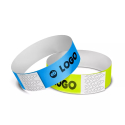
Tyvek bands are the lightest option for short events. They tear if you try to remove them, which makes them a sound choice for single-day entry control. Non-RFID Tyvek versions start as low as $0.04 per band, giving you a sense of how affordable this material sits at the base of the range before chip costs are added.
Plastic and Vinyl RFID Wristbands
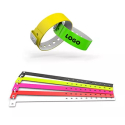
Vinyl handles repeated wear and water exposure better than Tyvek. Vinyl bands last up to 14 days, which suits resorts, hospitality programs and multi-day festivals. If your attendees keep the band on across a weekend, vinyl avoids the replacement cost of flimsier materials. Reference plastic wristbands start as low as $0.07 per band.
Silicone RFID Wristbands
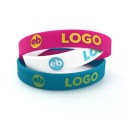
Silicone is the comfortable, reusable choice. It survives rain, sweat and rough handling, so you can collect bands after the event and redeploy them. Custom silicone wristbands start as low as $0.16 per piece in non-RFID form. This material fits VIP zones and recurring events where reuse spreads the cost across several dates.
Fabric RFID Wristbands
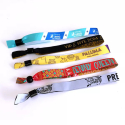
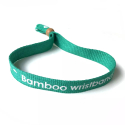
Woven fabric bands carry the premium look most festivals want for multi-day passes. Attendees keep them as keepsakes, which extends your branding well past the gates. Pricing sits at the upper end and is quoted per project rather than published, so treat fabric as a quote-based line in your budget.
| Material | Best use case | Reference price (non-RFID) |
|---|---|---|
| Tyvek® | Single-day events, low budget | As low as $0.04 / band |
| Plastic / Vinyl | Multi-day wear, up to 14 days | As low as $0.07 / band |
| Silicone | Reusable, VIP access | As low as $0.16 / piece |
| Fabric | Premium multi-day festivals | On request |
The Total Budget Beyond the Wristbands: Readers, Software and Staff
Budgeting for RFID at an event means costing the full system, not just the bands. The hardware, integration work and on-site staff frequently outweigh the wristbands themselves, especially on smaller events. UHF readers typically cost about $1,000 to $2,000 apiece, depending on the number you need.
Readers and Infrastructure
Readers are the backbone of any RFID setup. You position them at entry points, bars, activations and exits, which means the count scales with the size of your footprint. An embedded HF module placed inside a sign or another fixture costs around $300, useful for interactive touchpoints that do not need a full reader.
Beyond the readers, factor in the supporting infrastructure: network connectivity, power, mounting and backup units for redundancy. A single failed check-in lane during peak entry creates queues, so redundancy is not optional on a large gate.
Software Integration and Data
The software layer turns taps into usable information. This is where access control, cashless wallet balances and reporting come together. Costs here vary widely with the scope of the work. Integrating RFID data with a platform like Facebook would likely cost around $15,000 to $20,000 on a smaller project.
Closed-loop payment systems process transactions offline in under two seconds, which keeps bars and food stalls moving even when connectivity drops. Plan for:
- Access control logic: entry rights, zone permissions and time-based passes managed per wristband.
- Cashless wallet setup: top-ups, balances and refund handling for the closed-loop system.
- Reporting and data exports: live dashboards and post-event reports on entry flow and on-site spending.
- Third-party integration: connecting RFID data to ticketing, CRM or social platforms.
Training and On-Site Staff
Hardware and software only perform when the team knows how to run them. Budget for staff who manage check-in lanes, troubleshoot readers and assist attendees at top-up points. With cash now down to 14 percent of consumer payments by number in 2024, your staff will spend more time on wallet questions than on handling notes and coins. A short pre-event training session keeps the operation steady during opening rush.
RFID vs Barcode Wristbands: What the Price Gap Buys You
RFID wristbands cost more than printed barcode credentials, but the gap buys speed, fraud resistance and reusable functionality. With RFID priced at $0.30 to $1.50 each and events reporting up to 40% faster entry times, the technology pays back in throughput and on-site revenue where a barcode simply cannot compete.
| Capability | RFID wristband | Barcode wristband |
|---|---|---|
| Cost per band | $0.30 to $1.50 | On request |
| Entry speed | Up to 40% faster | - |
| Tap payment speed | About a second | - |
| On-site spending lift | 15-30% higher with cashless | - |
| Vinyl durability | Up to 14 days | On request |
Entry Speed and Crowd Flow
A barcode credential must be visually aligned and scanned one at a time, which slows queues at peak arrival. An RFID tap reads contactlessly in about a second, and events deploying it report up to 40% faster entry times. For a gate handling thousands of attendees, that difference removes bottlenecks no printed barcode can clear.
Security and Fraud Prevention
Printed barcodes can be photographed, copied and reused, a weakness any organizer knows. RFID stores encrypted credentials on a chip that is far harder to duplicate. Each wristband ties a unique identity to its holder, so duplicate entries are flagged at the reader. Closed-loop payments process offline in under two seconds, keeping transactions secure even without connectivity.
Reuse and Data Collection
Barcode bands carry a single static value and nothing more. An RFID wristband supports access control, cashless payments and behavioral data from the same chip. A reusable band at $10 serves multiple events, while the captured data on movement and spending feeds your planning. These combined benefits justify the price gap for any organizer weighing the two technologies. Speak with your advisor for barcode pricing details.
Calculating the Return on Investment of Your RFID Wristbands
The extra cost of RFID over a printed barcode pays for itself through three measurable levers: higher on-site spending, faster entry, and post-event data. Organizers report 15 to 30 percent higher on-site spending after switching to RFID payment systems. For most events, that uplift alone covers the price gap.
Higher Cashless Spending On-Site
When attendees pay with a wrist tap instead of cash, they spend more. A wristband tap clears in about a second, far quicker than a cash sale, so bar and food queues move and impulse purchases climb. With cash down to 14 percent of consumer payments by number in 2024, removing physical wallets from the equation matches how people already buy. Closed-loop systems process payments offline in under two seconds, which keeps revenue flowing even where connectivity is poor.
Shorter Queues and Lower Operating Costs
Faster scanning cuts both wait times and staffing needs. Events using RFID have reported up to 40 percent faster entry times. Fewer gate staff, fewer cash-handling errors, and less manual reconciliation translate directly into lower operating costs across the weekend.
The Value of Post-Event Data
Every tap generates data you can turn into reports: which zones drew traffic, when spending peaked, which vendors performed. These insights help you plan layouts, sponsor packages, and pricing for the next edition.
The benefits stack up across several fronts:
- Spending uplift: 15 to 30 percent higher on-site spend with cashless payments.
- Throughput: up to 40 percent faster entry, reducing gate bottlenecks.
- Transaction speed: taps clearing in about a second keep queues short.
- Lower staffing and cash-handling costs across the event.
- Actionable reports on attendee movement and spending for future planning.
Run these figures against your attendee count and the RFID premium often recovers within a single event.
Building and Optimizing Your RFID Budget Step by Step
Sizing your RFID budget comes down to four moves: estimate volumes, pick the right material and chip, gather comparable quotes, then test before doors open. Follow them in order and you avoid both overspending and last-minute surprises that wreck the experience for your attendees.
-
Estimate Your Volumes and Access Profiles
Start from your headcount and how many access tiers you run: general admission, VIP, staff and press each need their own credentials. RFID wristbands typically range from $0.30 to $1.50 each, depending on material and chip type. Order volume moves the needle hard: buying 100 units of each can halve the unit price versus a small batch. Map your numbers per profile before you ask for a single price.
-
Choose Material and Chip
Match the material to your event format. Tyvek suits single-day events, vinyl lasts up to 14 days for multi-day or resort settings, and silicone or fabric handle recurring editions. A reusable band with some style runs about $10, against $3 for a single-use one. Confirm the chip type fits your use case, whether that is access control, cashless payment or both.
-
Request a Quote and Compare Suppliers
Ask each supplier for a custom quote covering bands, branding and chip programming on the same volume, so you compare like for like. Factor in the full stack: readers, software and staff. UHF readers typically cost about $1,000 to $2,000 apiece, depending on the number of antennas. Push suppliers on lead times for large custom runs and lock the timeline in writing.
-
Test Before Event Day
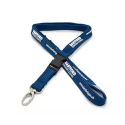
Never deploy untested hardware. Run a pilot with a sample batch, scan real wristbands at your readers, and check that lanyards, credentials and payment flows behave as expected. A tap should clear in about a second, so any lag at this stage signals a problem to fix early.
Budget checklist:
- Headcount and access tiers confirmed
- Material and chip matched to event format
- Comparable quotes from at least two suppliers
- Reader, software and staff costs included
- Lead time for custom orders secured
- Pilot test completed before the event
Eco-Friendly Options and Their Impact on Your Budget
Sustainable RFID wristbands shift your budget toward reuse rather than disposal. The clearest financial lever is choosing reusable bands over single-use ones: a reusable RFID wristband with some style costs around $10, versus $3 for a band used once and thrown away. The higher unit price pays back across multiple events.
Recycled and Bio-Based Materials
Several material families let you cut waste while keeping a custom look for your attendees. Each carries a different cost profile, so weigh the eco benefit against your per-band target.
- Recycled fabric bands: woven from reclaimed fibres, well suited to a multi-day festival where durability already justifies a higher spend.
- Bio-based materials: a greener alternative to standard plastics, with custom branding still possible for sponsor visibility.
- Tyvek for short events: the most economical disposable option at as low as $0.04 per band, a sensible pick when reuse is not realistic for a single-day event.
Reusable RFID Wristbands
Reusable bands suit organizers running a recurring festival or a series across a season. At roughly $10 each, they only make budget sense when you collect, sanitise and redeploy them, spreading that cost over several gates of attendees.
The trade-off is operational: you need a return and storage process, plus staff time to manage it. For one-off events, the single-use $3 band stays the leaner choice. Run the maths on how many editions a band will survive before committing the larger upfront spend.
Frequently Asked Questions About RFID Wristband Budgets in 2026
The most common budget questions revolve around per-attendee cost, connectivity, reuse and lead times. RFID wristbands typically range from $0.30 to $1.50 each, depending on material and chip type. The answers below give you the practical figures to size your event spend with confidence.
How much does an RFID wristband cost per attendee?
Plan for $0.30 to $1.50 per band, driven by material, chip technology and order volume. Higher quantities push the cost toward the lower end. A single reusable wristband with some style runs around $10, while a single-use band sits closer to $3. For a festival counting attendees in the thousands, volume pricing matters most.
Do RFID wristbands work without a mobile network?
Yes. Closed-loop systems process payments offline in under two seconds, with no mobile network required. A wristband tap clears in about a second. This makes RFID reliable for remote or crowded sites where cellular coverage is weak, a frequent issue at large outdoor events.
Are RFID wristbands reusable?
It depends on the material you choose. A reusable wristband with some style costs about $10, against roughly $3 for a single-use band thrown away after the event. Fabric and silicone options support reuse across multi-day or recurring events, while Tyvek suits single-day, disposable use.
Are RFID wristbands waterproof?
Durability varies by material. Vinyl bands last up to 14 days, making them a strong choice for resorts and multi-day events exposed to water and wear. Silicone and fabric also hold up well, while Tyvek is designed for shorter, single-day use.
What lead time should I plan for ordering and customization?
Lead times are not fixed and depend on quantity, custom branding and chip programming. Request a clear timeline from your supplier when you order, especially for large custom runs, and build that window into your event planning.