 Deutschland
 España
 France
 Italia
 United Kingdom





























The essentials of implementing an RFID cashless payment system at your event
- What it is : a cashless payment system using RFID wristbands embeds an RFID chip into a wearable wristband (a physical tool) that attendees tap on a reader at the point of sale to complete a payment, replacing cash and cards at the event.
- Two technical models : closed-loop systems store credit on the wristband or in a dedicated event account usable only on-site, while open-loop systems link to external bank cards or payment networks for transactions beyond the venue.
- Transaction speed : an RFID tap is completed in under 2 seconds, compared with 15–30 seconds for cash or card payments, reducing queues at every point of sale.
- Setup timeline : a typical deployment runs 2 to 4 weeks from contract signature to go-live, covering hardware, software configuration and wristband encoding.
- Offline capability : RFID cashless systems can process transactions without an active internet connection, syncing data once connectivity is restored, ensuring continuity in low-signal venues.
- Measurable benefits : reported outcomes include higher spend per attendee, reduced theft and fraud thanks to non-cash handling, and access to real-time transaction data for operators.
- What this guide covers : the full article details implementation steps, security, costs and ROI, and how to choose a provider for bringing a cashless society approach to your event.
What Is an RFID Wristband Cashless Payment System?
An RFID wristband cashless payment system replaces cash and cards at your event with a small chip embedded in a wristband that attendees simply tap against a reader to pay. Each transaction takes seconds, and money is loaded onto the wristband in advance or topped up on site.
High-frequency RFID tags operating at 13.56 MHz are the standard for event payments. This is the same near-field technology behind contactless bank cards, which makes it familiar and fast for your guests.
How RFID payment technology works
The principle is straightforward. A passive chip inside the wristband stores a unique identifier linked to a balance held in your event platform. When an attendee taps the wristband on a reader at a bar or merchandise stand, the reader reads the chip, checks the balance and confirms the transaction. No internet-dependent card terminal is required at the point of sale, which keeps queues moving even when connectivity is poor.
Closed-loop vs. open-loop systems
Two models exist, and the difference matters for how you run your event.
- Closed-loop: funds work only inside your event. Attendees preload credit, spend it at your vendors, and you control every transaction within a single ecosystem.
- Open-loop: the wristband connects to an external payment network, letting guests use it like a standard contactless card beyond the event grounds.
Most festivals choose a closed-loop cashless payment system because it simplifies reconciliation and keeps spending data in one place.
Where the chip can be embedded: wristbands, cards and badges
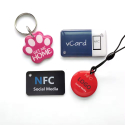
The chip itself is a physical tool that can sit in several formats depending on your audience and event style:
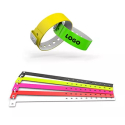
- Fabric or silicone wristbands for multi-day festivals
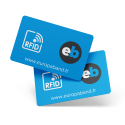
- Plastic cards for conferences and trade shows
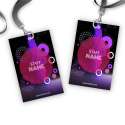
- Lanyard badges for corporate access and payments
As we move closer to a cashless society, these RFID wristbands give your event a single, tap-to-pay credential that handles access and payment together.
Why Event Organizers Switch to Cashless RFID Payments
Event organizers adopt RFID wristbands because they cut queues, reduce cash handling risks, and lift on-site spending. On average, attendees make 30% higher transactions with a cashless payment system. The shift mirrors a broader move toward a cashless society, where cash now accounts for just 16% of all U.S. transactions.
Faster transactions and shorter queues
Speed at the point of sale shapes the entire attendee experience. A tap of an RFID wristband clears a payment in seconds, while cash forces staff to count change and reconcile floats. Fewer bottlenecks at bars and food stalls mean more sales served per hour.
| Payment method | Average transaction speed |
|---|---|
| Cash | 20-40 seconds |
| Contactless card / NFC | 5-10 seconds |
Reduced fraud, theft and cash handling
Cash on site creates exposure: skimming, miscounts, and theft from staff or attendees. Removing physical money from your bars and gates shrinks that risk. RFID wristbands tie spending to a registered account, so a lost band can be deactivated instead of becoming free money for someone else. Less cash handling also means lighter security and reconciliation work at the close of each day.
Higher per-attendee spending and sales
People spend more freely when they are not counting coins. The friction of cash slows decisions; a wristband tap does not. This is why successful festivals generate 60% of their revenue from in-event cashless payments. For an event manager building a budget case, that revenue concentration is the core argument for the investment.
Real-time data and operational insight
Every tap feeds your dashboard. You see which bars are busy, which products move, and when peaks hit, all in real-time. That visibility lets you redeploy staff, restock fast, and plan next year's layout on actual figures rather than guesswork.
The headline benefits for organizers:
- Faster payments that keep queues short and revenue flowing
- Lower fraud and theft by removing cash from the site
- Higher average spend per attendee across food, drink and merchandise
- Live transaction data to manage operations as the event runs
- Cleaner end-of-day reconciliation with every sale logged automatically
The category is maturing fast: the global RFID market reached $17.12 billion in 2025 and is projected to reach $37.71 billion by 2032, giving organizers a stable, well-supported technology to build on.
How to Implement an RFID Wristband System: Step-by-Step
Implementing a cashless payment system with RFID wristbands at your event follows seven concrete stages: defining your needs, selecting a model and vendor, encoding wristbands, deploying readers and top-up stations, training staff, testing offline mode, then going live with real-time monitoring. Each step builds on the previous one.
Step 1: Define your needs and event scale
Start by mapping your event size, expected attendance, number of payment points and the access zones you need to manage. A one-day conference and a three-day festival have very different requirements. Smaller events typically invest $3,000 to $10,000, while large multi-day festivals can spend $50,000 to $200,000 or more. Knowing your scale upfront keeps your budget realistic.
Step 2: Choose closed-loop or open-loop and a vendor
Decide whether attendees spend only inside your event (closed-loop) or use the wristband like a standard contactless card beyond it (open-loop). Most organizers pick closed-loop for cleaner reconciliation. Then shortlist vendors and verify chip compatibility. Some platforms, such as Oveit Pay, work with any Mifare 1K standard chip, which gives you flexibility on supplier choice.
Step 3: Encode and distribute the wristbands
Each RFID wristband carries a unique identifier linked to a balance in your platform. Encode them before the event, then distribute either by mail in advance or at entry desks. Pre-loading credit during this stage reduces queues on arrival and lets guests tap and pay from the moment they walk in.
Step 4: Set up readers, POS and top-up stations
Position readers at every bar, merchandise stand and access gate. Install your POS interface at each selling point and place top-up stations where lines naturally form. With Oveit Pay, a vendor station needs only a smartphone, a wristband and an internet connection, which keeps your hardware footprint light.
Step 5: Onboard vendors and train staff
Brief every vendor on how transactions are processed, how refunds work and how to read the wristband correctly. Run short hands-on sessions so cashiers feel confident. Staff who understand the system move guests through faster, and confident vendors mean fewer support calls during peak hours.
Step 6: Test offline mode and run a pilot
Connectivity drops happen at crowded venues, so confirm your system processes payments without a live internet link. A closed-loop RFID system reads the balance stored on the chip, so transactions can continue even when connectivity is poor. Run a small pilot with real taps before doors open to catch encoding errors and reader placement issues.
Step 7: Go live and monitor in real time
On event day, open your gates and watch transactions flow through a real-time dashboard. Track spending per stand, top-up volume and any reader showing errors. The payoff is measurable: on average, a person makes a 30% higher transaction with a cashless payment system. Successful festivals generate 60% of their revenue from in-event cashless payments, so live oversight protects a large share of your takings.
Keep a quick reference checklist for your operations team:
- Confirm all readers are paired and responsive
- Verify top-up stations accept payment correctly
- Check that offline mode holds and syncs once connectivity returns
- Monitor the dashboard for unusual gaps in transactions
Keeping RFID Payment Data Secure at Your Event
Securing your cashless payment system means protecting both the money loaded onto each wristband and the transaction data behind it. The technology relies on encryption, real-time balance tracking and closed-loop control, so funds stay inside your event ecosystem and every payment is logged the moment a wristband is tapped.
Encryption and fraud prevention
Each chip stores a unique identifier rather than the actual balance, which sits in your event platform. That separation makes a stolen wristband nearly worthless to anyone trying to commit fraud. Encrypted communication between the wristband and the reader prevents balances from being cloned or altered during a transaction. Lost wristbands can be blocked instantly, and any remaining credit reassigned to a replacement.
Protecting against internal theft and reconciliation errors
Because payments are cashless, your staff never handle physical money at the bar or merchandise stand. Every sale leaves a digital record, which removes the gaps where skimming and till discrepancies usually happen. The core security mechanisms work together:
- End-to-end encryption on each transaction between reader and platform
- Instant blocking and credit transfer for lost or stolen wristbands
- Real-time balance updates that flag unusual spending patterns
- Centralised logs for clean accounting reconciliation after the event
- Role-based access so only authorised staff can issue refunds or top-ups
This audit trail lets you reconcile vendor takings against system data line by line, instead of counting cash bags at 2am.
Handling guest data and privacy
You decide how much personal information is tied to a wristband. Many organisers run a fully anonymous closed-loop system, linking only a balance to each chip with no name or card details attached. If you collect contact data for refunds or registration, store it according to your privacy obligations and keep it separate from spending records. For the technical specifics of your setup, your dedicated advisor can walk you through the configuration that fits your event.
What Does an RFID System Cost and How to Calculate ROI
The cost of an RFID wristband payment system scales with your event size. Smaller events typically invest $3,000 to $10,000, while large multi-day festivals can spend $50,000 to $200,000 or more on hardware, wristbands and software. Your return comes from a measurable spending lift and operational savings.
Cost components to budget for
A complete system bundles several line items. The main posts to plan for are the wristbands themselves, the reader hardware, the software platform that processes transactions, and the connectivity that keeps everything live during your event.
| Event profile | Indicative system cost |
|---|---|
| Smaller events | $3,000 to $10,000 |
| Large multi-day festivals | $50,000 to $200,000 or more |
Some lightweight platforms keep entry barriers low. With Oveit Pay, for example, everything you need is a smartphone, a wristband and an internet connection, which removes heavy terminal purchases from the equation.
How to calculate return on investment
To work out your ROI, compare the total system cost against the extra revenue and the savings it generates. The spending lift is the strongest lever: on average, a person makes a 30% higher transaction with a cashless payment system, and successful festivals draw 60% of their revenue from in-event cashless payments.
- Multiply your expected attendees by your current average spend per attendee, then apply a 30% uplift to estimate added sales
- Add operational savings from lighter cash handling, faster reconciliation and reduced security overhead
- Subtract the full system cost, including wristbands, readers and software
- Divide the net gain by the cost to express your return as a percentage
Is it worth it for smaller events and venues?
Yes, when the per-attendee spending lift covers the entry cost. A venue running regular nights or a small festival can start at the lower end of the budget and still capture the same 30% transaction uplift. The faster payment flow keeps bar queues short, which directly protects sales during peak hours. For a recurring venue, the same hardware spreads across multiple events, sharpening the ROI each time you reuse it.
Questions to Ask Before Choosing an RFID Payments Vendor
Before signing with any RFID payments provider, ask four questions that separate reliable vendors from risky ones: how transactions behave offline, how hardware and support are handled, what real-time data you receive, and how refunds work. Their answers tell you whether the platform fits your event reality.
Can the platform process transactions offline?
Connectivity drops at outdoor sites and crowded venues, so this is the first thing to verify. An RFID payment system that processes transactions offline keeps bars and stands running even when the network fails, then syncs balances once the connection returns. Ask how the vendor reconciles offline sales and what happens if a wristband is tapped at two readers during a blackout.
How is hardware delivery and support handled?
Clarify exactly what the vendor ships, when it arrives, and who fixes problems on site. Some setups need only a smartphone, a wristband and an internet connection, which simplifies logistics considerably. Run through this checklist with each provider:
- Delivery timeline for readers, wristbands and any terminals before doors open
- Whether on-site technical support is included or billed separately
- Replacement procedure for faulty hardware during the event
- Compatibility with your existing chips, such as the Mifare 1K standard
- Staff training provided ahead of opening day
What reporting and real-time data is provided?
Strong vendors give you a live dashboard showing sales per stand, top-up volume and spending patterns as they happen. Confirm whether you get real-time access during the event or only a report afterward. Real-time figures let you restock fast-selling items and spot quiet zones while you can still act on them.
How are refunds and leftover balances managed?
Guests will finish with unspent credit, so the refund flow matters. Ask whether refunds are automatic or manual, what fees apply, and how long payouts take. A clear, fair policy on leftover balances protects your reputation long after the gates close.
Branded RFID Wristbands as Part of Your Event Experience
Branded RFID wristbands turn a simple payment tool into a marketing asset. A customized RFID wristband works as both a cashless payment method and a wearable extension of your event identity, carried by every guest from entry to exit. This dual role is why personalized wristbands fit naturally into the promotional products sector.
Customization options for branded wristbands
You can adapt wristbands to match your event branding across several elements. The most common options include:
- Custom colors aligned with your visual identity
- Printed logo, event name or sponsor artwork on the band
- Choice of materials such as silicone, fabric or coated finishes
- Sequential numbering or unique guest identifiers
- Mifare 1K chips embedded for payment and identification
Each wristband can carry a different message while keeping the same technical core, which lets you run tiered designs for general admission, staff and VIP guests.
Reinforcing brand visibility on-site
A wristband stays on the wrist for the full duration of an event, so it becomes one of the most visible touchpoints across the venue. Guests see it every time they pay at a bar, pass through a gate or check a balance. That constant exposure gives sponsors and organizers a presence that printed signage cannot match, and it extends after the event as a keepsake people often keep.
Combining access control and payment in one wristband
A single branded band can handle access control and payment together, removing the need for separate tickets, tokens or cards. One RFID wristband can grant zone access and process cashless payments at the same time, simplifying logistics for both guests and staff. This consolidation reduces hardware, cuts queues and reinforces a coherent brand experience from the moment guests arrive at the venue.
Frequently Asked Questions About RFID Cashless Payments
Setting up RFID wristbands for cashless payments raises practical questions about timing, offline reliability, leftover balances, security and budget. The answers below address what event organizers ask most often before committing to a system.
How long does it take to set up an RFID payment system?
Setup time depends on your event size and the vendor you choose. With a lightweight platform, everything you need is a smartphone, a wristband and an internet connection, which keeps preparation minimal. A streamlined RFID payment system can run on nothing more than a smartphone, a wristband and an internet connection. Larger festivals need more lead time for hardware delivery and staff training.
Can an RFID payment system work without internet access?
Yes. A well-built RFID payment system processes transactions offline and syncs balances once connectivity returns. Offline processing keeps your bars and stands running during network blackouts, then reconciles every transaction when the connection comes back. Always confirm with your vendor how offline sales are reconciled across multiple readers.
What happens to money left on a wristband after the event?
Leftover balances are handled through your vendor's refund policy. Some providers refund unspent credit automatically, others require a manual request, and fees or payout delays vary. Clarify these terms before the event so guests know exactly how to recover money left on their wristbands.
How secure is payment data on an RFID wristband?
RFID wristbands store a reference linked to a balance rather than full card details, which limits exposure if a band is lost. For context on the broader shift, cash now accounts for just 16% of all U.S. transactions, and only 23% of UK fraud cases in 2019 involved actual money loss.
Is RFID worth it for smaller events?
It can be. Smaller events might invest $3,000 to $10,000 in an RFID system, and cashless payments are linked to roughly 30% higher transactions per guest. Weigh that revenue uplift against your expected attendance before deciding.